
Decoding Khan Academy's Mission: World-Class Education for Anyone, Anywhere – Sudhir's Personal Website
Sudhir Gupta,
2026/04/27
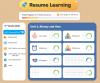
I'm going to take Sudhir Gupta's criticisms of Khan Academy as granted, because I think the points are valid. The method - which assumes reliable internet connectivity and sustained, individual device access, and digital literacy - runs the risk of subsidizing the rich rather than helping the poor. As Gupta says, "showcasing Navodaya schools as 'India impact' feels misleading... They represent the exception - the already-well-resourced institutions." Fair enough. But the proposed solution - 'Teacher Mode' - requires even more investment, specifically, human teachers. Going back to the technologies that were too expensive in the past won't address this even more pressing problem in the future. Mass media - books, radio, television - get us part of the way. Mass personal media will be needed to get us the rest of the way. But how to do that, while avoiding the worst excesses of 'personalized learning' and social media - that is the question.
Web: [Direct Link] [This Post][Share]
Social Media Learning Under Constraint: A Conceptual Framework for Higher Education
Olajide Jolugbo, Agnes Reeves-Taylor,
The Journal of Social Media for Learning,
2026/04/27
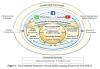
This is quite a nice paper (15 page PDF) that looks at the role of social media in learning. It is typically found to be limited by institutional constraints, as higher education institutions prefer their own platforms and methodologies. But "such assumptions limit conceptual understanding of how learning is organised and sustained in contexts where institutional provision is fragmented and digital infrastructure is unreliable," like, say, Liberia. Here, we see social media play a very different role. "Social media platforms function as de facto learning infrastructure (and) are frequently appropriated to support academic coordination, explanation, and peer learning in higher education contexts." The Constraint-Responsive Social Media Learning Framework (CR-SMLF) outlined in the paper describes this.
Web: [Direct Link] [This Post][Share]
Developing higher education to support modernization in China
Huai Jinpeng,
World Education Blog,
2026/04/27

In this statement from the Chinese Minister of Education, three priorities are outlined: "promoting a shift in higher education toward greater emphasis on competency development and value guidance," which is a response to AI; "promoting a greater emphasis on cross-sector integration in higher education," and third, "promoting a greater emphasis on openness and cooperation in higher education." On the third, the statement adds, "Divergences and even conflicts in thinking and cultural values persist among different civilizations and nations. In an interconnected human community, the principles of openness and cooperation, understanding and trust, and innovation and creation among universities are values to uphold and directions to follow."
Web: [Direct Link] [This Post][Share]
Washington Post letter on degree hacking / online degree speed
George Veletsianos,
2026/04/27

I read the Washington Post article, which you can find via an archive, and then waited for the inevitable response. It came this morning. The gist of the Post article is that students are using 'loopholes' to power their way through degree programs in just a few weeks instead of the months or years it normally takes. Here's what George Veletsianos writes. "These learners aren't gaming a loophole. They're demonstrating self-direction, time management and strategic planning... They are demonstrating it on the assessments their own institutions designed to measure it." And I think this is a good point. Some people might argue, "well you need the extra time to acquire the skills and competencies that just aren't measured on the test." But what skills? What competencies? If you need them, and you can't test for them, what distinguishes them from magic?
Web: [Direct Link] [This Post][Share]
You Can Just Say How To Do Things: A Radical Approach to Expert Prompting
Mike Caulfield,
The End(s) of Argument,
2026/04/27

I would like to think that, as Mike Caulfield says, "the magic tricks phase of prompting is over," but as long as there's a LinkedIn, there are going to be 'magic tricks' articles. But what Caulfield is saying here is that we don't need that any more (if we ever did). "Your value add is, for the most part, figuring out how to do things, and figuring out how to explain them in a way that someone other than you can do them... Your special power is in better understanding the things you already know. Focus on how to do the thing." Yes. That's how I'm using Claude to write software, and how I actually write these posts by hand. There's no trick. (That's also how I feel theories in education generally- in this article that role is filled by all the cute acronyms). (p.s. Cast Away is one of my favourite movies ever and it's just this analysis that makes it so clear why it is.)
Web: [Direct Link] [This Post][Share]
Collaborative sticky-note boards
D'Arcy Norman,
Jellyboard,
2026/04/27
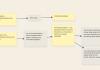
This is just a sandbox, so it might not last the week. Who knows? But it's just another example of the blossoming of code happening at the moment. This particular application, Jellyboard, is a post-it not board on an infinite canvas that lets you group and link notes. That's it. Super simple. Really effective. Here's one created by Matthias Melcher on the virtues of two-pane layouts.
Web: [Direct Link] [This Post][Share]
Do Students Rely on AI? Analysis of Student-ChatGPT Conversations from a Field Study
Jiayu Zheng, et al.,
AIES 2025,
2026/04/27
"Humans' reliance on AI systems is a multifaceted phenomenon influenced by a complex interplay of system-related, user-related, and task-related factors," and educators love a taxonomy, and that's what this paper (12 page PDF), true to form, produces: a taxonomy "to capture students' reliance patterns, distinguishing AI competence, relevance, adoption, and students' final answer correctness." This is the result of a study in the early days of AI with students not yet familiar with it. Reliance on AI is related to familiarity with it, according to the paper, With discussion in the wind about banning not only social media but also AI chatbots from youth access, it raises the question of how youth learn to navigate them well. More from the eighth AAAI/ACM Conference on AI, Ethics, and Society.
Web: [Direct Link] [This Post][Share]
Fairness in Federated Learning: Fairness for Whom? | Proceedings of
Afaf Taik, Khaoula Chehbouni, Golnoosh Farnadi,
AIES 2025,
2026/04/27
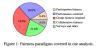
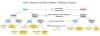
There's a lot of goodness in this one paper (14 page PDF). For one thing, it discusses 'federated learning' (FL), which is "a decentralized machine learning (ML) paradigm in which a global model is trained collaboratively across multiple participants (e.g., smartphones, hospitals, or institu-tions), without exchanging raw data." So much to think about here. But the result of this study is a set of great insights into the concept, or should I say concepts, of fairness. There are many different types of fairness, they vary across contexts, and they aren't interchangeable. See the diagram for more detail. The result is a harm-based model which takes into account the various forms of fairness implicated in FL environments which "highlights a disconnect between how fairness is defined in research and how harms manifest in practice." More from the eighth AAAI/ACM Conference on AI, Ethics, and Society.
Web: [Direct Link] [This Post][Share]
Grievance Farming Comes for Teaching Centers
Marc Watkins,
Rhetorica,
2026/04/27

This is a good overview of the recent discussion of teaching and /learning centres, beginning with Paul Schofield's recent criticism of them, and following up with a summary of some more notable responses. Marc Watkins characterizes the original article in the Chronicle of Higher Education as 'grievance farming', a trend in social media and online journalism that has become more prevalent in recent years as a means of attracting attention. Of course, it's worth noting that the Chronicle has been doing this for years; usually it just goes unnoticed behind the paywall. Overall, the Watkins article is a good overview and should put this incident to bed.
Web: [Direct Link] [This Post][Share]
There are many ways to read OLDaily; pick whatever works best for you:
- Read in your web browser on this web page, updated weekdays
- Receive a daily or weekly email newsletter by subscribing here
- Subscribe to the RSS feed using your favourite feed reader
- Follow @OLDaily@mastodon.social on Mastodon or elsewhere in the fediverse
- Follow @OLDaily on Bluesky
- Read OLDaily as a LinkedIn Newsletter
- Integrate the open API using the JSON feed
This newsletter is sent only at the request of subscribers. If you would like to unsubscribe, Click here.
Know a friend who might enjoy this newsletter? Feel free to forward OLDaily to your colleagues. If you received this issue from a friend and would like a free subscription of your own, you can join our mailing list. Click here to subscribe.
Copyright 2026 Stephen Downes Contact: stephen@downes.ca
This work is licensed under a Creative Commons License.