If you didn't get yesterday's newsletter you can find it here
User-Driven UI
Brad Woods,
Brad Woods Digital Garden,
2026/10/12
The is the approach I'm trying to take with CList: "With the capabilities of natural language processors, we can create a new approach to teaching UIs. User-driven UI. Instead of pushing features onto the user, the user pulls them in when needed. The software always presents a new user with the Minimum Viable Product (MVP)." That sounds easy, but it isn't. What is that minimum? Is it feed reading? Writing posts? And how are the new features unveiled - what is it to 'pull' new features into the interface? "For user to reach maximum value in complex software, they need to be in the Zone of Proximal Development (ZPD). This requires multiple approaches. In the past, teaching has been considered an after-thought to making the product. This is a mistake." Via D'Arcy Norman.
Web: [Direct Link] [This Post][Share]
Why Leaving Academia Feels Like Withdrawal
Claudio Cinà,
Inside Higher Ed | Higher Education News, Events and Jobs,
2026/10/12
"Many who succeed in academia become reliant on the recognition of its gatekeepers - tenure committees, journal editors, prize juries—until that recognition becomes the currency of existence." See also: qualifications and brain monsters. I left academia (properly so-called) some 25 years ago, though my career at NRC was a sort of proxy. But now I have nothing I can write in the 'institution' field in conference and event forms. "Picture two scholars. One has kept the same question alive for a decade because it grips her and would go on asking it in a shed with no audience. The other cannot begin a project without first asking whether it will count— whether it will be noticed, indexed, rewarded." The prevalence of the latter where I studied made it easy for me to leave. But the questions that grip me have never faded, though I feel much better now after all these years about the answers I have found. There was no registration wall on this article, but it's IHE, so that could change. Via ApostolosK.
Web: [Direct Link] [This Post][Share]
Academic urban legends
Ole Bjørn Rekdal,
Social Studies of Science,
2026/10/12

Via a Mastodon post from Alfie Kohn posted today I encountered this great 2014 article on how urban legends are perpetuated in academic writing. The article looks at the chain of commentary around the idea that spinach is a great source of iron (it isn't). You have to read it carefully: it's a maze of assertions that might be true ("messages that pass through several links have the unfortunate tendency to become modified or altered along the way, as in the whisper game") or might not be ("we are currently experiencing an 'avalanche of low-quality research'"). Even the URL to one of the references in the bibliography (intended to point to Hamblin, 1981) points instead to a study on cocaine on rigid OS (whatever that means). This sort of error is really easy to make I make a point to check the articles being cited in the links I cite - for example, one recent article said there were different types of consciousness, when the original paper said there were different models of consciousness - I posted the correct term, silently correcting the error, but it's a daily occupational hazard.
Web: [Direct Link] [This Post][Share]
Media helped create the crisis it finds itself in
Michał "rysiek" Woźniak,
Songs on the Security of Networks,
2026/10/12
This article is much too long and has a but of a tone, but it is chock full of evidence to back up what it says, and what it says is important: the media itself is responsible for the near total control of the tech industry over its domain. The reason for this, argues Michal Wozniak, is that the media companies unthinkingly participate in, and endorse, tech silo platforms that give them all the power. "How much would any other company have to pay for placing a small logo on a large news site? How much more for the logo to appear under every piece published on that site? X/Twitter gets it all for free." My own take is that this is what media companies would have done themselves, had they had the foresight. Subscription walls and silos are commercial media's natural home. This preference has landed us in an environment where nothing published in social media can be trusted.
Web: [Direct Link] [This Post][Share]
A Small Boat Facing New Horizons
Yaretzy Gabriela Calamaco Munguia,
unitwin-unoe,
2026/10/12
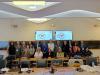
This post from a primary school teacher and Master's student from the Benemérita Escuela Normal de Coahuila (BENC) in Mexico recounts her experience attending the UNESCO's Digital Learning Week 2026 in France. "It was not a feeling of smallness as a synonym for inability, but rather an awareness of standing before an immense ocean. An ocean of knowledge, research, experiences, projects, questions, and possibilities that extended far beyond what I had previously been able to imagine." As she says, you don't need to know the entire ocean in order to begin exploring it. Really good reflection, worth the read.
Web: [Direct Link] [This Post][Share]
TopSciNet Tools
DATAMETA LAB,
TopSciNet,
2026/10/12
This looks like a really useful set of tools: "Free online tools with no signup: line counter, image resizer, compressor, PDF converter, QR generator, percentage calculator and more. Everything runs in your browser, so your files never leave your device." What's funny is that I found them while looking through what I think is a bit of a boondoggle, a website advertsing the 'top 2 percent' of researchers. I was following certificates posted by Aras Bozkurt and Christian Stracke offered by (?) Elsevier and Stanford. I hope they didn't pay any money for this listing.
Web: [Direct Link] [This Post][Share]
There are many ways to read OLDaily; pick whatever works best for you:
- Read in your web browser on this web page, updated weekdays
- Receive a daily or weekly email newsletter by subscribing here
- Subscribe to the RSS feed using your favourite feed reader
- Follow @OLDaily@mastodon.social on Mastodon or elsewhere in the fediverse
- Follow @OLDaily on Bluesky
- Read OLDaily as a LinkedIn Newsletter
- Integrate the open API using the JSON feed
This newsletter is sent only at the request of subscribers. If you would like to unsubscribe, Click here.
Know a friend who might enjoy this newsletter? Feel free to forward OLDaily to your colleagues. If you received this issue from a friend and would like a free subscription of your own, you can join our mailing list. Click here to subscribe.
Copyright 2026 Stephen Downes Contact: stephen@downes.ca
This work is licensed under a Creative Commons License.