
What Else Can We Do? The Thirteen Intentions of Philanthropy
Ariel Simon,
SSIR,
2026/02/13

These thirteen motivations are framed as reasons people give to philanthropic causes, but they could equally well be motivations to educate, to teach, or to do pretty much anything good for other people. I pass them along because, as we all know, educational researchers love a taxonomy. The thirteen intentions are broken down into four major categories: communitarian, transformative, declarative, and humanitarian. Some of them resonate - when I ride to raise money for the children's hospital, for example, I'm making a statement that hospitals shouldn't need charity to do their work. But are these all and only the intentions to do good? I don't know - I don't think so. I don't see 'care' anywhere in the document, for example. Or 'guilt', or 'responsibility'. They all seem consequentialist, describing intentions to build or form something. If I give money to a panhandler on the street, I'm not trying to do any of this - I'm just trying to recognize the other person as human. Is that OK?
Web: [Direct Link] [This Post][Share]
Why We Should Stop "Networking": On the Intrinsic Value of Connection
Marieke Schaper,
Blog of the APA,
2026/02/13

Here's the crux: "academic 'excellence' alone won't guarantee a successful career. Luck and having connections in the field is almost equally important, if not more." This leads to the phenomenon of 'networking', in which relationships become commodities. Counter to this, though: "we should shift our perspective to see networking as a vehicle for real human connection rather than merely a means to an end, that is, creating a network." What we see happening on LinkedIn is networking; what we see in (say) the blogging community is connection. "If we focus on the intrinsic value of what networking can be, we will eventually come across like-minded people who share similar values and passions. Finding connections like these will add the most genuine value to our academic lives."
Web: [Direct Link] [This Post][Share]
Coding agents as the new compilers - Anil Dash
Anil Dash,
2026/02/13

I've seen this perspective presented a few times over the last three years and it makes sense to me: AI is to today's coding languages and today's coding languages were to Assembler and Machine Language. We can, in other words, just think of AI as moving the development of software to a higher level of abstraction. OK, so who cares, it's an old argument. Yeah, but it made me wonder about the analogous argument for writing (say) documents and articles. I mean, you generally don't just AI to write some random article. From what I can tell, people who use AI to write have some idea of what they want to say, and they use AI to develop the article for them based on that. Now, in my view, what I'm really interested in is what they give to the AI as a prompt; I can figure out for myself what it might look like as a full article. But for people who don't have experience at that level of abstraction, the article might be necessary. Something to think about.
Web: [Direct Link] [This Post][Share]
Generative AI as a partner for teachers in building personalised learning paths for students with ease in Tanzania
Juliana Kamaghe,
Research in Learning Technology,
2026/02/13
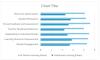
If we take this research (14 page PDF) at face value, on what grounds do we oppose the use of AI in Tanzania? "The data presented below, gathered from 120 secondary school teachers across Tanzania, reveal a substantial perceived improvement in multiple educational dimensions when comparing traditional teaching methods to AI-driven personalised learning systems." I take note especially of how AI-driven learning addresses the challenges found in this context, and specifically, the limited resources that can be brought to bear to provide any sort of individual attention at all.
Web: [Direct Link] [This Post][Share]
ONL pedagogical approach & design
Open Networked Learning,
2026/02/13
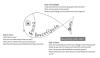
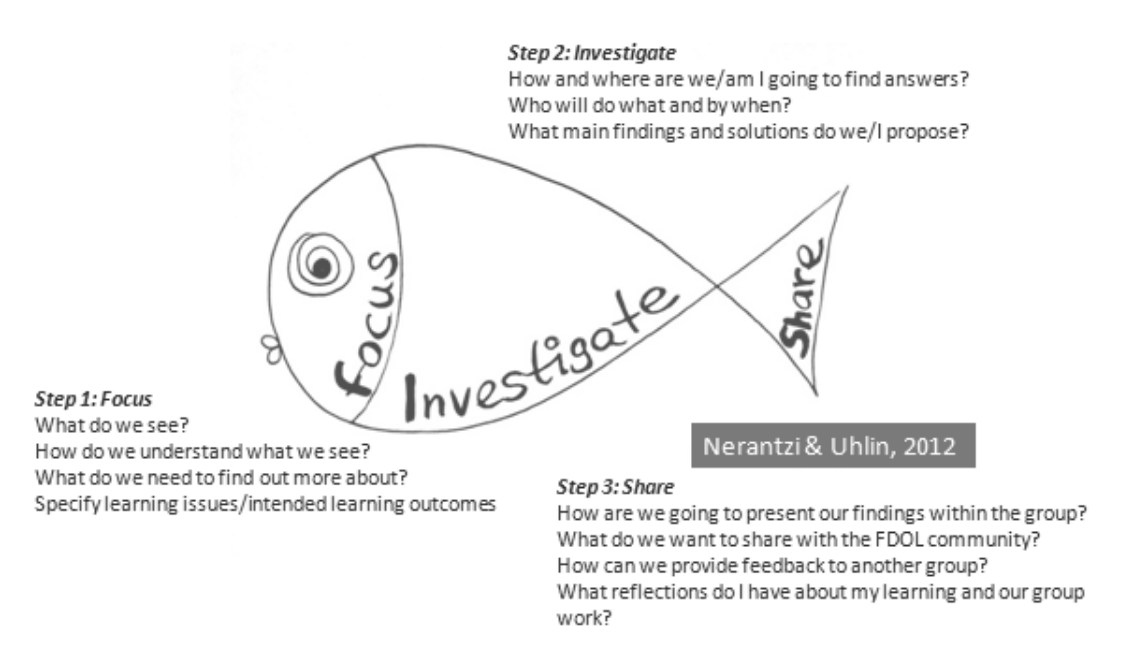
Following up on a LinkedIn post from Jörg Pareigis I rambled through some of the documentation on the Open Networked Learning course. "By building on the frameworks of PBL and Networked learning, we want to further explore how these frameworks can be utilized to create open, collaborative and online learning environments. An intention in designing the course is to develop a community of practice that can enhance understanding of what personal learning networks and environments can mean and how these can be built." Though of course nobody is calling it a MOOC, it shares some things in common with our experiments from the 2000s, including the ARRFF model (that they fall FISh, illustrated) and free registration. Its next start date is February 23.
Web: [Direct Link] [This Post][Share]
Finland Publication Forum will downgrade hundreds of Frontiers and MDPI journals
Retraction Watch,
2026/02/13

In keeping with my longstanding policy of not caring where an article was published, I have on occasion listed MDPI and (much less frequently) Frontiers journal articles here. My criteria for listing articles here are simple: what makes news is the fact that it's new... it reflects a rising trend, it describes a new approach to online learning, it recenters our thinking. I will say, though, that it's hard to keep up with the volume of articles from these sources, and it's easy to be sympathetic with the opinion posted in Nature recently that people should publish fewer papers. But that's not the problem; from where I sit, the real problem is that most academic publications are just authors going through to motions because that's what they're paid for (same with the LinkedIn posts that constantly reiterate the same themes over and over). But as Malgorzata Lagisz writes in a short follow-up, "For individuals to stop publishing and wait for institutions to fix broken incentives and prestige obsession is not the solution. Perhaps we should just let the increasingly dysfunctional publishing system collapse. Maybe then something better can take its place - something community-driven, transparent and not-for-profit." See also: the Discourse is a DDOS Attack via Harold Jarche.
Web: [Direct Link] [This Post][Share]
Brehove/pressbooks-cli
Joel Gladd,
GitHub,
2026/02/13
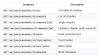
This is nice. This is a Python "command-line tool for managing Pressbooks textbook content. Pull chapters locally, edit them with AI coding assistants, and push updates back, including automated WCAG 2.1 accessibility remediation. (It is) built for higher ed faculty and instructional designers who maintain OER textbooks on Pressbooks and want a faster, more powerful editing workflow." Designed by Joel Gladd using Claude Code.
Web: [Direct Link] [This Post][Share]
How to Keep the Internet Human
Sarah Hinchliff Pearson,
Creative Commons,
2026/02/12
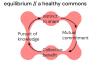
Creative Commons continues its campaign to redefine 'open' as 'closed'. It's getting to the point where I'm feeling like I should remove my Creative Commons licenses from my material - not because I want to stop people from using my stuff, but because I want to ensure that they can. In this post the argument is that the "instinct to share" is being eroded by a 'free-for-all' in which people use our content however they want. This 'instinct', though, is a complete fabrication that doesn't have any actual properties, just ones that have been made up. Anyhow, in this retelling everything is subject to new boundaries. "The ethics of sharing - which is what open is about - needs to be broader than what we can own." No. There never was an 'ethics of sharing'. This is also something being invented from nothingness. There is no transaction here - when I share my stuff, you can do whatever you want with it, except (obviously) own it. And I am not interested in some redefinition of the 'social contract' coming from south of the border.
Web: [Direct Link] [This Post][Share]
Revisiting 'the' Public Sphere, Again
Axel Bruns,
Snurblog,
2026/02/12
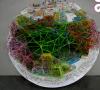
This of course seems right to me: "to still speak of 'the public sphere' may be a misnomer: our communicative environment has been reconfigured by contemporary digital and social media technologies to a point where it is no longer unitary, entirely public, or concentrically arranged around a set of agenda-setting mass media." So what may be said instead? In his slide presentation he talks about groups, communities, crowds and audience, though the best description is in the title, "From 'the' Public Sphere to a Network of Publics." (I'm surprised I can read the presentation on Slideshare without being slammed, so enjoy it while you can). See also.
Web: [Direct Link] [This Post][Share]
Democracy and the Swarm
Geoffrey Rockwell,
Theoreti.ca,
2026/02/12
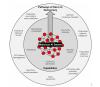
Gary Marcus likes to tell us that (neural network based) generative AI won't succeed, so it's a bit ironic to see him cited here (preprint here) as warning that the technology will destroy democracy. Still, the concern he raises is a valid one. "The "wisdom of crowds" works only if the crowd is made of distinct individuals. When one operator can speak through thousands of masks, that independence collapses. We face the rise of synthetic consensus." Quite so. This is a concern that was identified by the creators of blockchain, who faced the same issue when building consensus algorithms. Their solution was to make it too hard to be worthwhile to create fake voices, by adding an expensive 'proof of work'. That obviously won't work in a democracy (especially one inhabited by trillionaires). What we need instead is (what I'll call) "proof of life".
Web: [Direct Link] [This Post][Share]
Digital unravelling - losing Facebook and the transience of social media
Alastair Creelman,
The corridor of uncertainty,
2026/02/12

Once again a warning not to put all your faith in a platform owned by someone else. Alastair Creelman reports that "Last week I was suddenly and without explanation thrown out of Facebook and Messenger. I was scrolling through posts, as we all do, when a message appeared telling me that my account was suspended because activity on it didn't follow their Community standards on account integrity." He continues, "I have been a user for almost 20 years and have always been a responsible user, never making offensive comments or promoting disinformation or hatred." If you have some digital content that isn't backed up, stop what you're doing and back it up now. If it can't be backed up, get off that platform now.
Web: [Direct Link] [This Post][Share]
UK Higher Education VLE Market: 2025 Review
Neil Mosley,
Neil Mosley Consulting,
2026/02/12

There's a fair bit of in-the-weeds discussion, though "the story presented by this year's analysis almost perfectly reinforces overarching market trends seen in recent years. These include Instructure's Canvas being selected by a growing number of UK HE providers and increasingly becoming the choice for Russell Group universities looking to switch, as evidenced by Imperial College's decision this past year. Similarly, D2L's Brightspace continues to be frequently selected, with the company growing its number of UK HE customers again this year."
Web: [Direct Link] [This Post][Share]
The 2025 Emerging Technology Survey findings are available!
Nicole Johnson,
Canadian Digital Learning Research Association,
2026/02/12
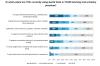
This is a relatively short document (9 page PDF) outlining a survey of post secondary institutions on potential AI use in education (see the methods here). "Survey respondents continue to foresee GenAI becoming a normal part of education, and an increasing proportion recognize its potential as a study tool. At the same time, concerns that GenAI will make teaching more challenging are also rising."
Web: [Direct Link] [This Post][Share]
Higher Education Beyond the Public Good
Alex Usher,
HESA,
2026/02/12
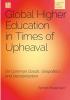
This is quite a good interview with Simon Marginson, author of Global Higher Education in Times of Upheaval, available as open access (337 page PDF) and itself recommended. The premises is that in the anglophone world, the public role of the university, as defined by governments, has been reduced to a purely economic role. "The state framework of regulation had decisively shifted into pure economism, if you like - the idea that the higher education system has to deliver for capital, and that is its sole rationale." So instead we turn to the 'common good': "the idea of a community committing to higher education as something that benefits it, and as an instrument for its own betterment and development."
Web: [Direct Link] [This Post][Share]
There are many ways to read OLDaily; pick whatever works best for you:
- Read in your web browser on this web page, updated weekdays
- Receive a daily or weekly email newsletter by subscribing here
- Subscribe to the RSS feed using your favourite feed reader
- Follow @OLDaily@mastodon.social on Mastodon or elsewhere in the fediverse
- Follow @OLDaily on Bluesky
- Read OLDaily as a LinkedIn Newsletter
- Integrate the open API using the JSON feed
This newsletter is sent only at the request of subscribers. If you would like to unsubscribe, Click here.
Know a friend who might enjoy this newsletter? Feel free to forward OLDaily to your colleagues. If you received this issue from a friend and would like a free subscription of your own, you can join our mailing list. Click here to subscribe.
Copyright 2026 Stephen Downes Contact: stephen@downes.ca
This work is licensed under a Creative Commons License.