
If you didn't get yesterday's newsletter you can find it here
Entangled cognitions: a complexivist perspective on AI and learning – slides from my invited talk at “Artificial Intelligence and the Humanities: Critical Thinking in the Algorithmic Era”, IHU, Brazil
Jon Dron's home page,
2026/10/09
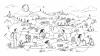
I just want to say, I absolutely love the drawings in Jon Dron's presentation, Entangled Cognitions and AI: a Complexivist Perspective on AI and Learning, "an attempt to situate generative AI in the context of complexivist approaches to learning such as Connectivism, Rhizomatic Learning, Landscapes of Practice, Entanglement, Enactivism, and many other theoretical models that treat learning as a complex phenomenon." I'm not sure I buy into the new terminology of 'complexitivism', which to me looks an awful lot like connectivism, but that doesn't impact the value of this presentation, which I heartily recommend. And in fairness, I may be missing some nuance, since I don't see a recording or transcript (why people don't record their presentations remains a mystery to me)..
Web: [Direct Link] [This Post][Share]
The people holding up the internet
sheets.works,
2026/10/09
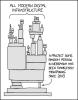
It's worth knowing that (a) some of the most important applications that hold the internet together are run by a small number of people doing it mostly in their spare time, and (b) government and industry have not found it worth their time or effort to provide any support at all to most of these people. Via D'Arcy Norman.
Web: [Direct Link] [This Post][Share]
The Seven Deadly Fediverse UX Sins: A Redemption Report Card
Tim Chambers, Sean Tilley,
2026/10/09

I think of these as design problems more than UX issues. Still, they're real and plague the fediverse even now. The list includes: instance selection issues, confusing timelines, difficulty following people, direct messaging issues, search, content discovery, and user discovery (the last three are variations on a single theme). Most of the solutions described in the post come in the form of third party apps: for example, "Services like tags.pub, relay.fedi.buzz, andtagpush.app already provide followable ActivityPub actors for each hashtag." Also, "Activity Intents just landed. Fediscovery is actually available to test." Will these solve the usability problems? I'm inclined to say no. This post is a follow-up to "Tim's Part 1 and Part 2, and Sean's solutions" and you may want to read them first, though it's not necessary.
Web: [Direct Link] [This Post][Share]
Signal Flow - How Léo Laporte runs AI at home and in the cloud
Léo Laporte,
Leo's Studio,
2026/10/09

This is a complex presentation of how "Léo Laporte runs AI at home and in the cloud: the machines in the attic, the models in the cloud, the agents, the voices, the memory, and what a year of it taught him. October 2026 edition" (Laporte is a tech journalist and host of TWIT). To figure out what's going on, your best bet is to scroll down to "Follow a thought through the house" and pick a scenario (such as "What's on my calendar?") The different stages will be listed on the right; click on them and watch as the components interact. If you want this at home, prepare to spend some money; the two DGX Sparks come in at roughly $10K per.
Web: [Direct Link] [This Post][Share]
Autonomy for the people
David Kernohan,
WonkHe,
2026/10/09

In many parts of the world universities are mostly autonomous, even though they are largely funded by government. It can feel like a black box: put money in, and get what you hope are educated people and research output out the other end. This article looks at the concept of university autonomy in the UK, from its origins in universities as religious institutions, to its present-day role as a bargaining position and advocacy of the idea that the best people to determine how to teach and research are teachers and researchers. There's a point to that; my dental insurance thinks it knows more about dentistry than my dentist, which is how I got an $8 payment this week. The money quote is near the end, where author David Kernohan suggests that freedom of speech legislation "has, arguably, removed the ability of the academy to discard old, discredited, and harmful ideas with impunity."
Web: [Direct Link] [This Post][Share]
7 Things You Should Know About Instructional Continuity
Jennifer Culver, et al.,
EDUCAUSE Review,
2026/10/09

Instructional continuity is "an institution's ability and commitment to sustain high-quality teaching and learning during and after a disruption." It's needed because "cyberattacks, technology outages, severe weather, public-health emergencies, political unrest, and infrastructure failures can cause disruptions." These are often hard to predict, and the biggest challenge is maintaining institutional commitment in the period between disruptions. Personally, I would have emphasized 'learning continuity', because that's what's important, but that's not how these institutions roll.
Web: [Direct Link] [This Post][Share]
Participedia
Participedia,
2026/10/09

Participedia is "a global network and crowdsourcing platform for researchers, educators, practitioners, policymakers, activists, and anyone interested in public participation and democratic innovations." The scale of the resource is daunting: there are 2435 cases and 399 methods listed. There's also an associated Participedia community that "established research clusters in several thematic areas under the umbrella of democratic innovations." The chatbot confidently told me there's an RSS feed and API, but neither link worked. Via Alan Levine.
Web: [Direct Link] [This Post][Share]
EdTech Can Work. Decision Makers Have to Check the Evidence First.
Sal Khan,
LinkedIn,
2026/10/09

This is an argument offered by Sal Khan to rebut the suggestion that there is no evidence that educational technology (ed tech) 'works'. " A randomized controlled trial addresses that directly. Students or schools are assigned by chance, and the comparison is between the groups as a whole, including students who barely used the product. This answers 'what happens if a school adopts this?' rather than 'what happens to the students who loved it?'" Of course there are many more contexts for consideration, and many definitions of 'works', subtleties that are ignored here; they're not Sal Khan's audience. It's a LinkedIn Pulse article; dismiss the login popup and you should have no problem reading it. Here's some interesting discussion on the post.
Web: [Direct Link] [This Post][Share]
There are many ways to read OLDaily; pick whatever works best for you:
- Read in your web browser on this web page, updated weekdays
- Receive a daily or weekly email newsletter by subscribing here
- Subscribe to the RSS feed using your favourite feed reader
- Follow @OLDaily@mastodon.social on Mastodon or elsewhere in the fediverse
- Follow @OLDaily on Bluesky
- Read OLDaily as a LinkedIn Newsletter
- Integrate the open API using the JSON feed
This newsletter is sent only at the request of subscribers. If you would like to unsubscribe, Click here.
Know a friend who might enjoy this newsletter? Feel free to forward OLDaily to your colleagues. If you received this issue from a friend and would like a free subscription of your own, you can join our mailing list. Click here to subscribe.
Copyright 2026 Stephen Downes Contact: stephen@downes.ca
This work is licensed under a Creative Commons License.