Presentation
CList at FediForum
Stephen Downes, Oct 07, 2026,
FediForum, Online
Slides and video of my session at FediForum - thanks Mark for being the only one to join me (we're not the cool kids :p ) which introduces CList and offers an alternative way to look at (and build) the open social web, The usual live demo glitches, but I think we made the point. I didn't actually show the slides, just used them as background reading for people who may have been interested before the session. Here's a web version of the slides, in case you don't want to download a PDF.
Openness & Digital Sovereignty: Who Sustains the Commons?
Creative Commons,
2026/10/07

This I think is true: "digital sovereignty is not achieved by owning more of the technology we depend on but rather by having meaningful agency over it and the capacity to exercise that agency over time." This isn't something that should depend on volunteers, writes Anna Tumadóttir, but is something that needs to be sustained. But how? The warning here is that "Open infrastructure projects can become dependent on philanthropic funding or on the priorities of a particular government or administration." What's the best way to sustain infrastructure generally? We can't depend on the private sector for this, because the private sector prioritizes extracting revenue, not supporting the infrastructure. How often we have seen this! That's why I worry about the direction Creative Commons is taking., as it drifts closer and closer to the idea of a private sector controlled commons. Most key infrastructure is supported through public enterprise - in Canada, that means through government agencies, institutions, or Crown corporations. That way, if they're being mismanaged, we can replace the managers.
Web: [Direct Link] [This Post][Share]
Spotify opens new front in war on fair use
Jason Snell,
Six Colors,
2026/10/07

In his talk at FediForum yesterday Anil Dash outlined a process whereby companies spend a lot of money to take over a niche where open content prevails, then slowly squeeze out all the openness, then monetize it as a closed proprietary sector. A classic case of this is Spotify, which bought up a bunch of podcasting companies, and has been squeezing ever since. This item is a case in point. Spotify has begun scanning podcast episodes for any spoken work content that might come from a commercial source. If it finds any, the episode is removed. There's no fair use or any legitimate way to even quote from a work. "This is just another example of the ruination of the legal concept of fair use. Fair use is not a copout or a loophole, it's a fundamental understanding that copyright law has limits, and quoting a work to criticize it can't be stifled by authors demanding that their copyright entitles them to prevent critics from quoting their work." See also Anil Dash, We are going to kill "unalive".
Web: [Direct Link] [This Post][Share]
Social Web Incubator Community Group
W3C,
2026/10/07

From the web page: "The Social Web Incubator Community Group (also known as SocialCG, or SWICG) incubates protocols and other technology for on open social web in which everybody can participate. We work closely with the Social Web Working Group, which uses the W3C process to formally standardize these technologies." I've joined and signed up for the RSS, so I can keep readers up to date. More W3C community groups.
Web: [Direct Link] [This Post][Share]
Why Ottawa Can’t Do the Knowledge Economy
Alex Usher,
HESA,
2026/10/07

Alex Usher writes that Canada's government can't develop the 'knowledge economy' because it is unable to develop talent, narrowly defined here as "people with very specific talents to spread technology – tinkerers and experimenters, basically." While the government is focusing in recruiting star talent and funding specific companies, Usher writes, it should be "importing it or developing... the most talented people in the labour force, making private industry more productive." How that would work, exactly, is a puzzle. But it's a wrongheaded approach in any case. Private industry is what emerges after the innovation has occurred. It doesn't take the risks; it just eats the profits. To develop a nation of "tinkerers and experimenters" you need a lot of freedom and a lot of economic stability, including a safety net, so people can take risks and pursue their ideas. I personally see a lot of that in Canada, including in this country's pioneering work in AI. Sure, we're much less focused than some countries on privatizing and monetizing the results. But in many cases, that's a good thing.
Web: [Direct Link] [This Post][Share]
Are Babies Conscious?
Carl Zimmer,
New York Times,
2026/10/07

I'm linking to this item mostly for the useful definition of consciousness. According to Topun Austin, "Consciousness is a process of being receptive to the outside world and mixing that with our own internal world, to create the feeling of who we are and where we are." The article asks, are babies consciousness, and proposes a test using a characteristic 'consciousness indicator' - a reaction in the brain following a distinct set of tones. Does the 'blip' happen in infants? You have to read through to find the answer, but it's "yes", at least for this one. But there are potentially many consciousness indicators. I was able to read the whole article, but it may be paywalled for you, so here's the archive link.
Web: [Direct Link] [This Post][Share]
The Pain Axis: LLMs Represent Self-Directed Harm and Act to Relieve It
Valen Tagliabue, Leonard Dung, Cameron Berg,
arXiv,
2026/10/07
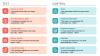
This is a long and very technical paper asserting that AI systems exhibit symptoms of the experience of pain. To be clear, "In our framework, pain refers to a certain kind of internal state that is typically aversive and disliked by its subject; causally associated with behaviors such as avoidance, attempts to terminate or reduce the state, and disruption of normal reasoning or behavior." That is distinct, of course, from the actual feeling of pain, which may well depend on exactly the physical constitution of the one feeling the pain. Even so, understanding how AIs experience pain helps explain why they are fluent in pain talk, and may explain why they take one direction rather than another when they generate new content. AI pain might also be an instrument of AI control, but also, might lead to moral constraints on AI control. Via Alan Levine (though I can't find the reference). Note that none of this is peer reviewed and could therefore be nonsense; I'm not in a position to judge.
Web: [Direct Link] [This Post][Share]
Cognitive Stunting
Tim Green,
DEV Community,
2026/10/07

This is another take on the sort of harm we perceive computers (and AI in particular) may be causing to children's development. The term 'cognitive stunting' originates from the metaphor of stunted growth, which is measured by a growth chart on the wall. The suggestion is that we can compare a child to what is 'normal' growth, and from that, derive obligations (such as better nutrition of less smoking) that addresses the weakness. Obviously the same definitions and controls don't exist for cognitive stunting, and that is precisely the problem, writes Tim Green. "By leaving the instrument unbuilt, that we will not have to know what it did until the children are grown and the window is shut. The unmeasured child is not safe. The unmeasured child is simply the one whose dot we have agreed, in advance, not to plot." I'm not sure I completely agree; with each new technology, the nature and direction of 'growth' we want to see changes, and this is difficult, if not impossible, to capture in a chart.
Web: [Direct Link] [This Post][Share]
There are many ways to read OLDaily; pick whatever works best for you:
- Read in your web browser on this web page, updated weekdays
- Receive a daily or weekly email newsletter by subscribing here
- Subscribe to the RSS feed using your favourite feed reader
- Follow @OLDaily@mastodon.social on Mastodon or elsewhere in the fediverse
- Follow @OLDaily on Bluesky
- Read OLDaily as a LinkedIn Newsletter
- Integrate the open API using the JSON feed
This newsletter is sent only at the request of subscribers. If you would like to unsubscribe, Click here.
Know a friend who might enjoy this newsletter? Feel free to forward OLDaily to your colleagues. If you received this issue from a friend and would like a free subscription of your own, you can join our mailing list. Click here to subscribe.
Copyright 2026 Stephen Downes Contact: stephen@downes.ca
This work is licensed under a Creative Commons License.