The School in the Cloud project - Results, Status, and a Sustainable Model
Sugata Mitra, Ritu Dangwal, Radhika Roy,
2025/11/19
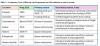
This is a follow-up to the projects that followed Sugata Mitra's Hole-in-the-Wall project. As we read in the abstract, "this study examined long-term sustainability and impact of the School in the Cloud (SC) initiative using Self-Organised Learning Environments (SOLEs)." It's not good. Seven of the eight projects have been discontinued, mostly because of lack of funding and change of leadership. Even so, write the authors, "qualitative evidence uniformly affirms the original educational promise. Former participants - now in college or employment - credit SC exposure with durable gains in English proficiency, digital literacy, internet search competence, and self-confidence." 16 page PDF.
Web: [Direct Link] [This Post][Share]
Review and Validation of the Benchmarking of Technology-Enabled Learning
Sanjaya Mishra, Nitesh Kumar Jha, Kaushal Kumar Bhagat,
Journal of Learning for Development,
2025/11/19
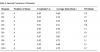
As the title suggests, this article (19 page PDF) offers a validation of the Technology-Enabled Learning (TEL) benchmark for higher education institutions (view the 'Validation' section of my paper here for a quick overview of validation methods). Overall, the TEL benchmark was validated, though worth noting are the two lowest-scoring indicators for content validity: "one is related to financial support, which is normally always considered inadequate, and the other concerned a centralised approach to monitoring the ICT policy." It was also interesting to read the comparisons between institutions in the different domains of the benchmark. Documentation was weak across the board, as is always the case, it seems, with technology.
Web: [Direct Link] [This Post][Share]
Google Antigravity
Simon Willison,
Simon Willison's Weblog,
2025/11/19
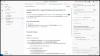
Simon Willison reports, "Google's other major release today to accompany Gemini 3 Pro. At first glance Antigravity is yet another VS Code fork (or) Cursor clone - it's a desktop application you install that then signs in to your Google account and provides an IDE for agentic coding against their Gemini models." But, he says, it's a lot more than that. I haven't tried it yet, but I'll follow "the official 14 minute Learn the basics of Google Antigravity video on YouTube." I use VS Code a lot, so it will take quite an improvement to get me to switch.
Web: [Direct Link] [This Post][Share]
Citation Style Language
GitHub,
2025/11/19

This is a project to "facilitate scholarly publishing by automating the formatting of citations and bibliographies." Each of thousands of different styles is represented in an XML file defining reference and citation fields and formatting. This allows different applications to read and write references in standardized ways, allowing authors to generate reference and citation lists by entering the appropriate values into a form. "CSL is defined by two documents: the human-readable CSL specification, and the computer-readable CSL schema." Via Alan Levine.
Web: [Direct Link] [This Post][Share]
Beyond the Mic: Podcasting in a Social Foundations of Education Course
Jacob Kelley,
International Journal for the Scholarship of Teaching and Learning,
2025/11/19
This article (14 page PDF) studies the use of podcasting to promote critical consciousness. "Freire conceptualized critical consciousness as the deep awareness of social, political, and economic oppression coupled with the action needed to transform these conditions." Based on interviews with ten self-selected students, Jacob Kelley writes, "By the end of the project, students expressed not only a greater understanding of inequities but also a commitment to addressing them in their future classrooms." So they learned what they were being taught. But did podcasting make the difference? Kelley writes, "multimodal assignments like podcasting allow students to engage with course content in dynamic, creative, and reflective ways." But I don't think we're really shown this in this article.
Web: [Direct Link] [This Post][Share]
What does it really mean to serve a community today?
Journalism UK,
2025/11/19

As I've commented in the past, education and news media are similar in many ways. This article focuses on who they serve, and how. The suggestion is that "communities yearn for a sense of pride, validation or a confidence boost - outcomes which benefit their lives, not just increasing our page views." I'm not sure these are top of mind for most communities today. What do communities need? There are versions of a Maslow's hierarchy for communities, like the Gray hierarchy described here, or the community building hierarchy. These are routes enabling educational institutions to become integrated and indispensable, which is their key to long-term survival and success, in my view.
Web: [Direct Link] [This Post][Share]
Life’s biggest moments are flukes, not fate
Brian Klaas,
Big Think,
2025/11/19
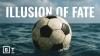
I think it's important to understand the substance of this post in order to come to any sort of understanding of the world (and by that, I include most of what we know about how students learn, how to prepare them for the future, and how to explain AI). It's this: "through survival of the fittest and evolutionary patterns, our brains are hyper attuned to pattern detection. This means that when random or seemingly random things happen to us, we're allergic to the explanation that it was just arbitrary... when you look closely at the nature of causality, reality and existence, is that things that are bewildering are happening all the time, and we just ignore them." There's no single cause for anything; everything is a chaotic mash of causal connections. Sure, we can influence outcomes, but we can't control them.
Web: [Direct Link] [This Post][Share]
There are many ways to read OLDaily; pick whatever works best for you:
- Read in your web browser on this web page, updated weekdays
- Receive a daily or weekly email newsletter by subscribing here
- Subscribe to the RSS feed using your favourite feed reader
- Follow @OLDaily@mastodon.social on Mastodon or elsewhere in the fediverse
- Follow @OLDaily on Bluesky
- Read OLDaily as a LinkedIn Newsletter
- Integrate the open API using the JSON feed
This newsletter is sent only at the request of subscribers. If you would like to unsubscribe, Click here.
Know a friend who might enjoy this newsletter? Feel free to forward OLDaily to your colleagues. If you received this issue from a friend and would like a free subscription of your own, you can join our mailing list. Click here to subscribe.
Copyright 2025 Stephen Downes Contact: stephen@downes.ca
This work is licensed under a Creative Commons License.