Navigating the Jagged Technological Frontier: Field Experimental Evidence of the Effects of AI on Knowledge Worker Productivity and Quality
Fabrizio Dell'Acqua, et al.,
Harvard Business School,
2025/09/26
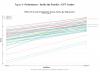
Rose Luckin cited this paper (58 page PDF) today, and though it's a year or two old, it still makes some interesting points. The authors were trying to measure how much (if at all) the use of AI would improve the performance of people performing some standard business consultation tasks. They broke down the tasks into two types, separated by a 'jagged frontier': those based on existing knowledge (from the perspective of the AI), and those extending beyond it. The results were to be expected: a performance improvement across the board, but with increasing error as the frontier is breached. The authors also identified two ways to use AI: 'Centaur behavior', where tasks are allocated according to the strengths of AI or human; and 'Cyborg behavior', where humans "intertwine their efforts with AI at the very frontier of capabilities." The thing to keep in mind is that the 'jagged edge' is a moving target. Today the knowledge of an AI is limited to "every book ever written". In the future, an AI will experience the world directly, without human interpreters.
Web: [Direct Link] [This Post][Share]
The AI Tsunami Is Here: Reinventing Education for the Age of AI
Tanya Gamby, David Kil, Rachel Koblic, Paul LeBlanc, Mihnea Moldoveneau, George Siemens,
EDUCAUSE Review,
2025/09/26

This is another 'first of a series' post from the Matter and Space crowd. The authors are attempting to answer the question "What does a university look like in the world that emerges from this period of great upheaval?" and they approach it using something like a systems model, proposing "a model we call interactionalism," that is, "a set of principles for designing the skills and knowledge learners need - and the mechanisms by which they acquire them - in a world where human and machine intelligence work together." The terminology strikes me as a blend of 'connectivism' and 'human-autonomy teaming'. The framework seems reasonable, overall, but I would have to ask why the model, which includes things like "dynamic, adaptive content" and "multiple perspectives and sources" and "cultivation of self-directed learning" needs to happen in a university as such. Why not develop something like this as asociety-wide initiative, removing the barriers for entry, and making it an ongoing part of people's lives?
Web: [Direct Link] [This Post][Share]
Designing for Transfer: Developing a Skill-Based Simulation Using Learning Engineering Design Frameworks
ModSimWorld 2025,
2025/09/26
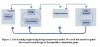
This is a paper from ModSimWorld from this year, shared on the Learning Engineering mailing list. The point is to show how 'learning engineering' design principles can be applied to the pedagogical design of a simulation exercise (specifically, pipefitting) using 3D-printed models. The point of the exercise ("independent application of blueprint interpretation, component layout, and precise measurements on a metal mock-up") is to teach participants how to read the blueprints and apply them correctly in practice. I would be hard-pressed to distinguish between the actual design framework (illustrated) and the well-worn ADDIE framework, so really what we have here is kind of a 'how-to' presentation, as in the sense of '"here's how I designed a pipefitting simulation". Nothing wrong with that, the internet is full of similar examples, and they help people learn how to do these things, though a formal PDF might not be the best medium to convey this knowledge.

Web: [Direct Link] [This Post][Share]
Generative AI in Design Thinking Pedagogy: Enhancing Creativity, Critical Thinking, and Ethical Reasoning in Higher Education
Vishal Rana, Bert Verhoeven, Australia Madhav Sharma,
Journal of University Teaching and Learning Practice,
2025/09/26
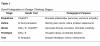
This (22 page PDF) is a "mixed methods analysis of 112 student reflections from a 12-week course." As the abstract states,"we examined experiences with GenAI tools... Sentiment analysis showed 86% positive responses, though ethical concerns generated significant negative sentiment (62%). Findings demonstrate that GenAI, when pedagogically scaffolded, augments rather than replaces human judgment. Students evolved from passive users to critical evaluators, developing strategies for bias detection and source validation." This kind of analysis is a super-common type of publication, is obviously a narrow snapshot, and when reading this type of article I evaluate it as an opinion piece (where the opinions are those of the students, which are being collected and summarized by the authors). Because the sample is so small, the percentages mean nothing, and what I do is sort the responses into buckets of 'possible responses to AI'. The literature review is also a useful if opinionated summary of previous work pointing to mechanisms for identifying and categorizing the discussion; I liked the mapping of generative AI integration into design thinking stages (illustrated). This is not nothing, and there's value in collecting a wide range of opinions.

Web: [Direct Link] [This Post][Share]
Artificial Intelligence in Educational Research and Scholarship: Seven Framings
Journal of University Teaching and Learning Practice,
2025/09/26
There are those who draw a sharp distinction between formal academic papers and blog posts, and then there's me, who reads something like this (16 page PDF), and sees nothing more than a set of short blog posts, where "writing was conducted in a sprint over the summer of 2025 using a shared Google doc." I'm not saying this is bad (though the resulting article is a bit loose and unfocused) but I remind readers that academic research in this domain should properly consider, and credit, not only formal journal articles, but also the original blogs where so many of the ideas are originally posted.
Web: [Direct Link] [This Post][Share]
There are many ways to read OLDaily; pick whatever works best for you:
- Read in your web browser on this web page, updated weekdays
- Receive a daily or weekly email newsletter by subscribing here
- Subscribe to the RSS feed using your favourite feed reader
- Follow @OLDaily@mastodon.social on Mastodon or elsewhere in the fediverse
- Follow @OLDaily on Bluesky
- Read OLDaily as a LinkedIn Newsletter
- Integrate the open API using the JSON feed
This newsletter is sent only at the request of subscribers. If you would like to unsubscribe, Click here.
Know a friend who might enjoy this newsletter? Feel free to forward OLDaily to your colleagues. If you received this issue from a friend and would like a free subscription of your own, you can join our mailing list. Click here to subscribe.
Copyright 2025 Stephen Downes Contact: stephen@downes.ca
This work is licensed under a Creative Commons License.