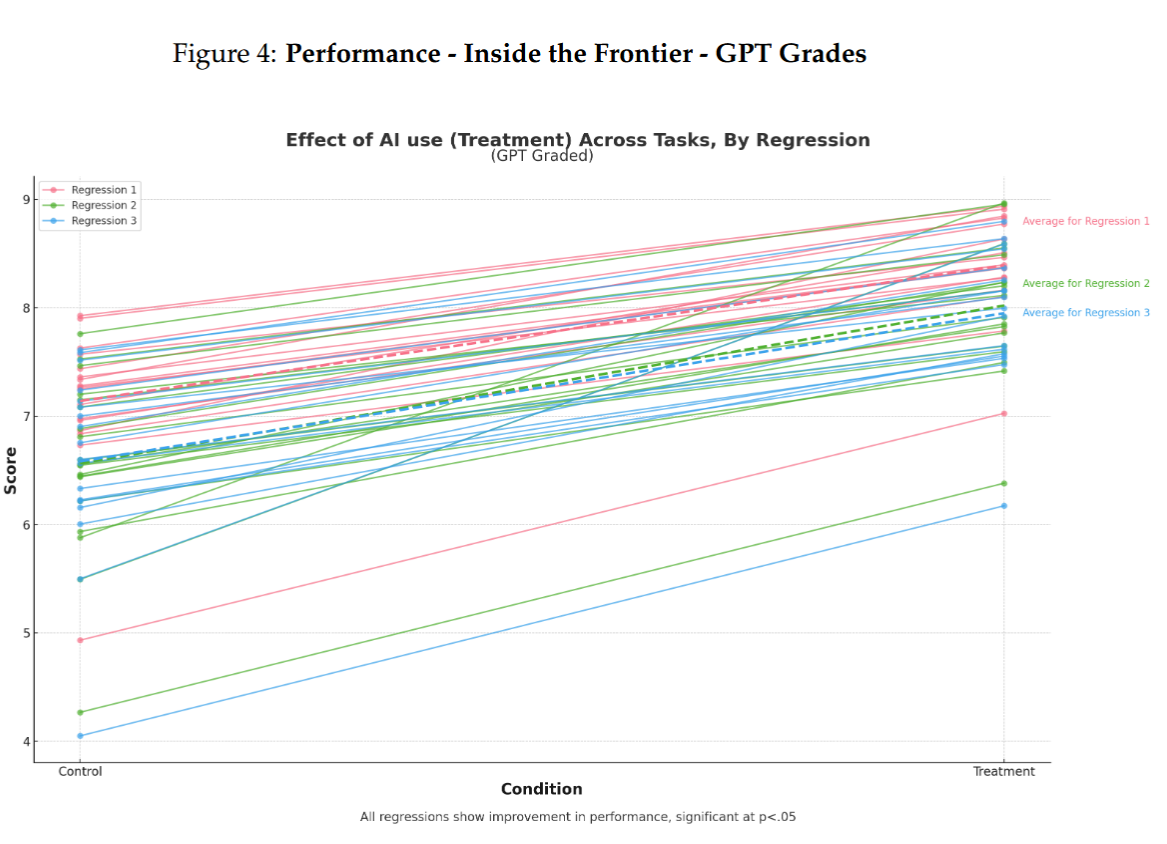
Rose Luckin cited this paper (58 page PDF) today, and though it's a year or two old, it still makes some interesting points. The authors were trying to measure how much (if at all) the use of AI would improve the performance of people performing some standard business consultation tasks. They broke down the tasks into two types, separated by a 'jagged frontier': those based on existing knowledge (from the perspective of the AI), and those extending beyond it. The results were to be expected: a performance improvement across the board, but with increasing error as the frontier is breached. The authors also identified two ways to use AI: 'Centaur behavior', where tasks are allocated according to the strengths of AI or human; and 'Cyborg behavior', where humans "intertwine their efforts with AI at the very frontier of capabilities." The thing to keep in mind is that the 'jagged edge' is a moving target. Today the knowledge of an AI is limited to "every book ever written". In the future, an AI will experience the world directly, without human interpreters.
Today: Total: [] [Share]