Emotion research has a communication conundrum
Nicole Rust,
The Transmitter,
2025/09/05

This is a surprisingly rich discussion on the nature of emotions and how we describe them, especially for those who read the contributions from experts and the links they provide. Nicole Rust summarizes, "An emotion has three components: physiological changes (such as a galvanic skin response or pupil dilation), a behavioral response (such as a facial expression or running away) and a feeling based on cognitive appraisal of the situation and interpretation of body states." Similarly, "The Stanford Encyclopedia of Philosophy offers a helpful tripartite scheme: emotions as feelings or qualia, emotions as evaluations or appraisals, and emotions as motivated states or causes of behavior," says Darius Valevicius. But these just scratch at the surface, and debates continue about (for example) whether emotions are felt or constructed.
Web: [Direct Link] [This Post][Share]
Wittgenstein, Turing, and AI: Foundations of Mathematics and Limits of Formal Systems
Michael Peters,
2025/09/05
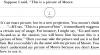
This is a really nice set of slides that captures the interactions between Ludwig Wittgenstein and Alan Turing during the former's 1939 lectures on the foundations of mathematics (you can read the summary of them here, which I highly recommend; readers will see a lot of Wittgenstein in my own work). This nice slide presentation frames the discussion as a confliuct between Turing's formalism and Wittgenstein's critique, though the issues are rather more subtle than that (here's a good example: "(Turing) arguing that contradictions could cause real-world failures, like bridges collapsing. Wittgenstein countered that contradictions don't 'explode' mathematics but reveal misinterpretations of rules"). Still, the framing allows us some understanding of the tensions people feel today in both learning theory and artificial intelligence, and is well worth reviewing. More.
Web: [Direct Link] [This Post][Share]
Principles for Open Impact
Doug Belshaw,
Open Thinkering,
2025/09/05
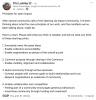
"Networks 'require' openness," summarizes Doug Belshaw. "Everyone needs to be able to take part and see themselves as part of the network helping enable the bigger thing." But, "is 'common purpose' necessary in working openly? Does everyone have to be working towards the same ends?" No. Even if we have different objectives, "we can all talk about something which is important to all of us." This, though, I would characterize as cooperation rather than collaboration. It's an important distinction.
Web: [Direct Link] [This Post][Share]
Towards a Micro-credential Framework for the Commonwealth
Rebecca Ferguson, Ratna Malar Selvaratnam, Vivekanandan S. Kumar, Sanjaya Mishra, Jako Olivier, et al.,
Commonwealth of Learning,
2025/09/05

According to this report (184 page PDF), microcredentials are "digital credentials awarded for shorter learning experiences - including courses - that show a record of focused learning achievement and verify what the learner knows, understands, or can do." They "may be associated with digital portfolios or ecosystems, which support lifelong learning by maintaining a record of both formal and informal learning experience." They can support "flexibility for learners, alignment with workplace needs, and stackability." Issues include cost of assessment, and quality assurance. The report outlines perceptions of microcredentials and supporting technologies, including blockchain, open badges, digital wallets, learning management systems, crdentialling platforms, and verification technologies. I like especially the section at the end discussiong emerging technologies, including federated learning, zero-knowledge proofs, and interoperability. The outcome of the report is a framework (8 page PDF) for microcredentails in the Commonwealth.
Web: [Direct Link] [This Post][Share]
There are many ways to read OLDaily; pick whatever works best for you:
- Read in your web browser on this web page, updated weekdays
- Receive a daily or weekly email newsletter by subscribing here
- Subscribe to the RSS feed using your favourite feed reader
- Follow @OLDaily@mastodon.social on Mastodon or elsewhere in the fediverse
- Follow @OLDaily on Twitter
- Integrate the open API using the JSON feed
This newsletter is sent only at the request of subscribers. If you would like to unsubscribe, Click here.
Know a friend who might enjoy this newsletter? Feel free to forward OLDaily to your colleagues. If you received this issue from a friend and would like a free subscription of your own, you can join our mailing list. Click here to subscribe.
Copyright 2025 Stephen Downes Contact: stephen@downes.ca
This work is licensed under a Creative Commons License.