I Made a Real Fly Brain Play Pong. It Didn’t Learn - And That’s the Interesting Part
Medium,
2026/09/10

This sort of article is really interesting to me, both for the subject matter, and for the fact that someone can deeply embed themselves into advanced scientific topics like this. OK, to be clear, it wasn't a real fly that played Pong, it was a real fly connectome from the recently released MaleCNS v1.0, "the first complete wiring diagram of an adult male fruit fly's brain and central nervous system... released publicly through neuPrint." Neuprint is a whole world worth exploring in itself, but I digress. Anyhow, the result was that the fruit fly model did not learn as it played Pong. Why not? The article traces a few obvious approaches, but as the author argues, "a wiring diagram isn't automatically a working circuit for a task it wasn't built for." It might be, in other words, that fruit fly brains are incapable of learning to play Pong.
Web: [Direct Link] [This Post][Share]
Two years ago, Meta killed CrowdTangle. Can a new AI tool fill the void?
Andrew Deck,
Nieman Lab,
2026/09/10

You read something on social media. You might want to know not only whether it's true, but where it came from, why it's there, and what might likely result. Meta had a tool called CrowdTangle to sort out the threads, but it was ultimately uninterested in it and killed it off in 2024. This article describes a new approach called Arbiter that "uses large language models (LLMs) and AI agents to pull posts from social media platforms and analyze them at scale. It collects data from social media APIs, academic data dumps, and third-party data scraping companies." Read down the story for a good illustration helping a journalist understand Mongolian libel law (more interesting than it sounds).
Web: [Direct Link] [This Post][Share]
AI Framework for Educator Preparation
Peña Bedesem, Leticia De Leon, et al.,
American Association of Colleges for Teacher Education,
2026/09/10
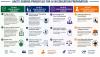
This report is brief (7 page PDF) but tightly written; I've seen 30 page reports on the same subject with less content. The framework is based on four pillars: (one) ethical, which includes right to refuse, AI literacy and equitable access; (two) practice, which focuses on tyes of AI, continuous professional development, and evaluation; (three) cognitive, including co-development with teachers, cognition and bias, and cognitive load; and (four) expertise, including professional judgment, pedagogical expertise, and human relationships. As a summary of what many groups have been saying over the last year, it's not a bad framework.
Web: [Direct Link] [This Post][Share]
Online Enrollments Have Found a New Equilibrium
Phil Hill,
On EdTech Newsletter,
2026/09/10
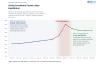
This is interesting data, at least for U.S. based institutions (though I would be surprised were the trend not the same elsewhere as well). Online learning, writes Phil Hill, has reached a new equilibrium point, lower than peak levels during the pandemic, but noticeably higher than what we saw before. "Within that equilibrium, undergraduate and graduate online enrollment look quite different once we separate mixed-modality from exclusively online students, despite nearly identical topline participation rates. And at the institutional level, online growth can represent genuine expansion or simply offset losses elsewhere."
Web: [Direct Link] [This Post][Share]
The Knowledge Concentration
Hinnerk Frech,
Dataetisk Tænkehandletank,
2026/09/10

I don't for a moment believe that 'learning' is the same as 'stealing knowledge', but I get the concern expressed here that the result of AI learning from books and online text is a concentration of capability (I won't call it 'knowledge' because it's arguable that current AIs do not 'know' in the sense of, say, justified true belief). This centralization is a concern, but in my view the response is not to restrict access to books and online text (as much as publishers and commercial enterprise would like us to) but rather to develop additional and alternative AI. After all, current AI is nothing more than mathematics plus data plus (to a lesser extend) algorithms. The key inputs are access and computing power. Today the bottleneck is computing power, but this is not a permanent condition. Let's not turn off the tap after only the rich have had their fill; let's keep access to data open so we can all sate out thirst.
Web: [Direct Link] [This Post][Share]
Creativity Doesn’t Have to Look Flashy
John Spencer,
Spencer Education,
2026/09/10
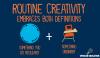
John Spencer returns from a big problem-based learning conference full of flashy and high-level demonstrations and feels he isn't really up to the standard being set. But then he argues that what's at stake isn't the project or the publicity but rather the cultivation of the creative process, which is a lot more basic and simple than these conferences would suggest. "Underneath those extraordinary creations are practices that look remarkably ordinary: show up, do the work (even when it gets boring), and keep going... This idea is at the heart of routine creativity. It embraces both meanings of the term routine. Creativity can look routine. It's small and mundane and unimpressive from the outside. But routine also means habit. It's the idea that we can integrate creative routines into our practice as learners and makers." I agree with that.
Web: [Direct Link] [This Post][Share]
Performative Theatre: Why Learning Analytics Fails at the Coalface
Colin Beer,
Col's Weblog,
2026/09/10

I'm not a fan of the 'coalface' terminology but this is otherwise a good article with good insights scattered throughout. The main argument is that the implementation of an analytics system is only the beginning of what should be a serious academic enquiry, rather than the implementation of a platform that masks, rather than reveals, ways the institution could improve. I also like this bit: "Simon Buckingham Shum and Ruth Deakin Crick remind us, analytics tools are fundamentally theories of learning and knowledge encoded in software."
Web: [Direct Link] [This Post][Share]
There are many ways to read OLDaily; pick whatever works best for you:
- Read in your web browser on this web page, updated weekdays
- Receive a daily or weekly email newsletter by subscribing here
- Subscribe to the RSS feed using your favourite feed reader
- Follow @OLDaily@mastodon.social on Mastodon or elsewhere in the fediverse
- Follow @OLDaily on Bluesky
- Read OLDaily as a LinkedIn Newsletter
- Integrate the open API using the JSON feed
This newsletter is sent only at the request of subscribers. If you would like to unsubscribe, Click here.
Know a friend who might enjoy this newsletter? Feel free to forward OLDaily to your colleagues. If you received this issue from a friend and would like a free subscription of your own, you can join our mailing list. Click here to subscribe.
Copyright 2026 Stephen Downes Contact: stephen@downes.ca
This work is licensed under a Creative Commons License.