
Presentation
Framing the Discussion
Stephen Downes, Jun 17, 2026,
Media & Learning Conference 2026, Leuven, Belgium, via Zoom
Short (five minute) introduction in which I describe personal learning as an architecture of agency, then a wide-ranging question and answer session where we discuss the role of media, dependence on new technology, learning outcomes, and correctness in the age of AI in learning.
Why is Meta destroying its engineering organization?
Gergely Orosz,
The Pragmatic Engineer,
2026/06/17

Obviously I don't feel any sympathy for Meta as a company, and while I do feel for its employees, I consider this to be a bit of a case of "you reap what you sow". Anyhow, this is a long and (to me) quite interesting inside look at how Meta has pivoted toward AI at the expense of its software engineering staff, and some of the consequences that followed. The 'takeaway' will resonate with many: "If you're in a leadership position and feeling the temptation to make drastic org changes for AI-related reasons, take a deep breath and see where it left Meta." But I prefer to view it more broadly: any organization that treats its staff as disposable runs the risk of throwing away its core. Sure, you may be left with an engine of sorts and a large customer base, but AI-first organizations will be built from the ground, not by hollowing out existing enterprises.
Web: [Direct Link] [This Post][Share]
Toward a sociology of education and artificial intelligence
Lulu P. Shi, Neil Selwyn, Rebecca Eynon, Jeremy Knox,
British Journal of Sociology of Education,
2026/06/17

This is an editorial (12 page PDF) introducing an upcoming special issue of the British Journal of Sociology of Education on the sociology of education and AI. Rather than summarize the articles, the authors offer three major arguments showing how sociology "offers a distinct and powerful way to scrutinise and interrogate these technologies": first, through analysis if AI hype, second, mappings and explanations of injustices that arise from AI in education; and third, how society is reordered as new and powerful AI entities enter the political economy. Sociology also, argue the authors, "pushes us to ask how everyday activities and small-scale processes around AI in education are 'inscribed within structures' and connected to macro-level societal dynamics." The article walks a fine line between advocacy of a sociological analysis of AI and a routine 'everything about AI is bad' reading of the subject. But it probably puts the articles in the special issue (which I haven't seen) into a useful context.
Web: [Direct Link] [This Post][Share]
Coauthorship integrity: Reconceptualising assessment validity for the age of generative artificial intelligence
Mohsen Ebrahimzadeh, Antonette Shibani, Simon Buckingham Shum,
Computers and Education: Artificial Intelligence,
2026/06/17
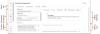
This paper is clever in various ways (creating a term like 'Coauthorship Integrity', for example, or mapping the discussion to the Standards for Educational and Psychological Testing) but it's ultimately disappointing. Here's the gist: because students can use AI to generate essay and assignment responses, we can't accept these as sufficient evidence of learning. Instead, students need to show independently that they understand what they have submitted, for example, by explaining it. That would historically have been done by having the student perform well in an oral interview - a viva voce - but that's impractical today. So the authors propose an AI viva (their term) where understanding is demonstrated to, yes, an AI. Now while many will object to the use of an AI here, my concern is deeper: what is it to 'explain' or show that you 'understand' what you have written, over and above being able to restate what you have written? "Explain what you wrote in your own words?" There's a conceptual confusion here.
Web: [Direct Link] [This Post][Share]
Beyond the sandbox: A playbook for scaling L&D innovation enterprisewide
Elizabeth Loutfi-Hipchen,
Chief Learning Officer,
2026/06/17

It's the same sort of lesson being learned again in the corporate learning environment. "We expected high engagement. We anticipated deep learning. The result? A ghost town. Across 20 participants and several weeks of the pilot, the total time spent with the AI coach was 10 minutes. Not 10 minutes per person, 10 minutes combined." The lessons: first, "to accurately test an innovation, you must select the audience that feels the problem most acutely. You need the people who are truly feeling the pain"; second, ", L&D teams must move from "destination learning" to workflow integration"; and third, evaluate for "operational viability metrics" - that is, "tell us if the tool is intuitive enough to be adopted without hand-holding." Without saying anything about AI, I think I can project that, some time in the future, most learning providers will follow these lessons.
Web: [Direct Link] [This Post][Share]
Online Conferences Should be Better than In-Person Conferences, Not Worse
Eric Schwitzgebel,
The Splintered Mind,
2026/06/17

Obviously I agree with the sentiment expressed in the title, and it's true that the bulk of the conferences I've attended and spoken to over the last five years have been online, yet I too enjoy the in-person experience. But let's be clear (and honest) about it: what we who are privileged enough to go to conferences enjoy is not the 40-minute talk in a crowded (or worse, empty) salon. It's going to new places, meeting new people, visiting the pubs, seeing the sights, enjoying the foods. These are valuable learning experiences, but of course, as the academics we are, we have to pretend that the real value is in the classroom. And so that's what online conferences have preserved, and consequently, they're not nearly as enjoyable. Still - we'll figure this out. Image: ) Helen De Cruz, from the post.
Web: [Direct Link] [This Post][Share]
There are many ways to read OLDaily; pick whatever works best for you:
- Read in your web browser on this web page, updated weekdays
- Receive a daily or weekly email newsletter by subscribing here
- Subscribe to the RSS feed using your favourite feed reader
- Follow @OLDaily@mastodon.social on Mastodon or elsewhere in the fediverse
- Follow @OLDaily on Bluesky
- Read OLDaily as a LinkedIn Newsletter
- Integrate the open API using the JSON feed
This newsletter is sent only at the request of subscribers. If you would like to unsubscribe, Click here.
Know a friend who might enjoy this newsletter? Feel free to forward OLDaily to your colleagues. If you received this issue from a friend and would like a free subscription of your own, you can join our mailing list. Click here to subscribe.
Copyright 2026 Stephen Downes Contact: stephen@downes.ca
This work is licensed under a Creative Commons License.