Curmudgucation: AI Is Coming to Evaluate You
National Education Policy Center,
2026/06/04

"Meet Observation Copilot!" writes Peter Greene. "Your principal can feed it a half page of loose notes about what he saw in your classroom, and Observation Pilot will pad it with a bunch of professional and framework-aligned bullshit until you have pages of mind-numbing argle bargle in mere seconds... And you know that this "tool" is only about five minutes away from the concept of letting a video-cam collect the "observation notes" and thereby reducing the human principal's contribution to zero." In spaces that are regulated - including things like classrooms, courtrooms, workplaces - this sort of technology can be blocked or severely constrained. But in the unregulated spaces in between - the job market, commercial markets, social media - the technology will be widely deployed. Legislation will likely prove ineffective; it's how we build these markets that will matter.
Web: [Direct Link] [This Post][Share]
From Making Web Giants Pay to Making Taxpayers Pay: Government Announces Plan to Kill the CRTC's Online Streaming Ruling
Michael Geist,
2026/06/04

How much would you pay for Netflix? $10? $25? What Netflix want to do is maximize that number, because they understand that the price of a non-essential good is based on a consumer's willingness to pay. Why does this matter? Because it's irrelevant what percentage of that price comes in the form of taxes or subsidies. Nobody cares; only Netflix cares. Why does this matter? The principle behind CanCon regulations, or more recently, Streamer subsidies to Canadian content producers (or for that matter, the Canada-US Auto Pact) is that people who make money selling content in Canada should pay part of the cost of producing content in Canada. Critics of such plans say that companies like Netflix will simply "pass the cost along to the consumers". That's a lie. You can't simply 'pass the cost along' because the price of the Netflix stream isn't based on what it costs Netflix to stream its content here; it's based on (say it with me) people's willingness to pay.
Web: [Direct Link] [This Post][Share]
LifeMaxxing - Optimize Your Life
LifeMaxxing,
2026/06/04
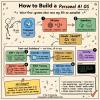
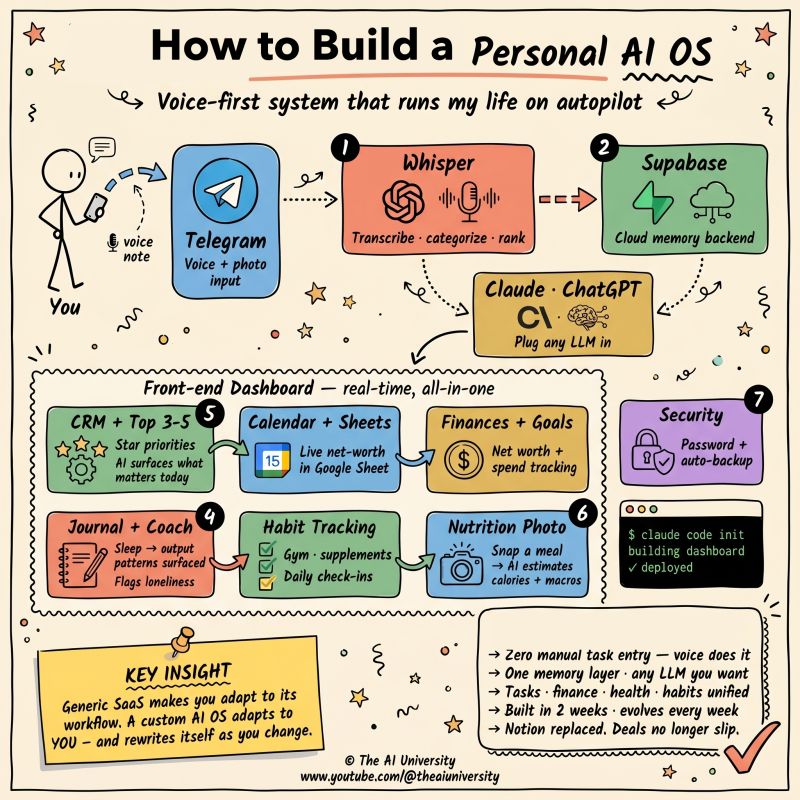
The prompt for this post is this image, which I got from a paywalled account on LinkedIn (it's obviously AI-generated so it has no copyright attached - here's their Youtube channel). Because I couldn't link to the original post, I went searching for the obvious contemporary representation of the same concept: lifemaxxing. Now this is not an endorsement of any of this, but it's well worth talking a look. Here's the pitch: "Master the art of self-optimization. Transform your health, fitness, style, lifestyle, and mindset to become the best version of yourself. Evidence-based protocols for peak performance." The image itself emphasizes a voice-based interface to an AI-based system supporting tasks and priorities, calendaring, finances and goals, journal and coach, habit tracking, and nutrition. It's described as a "personal AI OS" and the objective is personal self-management, with supports, as opposed to (say) a guided program. To me it's an interesting overview of what constitutes 'personal development' as compared to what an academic might call personal development.
Web: [Direct Link] [This Post][Share]
On European Tech Sovereignty, accompanied by an EU Open Source Strategy
European Comission,
2026/06/04

The risks Europe faces are similar to those we face here in Canada: dependence on west Asia for hardware, dependence on the U.S. for software. By now we are all aware how quickly conditions can change. This led to the development of this policy, released today by the European Commission. It begins by stating clearly (and correctly) "Technological sovereignty is thus grounded in openness, partnership and fair competition. It does not mean isolation, protectionism, or tech decoupling." The model proposed "includes four initiatives: the Chips Act 2.0, the Cloud and AI Development Act, the open source strategy, and the Digitalisation and AI in Energy Roadmap. These form a cohesive framework, together with existing initiatives, to move towards the goal of creating a 'European technology stack'." We would do well to emulate this approach, to the extent we are able. See more on DT.
Web: [Direct Link] [This Post][Share]
About TU Delft OPEN Publishing
TU Delft,
2026/06/04
This should be the future of academic publishing: "TU Delft OPEN Publishing is an innovative, community-driven university publisher working closely with TU Delft researchers and teachers. We listen to their needs and place them at the center of our services." The output serves the whole community. "Our books and journals adhere to the Diamond Open Access model, ensuring that all content is free to read and free to publish. Authors retain full copyright of their work under a CC-BY-4.0 license." I don't know what the financial model is for TU Delft but I would imagine they're spending less than they would on commercial academic publishing. For institutions looking to follow in their footsteps, here are their policies. Via Alan Levine.
Web: [Direct Link] [This Post][Share]
Walking in Darwin’s Footsteps
Rachel Botsman,
Rethink,
2026/06/04

The field trip has always been a staple of my intellectual process. Even when I was younger and had no money, I found ways to travel, buying cheap bus tickets and using it as my hotel. Later, in my car, I explored every road I could, covering vast swathes of Canadian countryside. I combined this with hobbies that would take me out of the vehicle and into the environment, forcing me to experience and feel; hiking and photography took me there. Even studying philosophy, I would find different places to read - Mill's On Liberty in Calgary's Devonian Gardens; Quine's Word and Object in the Edmonton River Valley; the Tao Te Ching on a B.C. ferry; Kierkegaard's Concluding Unscientific Postscript in a dive bar called Andante. That's why forcing people to attend an office or a classroom is so pernicious: it robs people of this, and substitutes conformity for development.
Web: [Direct Link] [This Post][Share]
Networks of influence: Linking capitals and agency to understand actors’ roles in sustainability interventions
Lena Rölfer, et al.,
One Earth,
2026/06/04
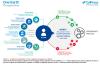
I have talked in the past about the idea that social (or public) knowledge results from a network process. This article (13 page PDF) is a version of a similar idea, but with some significant differences. The context is agency in global sustainability actions, for example, forest management in Germany, or water resources in Spain. The authors describe five forms of agency: "allocating human resources, enacting political relevance, influencing financial flows, providing physical goods and assets, and steering social-ecological discourse." These in turn are represented as forms of capital: human capital, political capital, physical capital, etc. These flow through a network structure to influence the governance process. There are of course significant problems with this model (notwithstanding that it may be empirically accurate). Capital of any sort is not distributed equitably, and some forms of capital are also counter to individual sovereignty. It's a process that bypasses and therefore may subvert democracy. The issue (in my view) is the focus of this network on single points of control - the 'management' of resources.
Web: [Direct Link] [This Post][Share]
There are many ways to read OLDaily; pick whatever works best for you:
- Read in your web browser on this web page, updated weekdays
- Receive a daily or weekly email newsletter by subscribing here
- Subscribe to the RSS feed using your favourite feed reader
- Follow @OLDaily@mastodon.social on Mastodon or elsewhere in the fediverse
- Follow @OLDaily on Bluesky
- Read OLDaily as a LinkedIn Newsletter
- Integrate the open API using the JSON feed
This newsletter is sent only at the request of subscribers. If you would like to unsubscribe, Click here.
Know a friend who might enjoy this newsletter? Feel free to forward OLDaily to your colleagues. If you received this issue from a friend and would like a free subscription of your own, you can join our mailing list. Click here to subscribe.
Copyright 2026 Stephen Downes Contact: stephen@downes.ca
This work is licensed under a Creative Commons License.