Critical thinking in the age of GenAI: Why do it?
Stefani Goga,
BERA Blog,
2026/05/22

"Critical thinking is defined as both a skill, which can be trained and developed, and as a disposition, which refers to the inclination to apply the skill in a given situation. Much teaching focuses on the skill dimension, but perhaps we need to shift our attention to the disposition." I wouldn't say it exactly this way ('dispositions' make me think of Ryle which makes me think of behaviourism) but I think there's something right here. First I would shift the context: forget about what happens in the classroom; why do we want people to think critically at all? Second, think of critical thinking as a way of seeing the world. I don't go out looking for logical fallacies or category errors (or trees or rocks) - I just see them when they're there.
Web: [Direct Link] [This Post][Share]
Announcing Web Serial Support in Firefox
Haik Aftandilian, Greg Stoll,
Mozilla Hacks,
2026/05/22
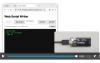
This is actually pretty interesting. "Web Serial is a web API that allows a website to read and write to serial devices using JavaScript... While modern computers don't typically include serial ports, serial devices connected to a USB port or paired via Bluetooth can advertise themselves as serial-capable devices so they appear as serial ports in the operating system." So, for example, "Web Serial could be used to read power data from an off-the-shelf USB power meter and display it in Firefox." This opens up all sorts of possibilities for remote labs and sensors.
Web: [Direct Link] [This Post][Share]
Harvard College will limit the number of students who can receive A grades
Edward Helmore,
The Guardian,
2026/05/22

On the one hand, I don't really care what Harvard does with its grading policy. Articles like this tend to confuse 'prestige' with 'wealthy and connected'. By the same token, I think it's worth pointing out that a policy such as this reinforces the idea that the university isn't actually measuring skills or achievement, but rather, is acting as a social filter, sorting people into classes and classifications. It's all about the competition, not the learning. We don't need that in a democratic society.
Web: [Direct Link] [This Post][Share]
A new generation of ads for the AI era of Search
Google,
2026/05/22
We may as well start here, so people can't say we're just imagining a worst-case scenario. From the searchbot's mouth: "Google is introducing new ad formats built with Gemini in Search and expanding the Direct Offers pilot for shoppers." I can't tell you how little I want that, especially given that advertising is the original fake news. I personally use Kagi when I search the web, but by far the majority of what I find comes from networks of connections. How bad is the news? Even Business Insider is saying Google is going to ruin the internet. Pundits are saying Google has "declared war on the remnants of the Web." Now let me be clear: the problem isn't the AI, it's the advertising (and hence, deliberately introduced falsehoods).
Web: [Direct Link] [This Post][Share]
AI chatbots right about daily news nearly all the time, but fail badly when users slip wrong details into chats
Hacks/Hackers,
2026/05/22
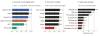
This article summarizes Evaluating Commercial AI Chatbots as News Intermediaries by Mirac Suzgun, et al. According to the paper, generative AI chatbots can be as high as 95% accurate when describing the daily news (which is rather better than Fox) but accuracy can drop to 19% after interactions where a user misremembers a detail. "Users who ask AI chatbots about news while misremembering details will frequently get confident answers that reinforce the error." It also found systematic inaccuracies in Hindi language interactions. As the paper authors say, "these results suggest that evaluating AI news intermediaries on aggregate accuracy alone is insufficient." This is important, of course, in the light of plans to replace search results with chatbot interactions. I don't know whether this summary was AI-generated, but I read the original paper as well (53 page PDF, but only 15 pages of actual paper) to verify it is at least accurate; we'd want more than a "fourteen-day real-time evaluation of six commercial AI chatbots" before drawing full conclusions.
Web: [Direct Link] [This Post][Share]
On ethical AI principles, and Responses
Stephen Downes, Jon Dron, Stella George, Dagmar Monett.,
Journal of Open, Distance, and Digital Education,
2026/05/22
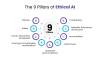
Readers will recognize this theme, and this page from Journal of Open, Distance, and Digital Education leads with my article, On ethical AI principles, and then follows up with criticisms from Jon Dron, Stella George, and another from Dagmar Monett. My target is work by Luciano Floridi (such as) suggesting there is a global consensus on ethical principles, and also the many policy statements, guidelines, and even laws, entrenching them into practice. A closer look reveals no such principles are anything like universal, and some (like explainability and accountability) aren't even ethical principles at all. The Dron and George response is (on my reading) essentially the assertion that, yes, principles aren;t universal; "principles are foundational guidelines, starting points, and orientations that are used to frame understanding and assist with decisions." Monett criticizes my characterization of AI: "when defining AI, introducing a new definition and not considering at least one of the many that already exist... is a questionable omission.... "reviewing, summarizing, translating and composing" are overstatements of the capabilities of AI algorithms." Image: Cogent Infotech.
Web: [Direct Link] [This Post][Share]
What's going on in computational neuroscience nowadays? (part 1)
Chenchen Li,
2026/05/22
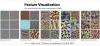
This is a teriffic article and I can't wait for the next few in the series (I found it via Data Science Weekly but I've now subscribed). It's a retrospective from the first day of the week-long Cosyne 2026 conference and breaks down into three main parts: a short discussion of open databases, introduction to a 4 hour (!) session on ways to compare neural signals, and a long discussion of the keynote from Chris Olah, co-founder of Anthropic. There are many gems in here, some things that reinforced my previously held views, and others than challenged them. One thing that matters to me: "we find that networks tend toward distributed representations and mechanisms, which make understanding both artificial and biological networks a pain, equally... , the most natural computational unit of the neural network – the neuron itself – turns out not to be a natural unit for human understanding. This is because many neurons are polysemantic: they respond to mixtures of seemingly unrelated inputs."
Web: [Direct Link] [This Post][Share]
There are many ways to read OLDaily; pick whatever works best for you:
- Read in your web browser on this web page, updated weekdays
- Receive a daily or weekly email newsletter by subscribing here
- Subscribe to the RSS feed using your favourite feed reader
- Follow @OLDaily@mastodon.social on Mastodon or elsewhere in the fediverse
- Follow @OLDaily on Bluesky
- Read OLDaily as a LinkedIn Newsletter
- Integrate the open API using the JSON feed
This newsletter is sent only at the request of subscribers. If you would like to unsubscribe, Click here.
Know a friend who might enjoy this newsletter? Feel free to forward OLDaily to your colleagues. If you received this issue from a friend and would like a free subscription of your own, you can join our mailing list. Click here to subscribe.
Copyright 2026 Stephen Downes Contact: stephen@downes.ca
This work is licensed under a Creative Commons License.