
Getting research out of the lab: supporting the “Third Mission” of Canadian universities
Kyle Briggs, David Durand, TJ Misra,
University Affairs,
2026/05/21

I think there is something like what the authors call 'the third mission' for universities, but I feel it is badly mischaracterized here (not that the authors are at fault; they are following a long tradition). Here is how they describe it: "translating the knowledge they generate into socioeconomic benefits." And here is what they consider to be the major problem: "Given that university research operates far upstream from practical implementation, connecting the lab to the market is no small task." The characterization is that universities are the source, the community is the recipient, and that it's an entirely one-sided relation. But of course that's not true. There are numerous actual and potential points of contact between the university and the community, ranging from the students that enrol, the priorities the community expresses, the data the community produces, the culture all of this inhabits. If we think of universities as producing nothing more than 'research outputs' that need to be 'translated' (or maybe 'mobilized') into benefits, we are seriously misguided.
Web: [Direct Link] [This Post][Share]
Building AI Companions That Prioritise Learning Over Performance
Hassan Khosravi, et al.,
arXiv,
2026/05/21
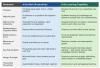
In a nutshell, " This paper (32 page PDF) addresses the question of how artificial intelligence should be designed and used to support learning rather than merely improve immediate outputs." The authors draw a sharp distinction between AI for work and AI for learning (illustrated) which I think may overstate the case. Still, the point stands. From there, they develop a three-part framework, based on (a) pedagogical foundation "to determine how generative systems can provide the precise support necessary," (b) an adaptive foundation, "organising adaptivity into a continuous four-stage cycle:" capture, model, adapt and evove, and (c) a responsible design foundation that "addresses how AI companions can act with integrity and uphold human values," based on security, transparency, accountability and inclusion. Via Philippa Hardman.
Web: [Direct Link] [This Post][Share]
The Death of the Source Layer
Ian O'Byrne,
Digitally Literate,
2026/05/21
Ian O'Byrne summarizes some recent stories, including Googles AI-search announcement and the Monet painting panned on Twitter and draws the conclusion that many others have drawn, that we are losing our connection to 'the source layer'. "For a long time, information came with visible signals attached. A citation, a publisher, a byline, or a recognizable human voice with its own perspective and flaws," he writes. "AI systems change that. They collapse the distance between asking a question and getting an answer." Well, maybe. But claims that the source layers is dead are wildly exaggerated. A record of who said what, and how they knew, is still important, even to AI. If AI does anything, it reinforces the need for an empirical basis that underlies our knowledge. You can see the links to sources in his own article. It wouldn't have been worth reading without them.
Web: [Direct Link] [This Post][Share]
How AI Is Changing Teaching Workflows
Lin Ler,
Edtech Insiders,
2026/05/21

This is a decent article summarizing recent research from a variety of sources and discussing how AI will impact a teacher's day-to-day life. The major initial impact seems to be focused around assessment, with AI being used to create rubrics and other tools, as well as playing a role in scoring. Time savings here can be considerable. But the the major potential impact is described under the heading of 'teacher survival' as some report the impact of 80 hour workweeks. AI plays a role not necessarily in reducing this workload, but in changing its nature, allowing teachers to shed paperwork and bureaucratic tasks and to focus on the actual work.
Web: [Direct Link] [This Post][Share]
The Ethics of Quantum Computing
UNESCO,
2026/05/21

It's good that UNESCO is getting ahead of the technology as it issues this report (70 page PDF), though honestly it could have been (in broad strokes at least) a report on the ethics of anything. "Technology itself is not neutral and must be guided by human rights, sustainability and social justice" write the authors, raising a set of issues like security, misuse, labour impacts, and environment. "Each concern is linked to core ethical values, including fairness, accountability, inclusivity, transparency, sustainability, and solidarity," they write. The main utility of the report is that it describes "fundamental principles of quantum computing such as superposition, entanglement and quantum gates and correct common misconceptions about the technology."
Web: [Direct Link] [This Post][Share]
View of Ethical Use of Artificial Intelligence Tools by Future Teachers
Ana González-Cervera, Jorge Burgueño-López, Belén Urosa-Sanz,
Canadian Journal of Learning and Technology,
2026/05/21
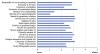
You can learn a lot from what people consider ethically important. Consider this paper, which assesses the ethical use of AI by future teachers. The authors observe that some students behave unethically, and specifically, "these practices include a tendency to place unquestioning trust in AI, failing to cite sources derived from AI adequately, and composing written work without undergoing a thorough review process." But let's consider what they asked. According to the article (figure 4) it looks like they were most concerned about originality and accuracy. I can think of many other ethical questions, ranging from the choice of models to the choice of product to applications such as assessment and surveillance. Moreover, in the grand scheme of things, practices like citing your use of AI might not be ethical issues at all - after all, nobody credits their calculator or spell-check.
Web: [Direct Link] [This Post][Share]
There are many ways to read OLDaily; pick whatever works best for you:
- Read in your web browser on this web page, updated weekdays
- Receive a daily or weekly email newsletter by subscribing here
- Subscribe to the RSS feed using your favourite feed reader
- Follow @OLDaily@mastodon.social on Mastodon or elsewhere in the fediverse
- Follow @OLDaily on Bluesky
- Read OLDaily as a LinkedIn Newsletter
- Integrate the open API using the JSON feed
This newsletter is sent only at the request of subscribers. If you would like to unsubscribe, Click here.
Know a friend who might enjoy this newsletter? Feel free to forward OLDaily to your colleagues. If you received this issue from a friend and would like a free subscription of your own, you can join our mailing list. Click here to subscribe.
Copyright 2026 Stephen Downes Contact: stephen@downes.ca
This work is licensed under a Creative Commons License.