
Open Education Is the New Punk: A Subversive Do-It-Yourself Approach to Pedagogy
Hüseyin Serbes,
Open Praxis,
2026/03/10

Something I'd like somebody to build omne day is a function that tracks concepts over time across articles, publications and popular discourse. I say this not so much as a criticism of this paper, because it's not doing anything uniquely wrong, but because it would track the related concepts of punk, open learning and DIY back through the Edupunk days of Jim Groom from one reference to the next through to papers like that where the original idea has become lost in time. Anyhow, this article revisits the concept through the mechanism of a literature review (sans Groom) and semi-structured interviews with 22 participants last year. "Open education functions as a contested space where learners actively reclaim agency through practices that align with punk ethos and rhizomatic engagement. Learner autonomy in this context operates as a form of resistance against institutional constraints... unlike the view that DIY practices are simply a reaction to a lack of resources, these acts are intentional and political." Image: Jim Groom.
Web: [Direct Link] [This Post][Share]
Skills, Innovation, Quality, Blindness
Alex Usher,
HESA,
2026/03/10

Alex Usher wants to redefine two things in this short post: innovation, and skills. For the first, instead of the usual definition of innovation, "about discovering some new idea or application and then building a world-beating company," he says it should be thought of as "the general application of new ideas to all processes across the economy as a means to bring about not just novelty but greater efficiency and value as well." I read this as meaning that innovation includes building markets (which includes building skills in the use of the new products). But then his take on skills is puzzling. "Instead of focusing on the number of graduates we are producing in a given field, why not put the emphasis on a relentless improvement in the quality of graduates?" That's a strategy that would seem to accelerate inequality in society, undermining any effort to build markets (not to mention undermining society itself). I'm not opposing the idea of redefining innovation and skills, but I think we have to get out of the old way of market-based thinking to do it. Something to think about.
Web: [Direct Link] [This Post][Share]
Impeccable: Design skills for AI harnesses
Impeccable,
2026/03/10
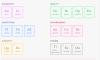
OK, I haven't tried this, and I think the left-right sliders over the examples are a usability fail (you'll see what I mean) but I find the concept intriguing so I thought I'd share. Here's the idea: this website and service offers people a way to describe their design preferences to an AI even if they don't really have the design language skills they need to do this well. "Great design prompts require design vocabulary. Most people don't have it. You can't ask for "more vertical rhythm" if you've never used those words. Impeccable gives you commands that put designer language in your hands." Basically, you use a 'command', and the service expands that into more complete instructions for the AI. Here's the command cheatsheet (which I can imagine being expanded in the future).
Web: [Direct Link] [This Post][Share]
The web is bearable with RSS
Cory Doctorow,
Pluralistic,
2026/03/10

This article starts off as praise for RSS and ends up as a lament for the web in general. The RSS part boils down to essentially this: "Imagine reading the web without popups, without ads, without nag screens. Imagine reading the web without interruptors or 'keep reading' links... RSS readers are really easy to set up and - crucially - make using the web much easier." The lament for the web is... well, you can imagine. Cory Doctorow's 'history of RSS' is different from my own history, and Google plays a much larger role in his. True, Google and Apple and Spotify and the rest have all tried to kill RSS. But in tech you can't kill what you don't own, and nobody owns RSS, so it continues to work - and always has worked since its early exciting days in the late 90s.
Web: [Direct Link] [This Post][Share]
The Hidden Advantage of Being Over 50 in the Age of AI
Joel Comm,
Inc.,
2026/03/10

I'm not really sure I'm convinced by this argument, despite being one of the ones having the advantage of experience. I mean, I learned how to operate a card punch and to program a computer by flipping switches. These skills aren't really useful today. But here's the argument. "AI is different. You don't need to learn a programming language; you need to ask better questions. And asking better questions isn't a technical skill - it's a judgment skill. The leverage in AI doesn't come from typing prompts quickly; it comes from knowing what matters, what doesn't, and what consequences might follow. That's pattern recognition, and pattern recognition is built over decades. It's something AI is really good at, and it turns out those with experience are as well." Ah yes... but the core question is: does pattern recognition improve over time, or is there an inflection point? Does pattern recognition improve at an equal rate for all people? Are some things - like experiencing new things - better for pattern recognition, while others - like ossifying rumination - worse?
Web: [Direct Link] [This Post][Share]
A new generation of apprentices: She started her career at 18 and hasn’t looked back
Atlantic Technological University,
2026/03/10

I really have mixed feelings about this. Starting a career at 18 has many advantages - by contrast, my 'career' (properly so-called) started when I was in my 30s. By the same token, my years between the ages of 18 and 35 weren't exactly 'wasted youth'. I made the most of the free time chronic unemployment and persistent poverty gave me. Kate Gaffrey, the subject of this story, meanwhile, works four days a week, studies the remaining day, and has no summers off. Now if what she wants to do with her life is all and only engineering, that's great. But it feels to me there should be more room for exploration. On the other hand, this kind of work experience learning is extraordinarily valuable. "The biggest benefit of working while studying is having fully qualified engineers around you who are willing to help," she said. "Whether it's calculations or project ideas, there is always someone you can sit down with. Even listening to engineers solve problems teaches you something." So like I say, I have mixed feelings.
Web: [Direct Link] [This Post][Share]
Making breakfast on a burning planet: a parent’s perspective on a GenAI future –
Shaun Bell,
Education Express,
2026/03/10
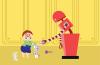
I'm sure this article will resonate with a lot of educators because (a) it speaks to how AI takes away from learning, and (b) because it introduces the concept of care to expertise. But I think each of these is an error. For the first, Shaun Bell asks, "what does 'learning' mean when access or retrieval is effortless, when drafting is outsourced, when a conversational agent can simulate understanding on demand?" I've argued before that learning isn't (and never was) any of these things. For the second part, Bell sets up what is needed: "the scarce resource becomes something else: sustained attention, relational responsiveness, and giving space and time for the slow formation of judgement." And this sets up the case for care. But the model Bell is working with is the care of a parent for a child - and that just seems to be to be the wrong frame in which to view either care or expertise. Via Paul Walk.
Web: [Direct Link] [This Post][Share]
There are many ways to read OLDaily; pick whatever works best for you:
- Read in your web browser on this web page, updated weekdays
- Receive a daily or weekly email newsletter by subscribing here
- Subscribe to the RSS feed using your favourite feed reader
- Follow @OLDaily@mastodon.social on Mastodon or elsewhere in the fediverse
- Follow @OLDaily on Bluesky
- Read OLDaily as a LinkedIn Newsletter
- Integrate the open API using the JSON feed
This newsletter is sent only at the request of subscribers. If you would like to unsubscribe, Click here.
Know a friend who might enjoy this newsletter? Feel free to forward OLDaily to your colleagues. If you received this issue from a friend and would like a free subscription of your own, you can join our mailing list. Click here to subscribe.
Copyright 2026 Stephen Downes Contact: stephen@downes.ca
This work is licensed under a Creative Commons License.