
Stephen's Retirement FAQ
Stephen Downes,
Half an Hour,
2026/01/05

As you may have deduced from the title, I am retiring from my position at NRC. On the day of my retirement - April 8, 2026 - I'll be 67 and more than this change. This article talks a bit about what I plan to do and what people who depend on my services, including OLDaily, can expect. Comments are welcome on my retirement threads on Mastodon, Bluesky or LinkedIn.
Web: [Direct Link] [This Post][Share]
The Small-Tent Path to Disaster
Alex Usher,
HESA,
2026/01/05
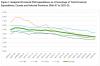
Alex Usher picks up where he left off, criticizing the Canadian Association of University Teachers (CAUT) for applying 'purity tests' to what he calls 'pretty minor differences' (for people not tuned to the dog whistles here, this is the equivalent of calling CAUT a bunch of reactionary and irrelevant leftists). The differences cited - all four, not just the two he keys in on - and in fact quite significant and have been the subject of ongoing dispute within the sector. One of the 'lesser areas' cited by Usher is the issue of performance-based funding, which has been the subject of acrimonious job action in Quebec recently. The other is 'alignment of academic programs with the labour market', which cedes (I guess?) ultimate wisdom on what to teach and study to people most interested in serving short-term business interests. The more serious (to Usher) items concern "taking on research contracts with industry partners" (a practice that has a checkered history, at best) and "restrictive collective agreements often layered with tenure," in other words, a union workplace, which again isn't just a 'purity test' but speaks to the economic well being, working conditions, and basic freedoms of those employed in the sector. It's not surprising to see Usher line up with the banking industry on higher education policy, but it's disappointing.
Web: [Direct Link] [This Post][Share]
Politics meets protocols in Berlin
Matthew Lowry,
Medium,
2026/01/05

Summary of Eurosky Live from last November, "bringing the worlds of politics, media and business - who seems to spend at least half their lives in conference centres - face to face with developers and entrepreneurs at the cutting edge of the open social web (which is what we're calling it now)." There's a lot on the table, including European data sovereignity, the (substantial) Canadian contribution, some innovative services (Sill.social, Gander Social, Tangled, ATConnect and Slices.
Web: [Direct Link] [This Post][Share]
Mastodon creator shares what went wrong with Threads and ponders the future of the fediverse
Jon Henshaw,
Coywolf,
2026/01/05

This is an engaging interview with Eugen Rochko, creator of the decentralized social network Mastodon. Some good bits: his analysis of why Threads never fully integrated with ActivityPub (lawyers became a problem, then Threads become popular so they didn't need to integrate), what ActivityPub needs to become successful (the people matter more than the technology) and why there isn't an ActivityPub ATmosphere merger (AT is more like RSS for social, while AP is more thought out and developed by W3C).
Web: [Direct Link] [This Post][Share]
Exploring the value of values: Does higher education need to abandon a 'skills transferability' focus in favour of 'values transferability'?
Jeffrey Naqvi,
The Journal of Teaching and Learning for Graduate Employability,
2026/01/05

The nexus of this article (20 page PDF) is the concept of 'protean careers' that are "characterised by their foundation in the values and motives of the individual, driving career decisions (and) an individual responsibility taken for career development such as re-training, a desire for meaningful work, as well as individualised, subjective definitions of success." So we get the question, "what is the role of the personal values of learners as a basis for their onward career development?" This set against what might be called a 'skills-first' approach to education and development. The research method ("interviews of approximately 30 –45 minutes each with 15 participants" with a "pulse check" follow-up) makes this feel to me more like an opinion piece than anything else, though I'm fine with that, so long as we stay within that framing. I certainly support the ideal of "the importance of understanding values and connecting that to career choice," though I would have to say this is often a prerogative of privilege and opportunity.
Web: [Direct Link] [This Post][Share]
First Draft Code of Practice on Transparency of AI-Generated Content
Kalina Bontcheva, Anja Bechmann, et al.,
European Commission,
2026/01/05

'Transparency' is one of those 'ethical AI' virtues that sounds good in the abstract, but becomes harder to define (and reach consensus on) the closer you look at it. Here the European Commission offers a first draft (32 page PDF), though what we have is not so much an ethical code as the beginning of a legal framework. Still, it's progress. So, what is transparency? Here's one take: "marking and detection of AI-generated and manipulated content." This raises questions of technical feasibility (especially for smaller enterprises), agreement on open standards and specifications, and trust and cooperation along the value chain. Additionally, such marking needs to be detectable by the people and systems that access the content. This requires "understandable and accessible disclosure of verification and detection results," whatever that means, and "literacy for AI content provenance and verification." So - is it a part of AI ethics to require (in some sense) AI literacy training? How can we have "transparency" otherwise? There's also language on measurement and markings, leading to the question of what sort or how much AI-assistance counts as 'AI manipulation' or 'deepfakes'. See also: Deepfakes leveled up in 2025.
Web: [Direct Link] [This Post][Share]
3 philosophical debates from the 20th century that neuroscience is reshaping
Rachel Barr,
Big Think,
2026/01/05
So I want to wrap three separate posts into one commentary, because they each take a different perspective on the same set of problems. The first is Doug Belshaw's reflections on understanding ourselves. Here he considers the implications of "'unhooking' from thoughts. You stop treating them as literal truths or commands." In other words, "observing that the thought is just language, just noise, passing through awareness... it doesn't have to direct your next thought or action." In a similar manner, Carlo Iacono writes, "There is no uncontaminated source. The self that seems to speak is itself a construction, built from materials that arrived from elsewhere, assembled by processes you don't control and can't fully access." As he notes, none of this is new. What is new is the perspective from neuroscience that actually makes sense of this perspective. As Rachel Barr writes, "The past shapes us, but shaping is not the same as puppeteering... Brains are neither pure dice nor pure clockwork; they sit somewhere in between."
Web: [Direct Link] [This Post][Share]
There are many ways to read OLDaily; pick whatever works best for you:
- Read in your web browser on this web page, updated weekdays
- Receive a daily or weekly email newsletter by subscribing here
- Subscribe to the RSS feed using your favourite feed reader
- Follow @OLDaily@mastodon.social on Mastodon or elsewhere in the fediverse
- Follow @OLDaily on Bluesky
- Read OLDaily as a LinkedIn Newsletter
- Integrate the open API using the JSON feed
This newsletter is sent only at the request of subscribers. If you would like to unsubscribe, Click here.
Know a friend who might enjoy this newsletter? Feel free to forward OLDaily to your colleagues. If you received this issue from a friend and would like a free subscription of your own, you can join our mailing list. Click here to subscribe.
Copyright 2026 Stephen Downes Contact: stephen@downes.ca
This work is licensed under a Creative Commons License.