2025: The year in LLMs
Simon Willison,
Simon Willison's Weblog,
2026/01/01
I know some people are completely tired of hearing about large language models (LLM) but they have had such an impact on the field of educational technology (edtech) that it would be irresponsible to ignore them. Fortunately, Simon Willison offers this set of 27 briefly described milestones for the year (it sounds like a lot but the article is actually a pretty quick read). Be familiar with this list and you will be able to speak and listen knowledgeably about cutting-edge edtech in the coming year.
Web: [Direct Link] [This Post][Share]
Computer Science and Civil Courage
Joseph Weizenbaum,
Boston Review,
2026/01/01

This article was written in 1970, when the author, Joseph Weizenbaum (the inventor of ELIZA) was 47 years old. Having escaped Germany before the war, he understood from experience the argument that there should be moral constraints on science, and the first part of this article puts it eloquently into text. People can and quite rightly should debate the ethics of science, because science is not removed from the rest of society. But on what basis? Here the argument is weaker. Weizenbaum offers two criteria: we should reject things "whose very contemplation ought to give rise to feelings of disgust in every civilized person" such as "the proposal that an animal's visual system and brain be coupled to computers"; and we should reject things "that which can easily be seen to have irreversible and not entirely foreseeable side effects," such as "automatic recognition of human speech." But he also says, "I am, of course, aware of the fact that these judgments of mine have themselves no moral force except on myself," and calls for people, and especially educators, "to be a whole person... (with) the courage to confront one's inner as well as one's outer world."
Web: [Direct Link] [This Post][Share]
Responsibility for Perception
Adrienne Prettyman,
Erkenntnis,
2026/01/01
We hold people morally responsible only for things they can control. "Perception has long been assumed to be a passive mental event. At first pass, it seems wrong to say that passive events can reflect on us in a morally significant way." But as Adrienne Prettyman points out, there are many cases where we hold people responsible for failing to perceive something - a dentist should have seen a cavity, a referee should have seen a penalty, a conductor should have heard an out-of-tune oboe. What happens is that though a perception is passive, it can be shaped by conscious decisions (or non-decisions) such as attention, training or bias. "The flexibility of perception means that we can alter perception by deliberately cultivating perceptual abilities that align with our values," including professional values and community values. This is a great paper that examines the relation between perception and ethics in detail and is recommended for those interested in either subject.
Web: [Direct Link] [This Post][Share]
Mapping Learning Where Work Actually Happens: The LITFOW Matrix
Ella Richardson, et al.,
GP Strategies,
2026/01/01
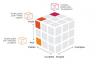
There's a lot of value in this simple framework designed as a cube to illustrate various flavours of "learning in the flow of work, and understanding when and how to deliver it." The cube has three dimensions as follows: complexity (simple-complex); context (curated-public); and delivery mode (pull-push). The article is devoted to explaining some permutations of these with basic examples. For example: "the bottom corner of the cube... an employee needs to complete their timesheet or submit an expense report. The information is curated by the organization, it's relatively simple, and the employee pulls it when needed." There's an associated video as well.
Web: [Direct Link] [This Post][Share]
What promised to liberate us instead helps to control us
Doug Belshaw,
Open Thinkering,
2026/01/01

Doug Belshaw offers a point of view similar to the one in Ploum. "Technologies which once promised emancipation, connection, and flexibility have quietly become the instruments of domination. Systems that invite us to express ourselves and optimise our lives, instead enclose our attention and monetise our behaviour." Where Ploum blames 'entertainment' Belshaw seems to be blaming monetization and work (these may in fact amount to the same thing). "Like slowly boiling frogs, it can be difficult for us to remember what life used to be like before cognitive capitalism digitally enclosed us... We live in an abundant, diverse world where we should be pursuing our own interests and desires. Instead, in the "achievement society" that Byung-Chul Han describes, we are competing against one another for what seem like scarce resources."
Web: [Direct Link] [This Post][Share]
How We Lost Communication to Entertainment
Lionel Dricot,
Ploum,
2026/01/01

Here's the argument: "All our communication channels are morphed into content distribution networks. We are more and more entertained but less and less connected." Now the question is, how true is this? If I take YouTube as an example, I've noticed it's getting harder and harder to keep snippets from commercial media out of my feed. But if I take Mastodon as an example, I can manage who I follow and (depending on my mood) interact with them as much as I want. So there's a sense in which it's how we use social media (and what social media we use). But there is a risk, isn't there? that the fediverse and things like Mastodon will follow previous social media and just stream content at us, because it's more profitable. In the end, it boils down to this: if we're in touch with everyone, it's an entertainment network, but if we're happy not being in touch with everyone, it can be a communications network.
Web: [Direct Link] [This Post][Share]
There are many ways to read OLDaily; pick whatever works best for you:
- Read in your web browser on this web page, updated weekdays
- Receive a daily or weekly email newsletter by subscribing here
- Subscribe to the RSS feed using your favourite feed reader
- Follow @OLDaily@mastodon.social on Mastodon or elsewhere in the fediverse
- Follow @OLDaily on Bluesky
- Read OLDaily as a LinkedIn Newsletter
- Integrate the open API using the JSON feed
This newsletter is sent only at the request of subscribers. If you would like to unsubscribe, Click here.
Know a friend who might enjoy this newsletter? Feel free to forward OLDaily to your colleagues. If you received this issue from a friend and would like a free subscription of your own, you can join our mailing list. Click here to subscribe.
Copyright 2026 Stephen Downes Contact: stephen@downes.ca
This work is licensed under a Creative Commons License.