
AI for English speaking practice: A study of effectiveness and engagement among Vietnamese university learners
Hoang Nguyen Huu,
Australasian Journal of Educational Technology,
2025/10/27
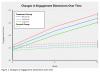
So, did it work? This study (17 page PDF) of Vietnamese English-learners showed that the use of AI-powered speaking practice tools exceeded the expected improvement in proficiency. Some caveats though. The cohort size of 240 in a narrow context doesn't allow a lot of generalization. Also, the application of AI in Vietnamese classrooms needed to take into account "cultural factors such as face-saving concerns and respect for authority, as well as structural issues within the education system." So the changes to pedagogy created by the adoption of AI may themselves be a significant factor, as they counter the impact of "limited class time, large class sizes and lack of confidence (that) significantly hinder speaking skill development... H. T. Nguyen's concept of the 'silent classroom phenomenon'."
Web: [Direct Link] [This Post][Share]
Receipts: a brief list of prominent articles proclaiming the death of the web
Jeffrey Zeldman,
Jeffrey Zeldman Presents,
2025/10/27

Jeffrey Zeldman offers the antidote to fears that AI browsers herald the end of the internet through a sequence of some of the worst articles Wired has ever published predicting - you guessed it - the end of the internet. The most notorious of these is 1997's Push lauding the arrival of "PointCast, a clever application that displayed news headlines as a screensaver." I think people knew it was wrong before the ink was even dry on that issue's pages. Zeldman's point is that "if AI kills the web that provides the information AI sucks down, then there is no contemporary body of news and text for AI to suck down and regurgitate." Content needs an origin, a source of truth, if you will. And for now, that's the web.
Web: [Direct Link] [This Post][Share]
Primitivist Theories of Truth
Jeremy Wyatt,
Stanford Encyclopedia of Philosophy,
2025/10/27

Suppose we said that a sentence is 'true' if it corresponds to some state of affairs in the world. For example, the sentence 'snow is white' is true if and only if snow is white. On such a view, we are defining truth as correspondence. But how could we possibly know any such correspopndence exists? So there are good arguments for saying we can't define truth as anything. On such a view, truth is what we would call a 'primitive'. Other things (like, say, beliefs) depend on truth, but truth doesn't depend on anything. It just is. This new article explores such arguments. One key question is, if we define truth as a primitive, how does it relate to detecting falsehoods? Do we just recognize when things are true or false? Another question: is truth a property of things? If so, how? If not, what is it? These are all core questions for someone working in knowledge and learning. If we want to promote 'the truth' in society, we need to have some understanding of just what it is we want to promote.
Web: [Direct Link] [This Post][Share]
Boundaries in Formal Education and the Role of Technology in Breaking Them
Arnon Hershkovitz,
Education Sciences,
2025/10/27

This paper (21 page PDF) describes "a framework for understanding how technology can help transform formal education by blurring five foundational boundaries: time and space, knowledge, pedagogy, hierarchy, and community." It defines a boundary as "a restriction that foundationally limits learning or teaching" in an educational setting. The bulk of the paper is devoted to describing the five types of boundaries and their implications, then applying them in three case studies. "When regarding technology integration in education, we would like to shift from a discourse of bringing technology into existing educational practices to one that wishes to rethink those educational practices in the first place," writes Arnon Hershkovitz. I would push the question further, asking whether after introducing technology there is a need for some educational practices at all.
Web: [Direct Link] [This Post][Share]
The community of inquiry framework and learning analytics: A systematic review of previous research
Secil Caskurlu, Daniela Castellanos-Reyes, Jieun Lim, Kadir Kozan,
Computers and Education Open,
2025/10/27
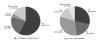
The Community of Inquiry (CoI) framework analyzes and describers the need for various instructor, student and content 'presences' in learning. Learning analytics and knowledge (LAK) is the use of data to study learners and learning design. This article (13 page PDF) explores the intersection between the two fields by means of a formal literature review. It identifies three major types of data employed: "text data from discussion forums, log data reflecting online learner behaviors, and data from CoI surveys." Also, two major types of analysis: "conventional statistical methods such as ANOVA, correlation analyses, and content analysis. The second approach was the use of network analysis such as SNA and ENA." Methodologies were limited to descriptive and prescriptive analytics, which to me suggests most of the studies were shallow. It was interesting that a lot of the research didn't explicitly reference CoI as a 'framework' even while drawing on related concepts. "Future research should go beyond LAK to inform research design and contribute new perspectives to existing theories."
Web: [Direct Link] [This Post][Share]
An Educators’ Guide to Multimodal Learning and Generative AI
Tünde Varga-Atkins, Samuel Saunders, et al.,
University of Liverpool,
2025/10/27
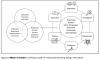
"In a multimodal learning environment," write the authors (141 page PDF), "educators aim to move beyond text-dominant formats, and instead incorporate and combine a variety of communication forms to better support student learning." See for example Gunther Kress on Multimodality, which forms the basis for this guide. At a basic level, educators could use AI to generate images, posters or videos. Or they could co-create multimodal media with students. At a deeper level it "can also be used for prompting critical thinking and metacognition, prompting deeper reflection and learning." It can also play a role in assessment and feedback. In chapter 8, the authors propose and briefly describe "a Unifying Model of Multimodal Learning Design with Generative AI (MMLD-AI)" (illustrated).

Web: [Direct Link] [This Post][Share]
There are many ways to read OLDaily; pick whatever works best for you:
- Read in your web browser on this web page, updated weekdays
- Receive a daily or weekly email newsletter by subscribing here
- Subscribe to the RSS feed using your favourite feed reader
- Follow @OLDaily@mastodon.social on Mastodon or elsewhere in the fediverse
- Follow @OLDaily on Bluesky
- Read OLDaily as a LinkedIn Newsletter
- Integrate the open API using the JSON feed
This newsletter is sent only at the request of subscribers. If you would like to unsubscribe, Click here.
Know a friend who might enjoy this newsletter? Feel free to forward OLDaily to your colleagues. If you received this issue from a friend and would like a free subscription of your own, you can join our mailing list. Click here to subscribe.
Copyright 2025 Stephen Downes Contact: stephen@downes.ca
This work is licensed under a Creative Commons License.