
Designing Inclusive Instruction with UDL and AI
Geoff Cain,
Brainstorm in Progress,
2025/06/11

This shortish post arrives in the context of the author "using AI to help make the Canvas LMS more accessible" as well as "preparing our mini-conference, AI+OER Institute", which raises the question of "what AI's role in UDL might look like." It makes sense to me. "UDL transforms what might once have been "accommodations" into routine options for all. AI could just be the component that levels the playing field in the access to education, tutoring, and study groups."
Web: [Direct Link] [This Post][Share]
A Values-Based Approach to Using Gen AI
Heather Hans,
Faculty Focus,
2025/06/11

I can see why someone might want to adopt a values-based approach to AI (even if only as a shorthand for the more intuitive approach we take on a case-by-case basis... but I digress). My question for Heather Hans, though is this: are these the values your use of AI rests on? They are listed as follows: originality, transparency, collaboration, scholarship, sustainability and critical thinking. Nothing about the good that can be done in the world, nothing about community, nothing about care (especially for children and dependents), nothing about peace and good will. It just seems like a terribly parochial perspective. Image: Deloitte.
Web: [Direct Link] [This Post][Share]
Ethical Framework for Educational Technologies
Brock University,
2025/06/11

Yet another educational institution ethical framework for technologies, this one from Brock. It has the usual (accessibility, algorithmic bias, digital literacy, environmental impact, etc). It's worth mentioning because it has some useful links to background literature and relevant policies, guidelines and standards. 11 page PDF.
Web: [Direct Link] [This Post][Share]
Seeing the Politics of Decentralized Social Media Protocols
Tolulope Oshinowo, Sohyeon Hwang, Amy X. Zhang, Andrés Monroy-Hernández,
arXiv,
2025/06/11
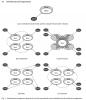
The authors analyze four decentralized social media protocols - ActivityPub (used by Mastodon), AT Protocol (used by Bluesky), Nostr, and Farcaster - "to develop a novel conceptual framework for understanding how protocols operationalize decentralization." In particular, they describe "how control over key components becomes distributed differently across the protocols, allocating decision-making power over questions of identity, curation, and infrastructure." Decentralizing each of these assigns greater power to users, but often at the cost of complexity. Interesting discussion. 23 page PDF.
Web: [Direct Link] [This Post][Share]
The Beautiful Betrayal
Carlo Iacono,
Hybrid Horizons,
2025/06/11

What I like about this post is the inverse of the argument that 'AI impairs learning by doing the thinking for you'. Carlo Iacono describes a situation where a student asks an AI a question and the AI's response is "technically correct but somehow fundamentally off." Iacono writes, "unlike a human teacher who might intuit meaning from context, who might bridge the gaps in a poorly formed question with experience and empathy, the AI responds only to what's actually there." The result is that "the student, confronted with their own imprecision, must return to the drawing board." This is a bit of learning that would be skipped if they had a human teacher. By depending on the teacher, they never advance beyond their normal state of imprecision.
Web: [Direct Link] [This Post][Share]
AI, Energy Use, and the Coffee Dilemma
Sarah Downey,
2025/06/11
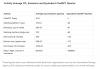
I've mentioned the ChatGPT-vs-coffee dilemma based on my own calculations in the past, and in this article Sarah Downey uses actual vetted numbers to compare the energy cost of ChatGPT with a number of other activities, including coffee and airline flights (nothing like someone blogging about the energy cost of a ChatGPT query from their in-flight wifi). As Downey writes, "If we're focused on caring about personal energy consumption, we need to be looking at all the ways we use energy and ask: are we spending it on what matters most?" I'm hoping this LinkedIn link will work for everybody (I tested it in another browser and it seemed OK but if you can't access it please let me know).
Web: [Direct Link] [This Post][Share]
Networks, Dynamics and Explanation
James Woodward,
PhilSci Archive,
2025/06/11
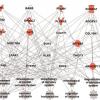
When describing 'connections' in connectivism, I typically add the phrase "...such that a change of state in one node may result in a change of state in the connected node'. From my perspective, this paper explains why. The author argues, essentially, that "variation in network structure explains variation in outcomes, for a given dynamics." The 'given dynamics' are what describe the way changes of state can happen. A network isn't simply an abstract, but "networks with similar properties to be used to describe a wide variety of systems which differ in their material properties or causal details-- ecological networks with the same structure can represent relations of predation or of parasitism, small world networks can represent relations in the brain or social relations and so on." Long and technical paper. 37 page MS-Word doc.
Web: [Direct Link] [This Post][Share]
Trusted reporting is needed more than ever, so let’s have school newspapers pave the way for the next generation
Lara Bergen,
The Hechinger Report,
2025/06/11

As long-time readers know, newspapers are in my blood. I delivered them for years as a kid, created my own paper in grade five, dedicated most of my undergraduate years to writing and editing one, and to this day produce this here newsletter. So I love the idea of promoting student journalism. My only question about this story is to wonder why it would be necessary to create a non-profit to make this possible for students in New York. Don't get me wrong; given that the need exists, I'm glad they did. But something like this should be core to a public education, not a privately financed add-on.
Web: [Direct Link] [This Post][Share]
Integrating Large Language Models and Machine Learning to Detect Struggle in Educational Games
Xiner Liu, et al.,
University of Pennsylvania,
2025/06/11
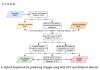
Raw interaction data, which records what a human does in an educational game, is hard to read. This is as true for large language models as it is for humans. So this project tests converting the raw data to text, which the AI can read. This paper (8 page PDF) reports on a test to see whether r GPT-4o can detect moments of struggle in the data. Plain machine learning "performed better when struggle followed measurable patterns, such as frequent or prolonged pauses between actions," but a combination of ChatGPT and machine learning worked well.
Web: [Direct Link] [This Post][Share]
Google Funds $5M AI Skills Initiative with Alberta’s Amii
Calgary.Tech,
2025/06/11

This is referenced as a big deal, but $5 million through 25 post-secondary institutions across amounts to $200K each (probably much less after overhead), which is essentially one professor and a few students. Coordinating something like this is hard, and it's less likely to be coherent than we might think, and it seems like a lot of work to benefit only 125,000 students. Here's the announcement from the Alberta Machine Intelligence Institute (AMII), which is coordinating the grant, which it describes as workforce readiness, and which will in part support travel to Upper Bound, AMII's conference. Via George Siemens.
Web: [Direct Link] [This Post][Share]
There are many ways to read OLDaily; pick whatever works best for you:
- Read in your web browser on this web page, updated weekdays
- Receive a daily or weekly email newsletter by subscribing here
- Subscribe to the RSS feed using your favourite feed reader
- Follow @OLDaily@mastodon.social on Mastodon or elsewhere in the fediverse
- Follow @OLDaily on Twitter
- Integrate the open API using the JSON feed
This newsletter is sent only at the request of subscribers. If you would like to unsubscribe, Click here.
Know a friend who might enjoy this newsletter? Feel free to forward OLDaily to your colleagues. If you received this issue from a friend and would like a free subscription of your own, you can join our mailing list. Click here to subscribe.
Copyright 2025 Stephen Downes Contact: stephen@downes.ca
This work is licensed under a Creative Commons License.