Stephen Downes

Knowledge, Learning, Community

Please select a newsletter and enter your email to subscribe.

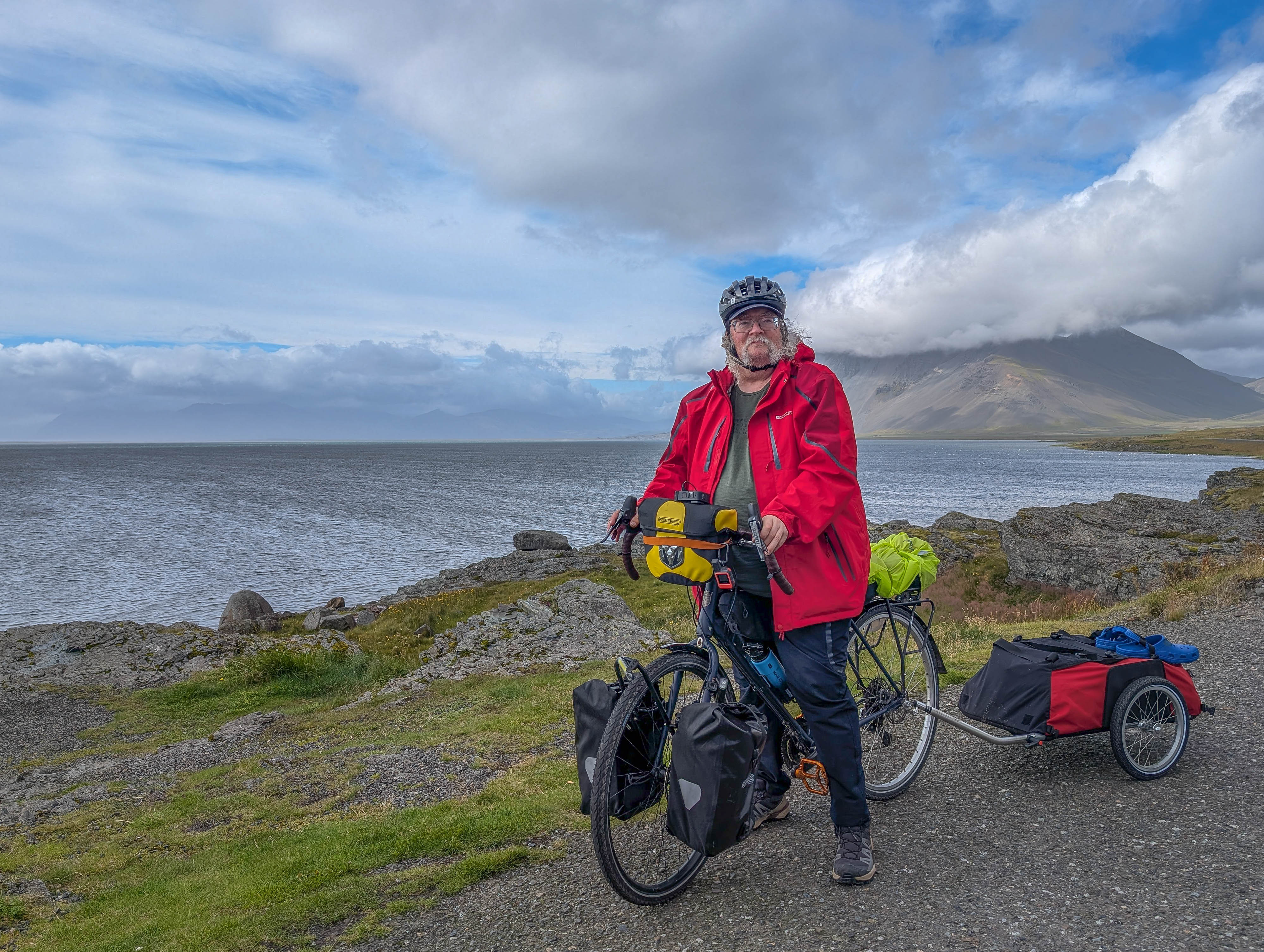
Stephen Downes spent 25 years as an expert researcher at the National Research Council of Canada, specializing in new instructional media and personal learning technology. With degrees in Philosophy and a background in journalism and media, he is one of the originators of the first Massive Open Online Course, has published frequently about online and networked learning, and is the author of the widely read e-learning newsletter OLDaily. He is a popular keynote speaker and has presented at conferences around the world. [More]

Support OLDaily

OLDaily has been free and open to all readers since 2001. It is a valuable and widely-used resource for educators, researchers, and learners worldwide. Please consider a monthly contribution to sustain the time and resources required to publish it every day.


Here's what's in the latest edition of OLDaily

Licensing Best Practices for the Sharing of Scientific Data
79177 image icon

As this post notes, Creative Commons has published a report Licensing Best Practices for Sharing Scientific Data (37 page PDF), a guide for researchers and data producers. As with most of what comes out of Creative Commons these days, I have mixed views. First, I note with approval that it endorses FAIR for open data - Findable, Accessible, Interoperable, and Reusable. However, it presents only two options for licensing of open data: either CC0, which is a 'public domain' license, or CC-by, which only requires attribution. There is no suggestion that data might be released for non-commercial purposes only. But - note well - it would also allow for the use of the data by corporations to train AI models, something Creative Commons has agitated against, up to and including suggestions like a 'pay to crawl' policy. So I don't know what Creative Commons really intends with respect to scientific data.

Today: Total: Annemarie Eayrs, Creative Commons, 2026/04/22 [Direct Link]
The Missing Pieces of the Skills Economy are the Skills and the Economy
79176 image icon

This is an informed and useful discussion of what is missing for the creation of a 'skills economy' (currently and still the core concept behind commercial ed tech). With respect to the skills, Michael Fedstein (quite correctly, in my view) argues against the development of a 'skills taxonomy' in most cases. As for the economy, the possibility of an economic transaction is missing. "Employers need skills. What's been missing is the ability to assess the match cheaply enough for the transaction to happen." There is room for movement in this field, but it will take rethinking about what we even mean by a skills economy. "What a skills economy needs, then, isn't better definitions of what individual skills 'really' are. It needs infrastructure that lets two parties point at the same thing, with attached evidence to claims about it, and make a judgment about whether the match is close enough for the transaction at hand."

Today: Total: Michael Feldstein, eLiterate, 2026/04/22 [Direct Link]
Lead4Change Summit Reflections
79175 image icon

I enjoyed this first-day summary of the Lead4Change event Wes Fryer is attending, not because it was ground-breaking in any way (a lot of it will be familiar to people who have been through leadership training) but because it offered a glimpse of how he sees himself and how we can see ourselves in general. One exercise had him draw a timeline of his life - a timeline that only begins after he leaves the USAF (by contrast, my timeline that I created years ago starts with my birth but drifts off around 2010). I also liked the idea of a a Quadrant Analysis - "thinking through four dimensions of life: Health/Personal, Relationships, Career, and Dreams" - though I don't think I want to share one of my own. I did, though, have ChatGPT write me a biography of myself, just out of curiosity.

Today: Total: Wesley A. Fryer, Moving at the Speed of Creativity, 2026/04/22 [Direct Link]
Against Nihilism, For Appetite: Why Teaching Still Matters
79174 image icon

"To teach well," writes David Webster, "is not simply to transmit knowledge or to facilitate the production of correct answers. It is to model a way of being in relation to knowledge: one that is attentive, discriminating, and alive to the possibility that understanding can deepen." This has implications, he writes, that tend toward a system of education based on presence, that is relational, iterative and slow. Fair enough, and I'm all for taking time with nuance and precision (though I think attitudes like A. J. Liebling's "kind of delighted voracity... to seek out, taste, compare, and pursue the best that can be found" is more pretentious than anything). The problem with Webster's argument is that while learning slowly is fine, teaching slowly is inefficient and expensive. What we need are ways (and means, and motivations) to be able and willing to learn slowly on our own for otherwise most of us will not have the opportunity to learn at all.

Today: Total: David Webster, 2026/04/22 [Direct Link]
Prompting is the Problem (?)
79173 image icon

Apostolos Koutropoulos responds to an article in TD magazine (both link and archive link point to a paywall, so don't bother). He writes, "There are two threads here. In one thread, I feel like the author is trying to get a bit Vygotskian here and treating the LLM like a more knowledgeable other, which they are not... The other thread is that the LLM becomes a mirror for your thoughts. Cool, I guess, but do we really need a modern-day ELIZA." But the main complaint is that it seems to treat the failings of the LLM as the fault of the user. Now granted, LLMs are not perfect. That doesn't mean they should be written off completely. They do some things very well. And to that extent, the skill of the user does come into play, if only to use them for tasks where they excel, and not where they don't.

Today: Total: Apostolos Koutropoulos, Multilitteratus Incognitus, 2026/04/22 [Direct Link]
Introduction to the 8-Stage Learning Design Framework (8SLDF)
79172 image icon

This article introduces the 8-SLDF, "a framework that serves as a comprehensive guide to the systematic development of formal curricula in tertiary education." The primary value is it's placement of the framework in a series of entities ranging from 'philosophy' and 'principles' through to 'models' and 'patterns'. It's all very structured and essentially rule-based, which may explain why frameworks like this are so fragile. Anyhow, the framework itself won't be any surprise to people with learning design experience, though they'd probably be disappointed by the short one-paragraph description of 'learning opportunities' as 'rehearsals for assessment.'.

Today: Total: Simon Paul Atkinson, Capable Institutions, 2026/04/22 [Direct Link]

Stephen Downes Stephen Downes, Casselman, Canada
stephen@downes.ca

Copyright 2026
Last Updated: Apr 23, 2026 02:37 a.m.

Canadian Flag Creative Commons License.