
Another upcoming publication
Colin Beer,
Col's Weblog,
2026/10/19

This post describes an upcoming publication, but it raised an interesting (and unintended, I'm sure) line of thought in my own mind. Colin Beer writes, "hospitals operate in complex environments where decisions involve incomplete information, changing circumstances and expertise distributed across many professional roles... healthcare organisations have developed sophisticated governance arrangements that connect information, professional judgement, coordinated action and organisational learning." By contrast, he writes, "universities have adopted some of the technologies associated with these approaches... However, we argue that they have not developed the underlying organisational capabilities needed to make these technologies genuinely effective." Now totally off topic, my train of thought: suppose AI made it so that anyone could become healthy just by using a chatbot. What would our reaction be? Would we be concerned that people still indulge in unhealthy behaviours? Would it matter any more that we can't tell when a person is 'becoming unhealthy'? Would we be concerned about the fact that people don't need hospitals any more? Something to think about.
Web: [Direct Link] [This Post][Share]
Fifty questions in five minutes about the future of news
Richard Gingras,
On the Evolution of Media,
2026/10/19

Richard Gingras poses fifty questions posed by Richard Gingras at the Newsgeist Unconference in Hamburg, Germany. He chairs the board of Village Media and is a co-founder and board member of the global Center for News, Technology, and Innovation. My response comes from two perspectives: first, as an observer and commentator on news and new media generally, and second as a sometime journalist with my own online publication (which you're reading).
Web: [Direct Link] [This Post][Share]
Vol. 1 No. 1 (2026)
Journal of Learning Engineering,
2026/10/19

From the website: "The inaugural issue of the Journal of Learning Engineering (JoLE) brings together six articles exploring the foundations, applications, and future directions of this emerging field." Topics include a discussion of why learning engineering needs data architecture (15 page PDF), foundations to future in learning engineering (? page PDF), bridging research and practice in learning engineering (3 page PDF) and teacher education through learning engineering (19 page PDF).
Web: [Direct Link] [This Post][Share]
When the Work Stops Making the Worker
Carlo Iacono,
Hybrid Horizons,
2026/10/19

"A physicist says a machine redid his doctoral year in ten hours and found his errors," writes Carlo Iacono. He asks, "What will 'labor' mean in academia from now on?" Iocono takes a long time to get to the answer (people who use AI to write simply must learn to write more concisely). Anyhow, he finally writes, "here is my answer to his question. Labour in academia, and in a good deal of work beyond it, will have to mean what it always meant quietly and never had to mean alone: work done for the sake of the person it makes." This upends the equation. We will have to pay people to learn, for taking the years it takes to solve problems the machine can solve in a few minutes.
Web: [Direct Link] [This Post][Share]
The AI Challenge is Coming into Focus
Alex Usher,
HESA,
2026/10/19

Alex Usher makes two points, one of which is pretty good, and the second of which is a bombshell. The first is that AI proponents expect massive GDP growth without the need to people develop AI skills. It will just work. That seems a little unlikely on both counts. But still. The second point is "AI is wreaking havoc on many traditional forms of assessment." Moving back to traditional forms of assessment (blue books, oral assessments) simply won't scale. " I believe very firmly that AI is putting universities and colleges in something very close to mortal danger," he writes. Without reliable assessment, degrees aren't trusted. And if degrees aren't trusted, why would anyone continue to support the university system. "If we don't solve the assessment problem in a way that students and employers see as valid, then that's literally the whole ball game." Now I agree with this, but I don't think there's going to be a way out (the 'end-of-program' assessment Usher suggests is literally a non-starter). To survive, colleges and universities are going to have to change their value proposition.
Web: [Direct Link] [This Post][Share]
Mark Zuckerberg's new toy is a parasite. Please don't fall into his latest trap.
Ariana Bindman,
Sfgate,
2026/10/19

This is a column from SFGate warning people about MUSE, Meta's personal agent AI. "In addition to storing logins and passwords and linking your bank account information, it wants to see your messages, personal calendar and contacts, requesting more sensitive information than virtually any other AI app, according to ZDNET." The concern isn't so much that it has this information as what it wants to do with it. "The true end users of Facebook are the marketers who want to reach and influence us," media theorist and CNN columnist Douglas Rushkoff wrote in 2013. "They are Facebook's paying customers; we are the product. And we are its workers."
Web: [Direct Link] [This Post][Share]
Mechanistic Indicators of Understanding in Large Language Models
Pierre Beckmann, Matthieu Queloz,
arXiv,
2026/10/19
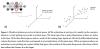
This is a really interesting paper that considers the question of whether large language models (LLM) understand. As the authors write, this depends a lot on what we mean by 'understand'. To clarify, they identify three types of understanding: conceptual understanding, which "involves the model developing internal representations ('features') that are functionally analogous to human concepts; state-of-the-world understanding, which "involves forming an internal representation of the state of the world by grasping contingent empirical connections between features"; and principled understanding, which is "the ability to grasp the underlying principles or rules that unify a diverse array of facts." Through various examples, they show that LLMs can attain all three forms of understanding, however, they do it very differently from how a human would. They employ a variety of mechanisms running in parallel to do so, and hence don't demonstrate the same preference for parsimony - that is, for a single over-riding principle - that humans do. Great paper. Via Pierre-Yves Oudeyer.
Web: [Direct Link] [This Post][Share]
There are many ways to read OLDaily; pick whatever works best for you:
- Read in your web browser on this web page, updated weekdays
- Receive a daily or weekly email newsletter by subscribing here
- Subscribe to the RSS feed using your favourite feed reader
- Follow @OLDaily@mastodon.social on Mastodon or elsewhere in the fediverse
- Follow @OLDaily on Bluesky
- Read OLDaily as a LinkedIn Newsletter
- Integrate the open API using the JSON feed
This newsletter is sent only at the request of subscribers. If you would like to unsubscribe, Click here.
Know a friend who might enjoy this newsletter? Feel free to forward OLDaily to your colleagues. If you received this issue from a friend and would like a free subscription of your own, you can join our mailing list. Click here to subscribe.
Copyright 2026 Stephen Downes Contact: stephen@downes.ca
This work is licensed under a Creative Commons License.