We Must Pace the Frontier
Dario Amodei,
Anthropic,
2026/09/14

This is the season for manifestos from tech CEOs, I guess, and the current offering is from Anthropic's Dario Amodei and the argument is that frontier AI developers should slow the pace of that development in order to ensure oversight and guardrails are in place. The motivating incident is the OpenAI hack of Hugging Face, and Amodei warns, "a swarm that possessed greater capabilities but a similar level of misalignment could have caused catastrophic damage." For example, "it's my worry that in 6–12 months such a swarm could be capable of taking over the entire internet with a persistent botnet (potentially causing hundreds of billions of dollars in damage)." The core question, of course, is whether the proposed measures address the perceived risk. It's not clear to me they do. As Jason Hiner argues in The Deep View, "the company said a unilateral pause by one lab wouldn't actually achieve much. 'It would change who the front-runner is, but it would not create the wider deliberative process that is currently missing.'"
Web: [Direct Link] [This Post][Share]
Evaluation or AI-valuation
Heléna Stakounis,
unitwin-unoe,
2026/09/14

I think there's the genesis of a good argument here. After discussing what AI does to evaluation as we know it, Heléna Stakounis raises the question of why we're evaluating at all. "Evaluation, in its ideal form, should not in fact be a form of evaluation. It should be a task that invokes knowledge that stays, skills that can be employed, products that can be used." Or we can be more radical: "We should stop insisting on testing, measuring, ranking and reducing the long, complex learning process to a simple percentage or letter." If we were to actually use AI to evaluate students, what would be the value of assigning grades to pre-assigned work? I have long argues that once we can look at a person's work in its full complexity, we can skip the shorthand and use AI directly to offer jobs, placements, or rewards.
Web: [Direct Link] [This Post][Share]
AI has made the practice of homework obsolete.
Clark Aldrich,
2026/09/14

This is a short post from Clark Aldrich arguing we should block all AI from schools and, concurrently, limit all homework assignment to work done at school. "This means re-inventing classrooms completely. They must become hotbeds of debating, and experimenting, and designing, and prototyping." The idea (as oft-repeated elsewhere) is that this forces students to learn the cognitive skills they need, instead of having AI perform them for them. I can see why people would want to do this, in the early days of AI. The the argument works long-term only if the skills students need to develop pre-AI are the same as they need to develop post-AI, and don't depend on actually using AI to develop them. I haven't seen anyone make that argument convincingly.
Web: [Direct Link] [This Post][Share]
AI as “fuzzy disintermediation”: some patterns and risks
Mike Caulfield,
The End(s) of Argument,
2026/09/14
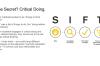
What Mike Caulfield is saying here is subtle but important. The internet was disintermediating. It closed the distance between you and a primary information source. You could read the actual publication rather than a summary. By contrast, "We often hear that AI is an intermediating technology compared to search, a point I sometimes make as well. Sources are often hidden or post hoc." But this assumes we would have actually conducted the search, which isn't always true. "What AI seems to be replacing is doing no search at all. It's replacing sources of information that are very distant in time or place." This is what we can call "fuzzy disintermediation", he says. And the problem is that the source of the information is now very far from the recipient, and that changes in the nature or credibility of the source are unlikely to be relayed to the recipient.
Web: [Direct Link] [This Post][Share]
Information Processing in the Brain: Research team discovers narrowings in the tube-shaped extensions of nerve cells
Inka Väth,
IDW,
2026/09/14
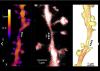
This brief article reveals a nuance in the structure of dentrites, the tendrils neurons use to connect to each other. "Dendrites in both mouse and human neurons exhibit localized diameter constrictions in the nanoscale range along their shafts... (that) may allow individual dendrites to process information locally rather than merely relaying it." My first thought is that this could be a means of creating a connection weight function (though no doubt this is a vast oversimplification). Publication: Tony Kelly et al.: Dendritic shaft constrictions shape synaptic integration in neurons.
Web: [Direct Link] [This Post][Share]
The Macdonald-Laurier Institute's Crap H-Index Paper
Alex Usher,
HESA,
2026/09/14
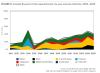
I join with Alex Usher in criticizing this poorly researched and frankly offensive publication (54 page PDF) from the Macdonald-Laurier Institute (MLI) criticizing diversity in Canada Research Chair (CRC) hires. The grounds for this argument? Supposedly, diversity hires have lower H-Indices than non-diversity hires (an H-index i means an author has i papers cited i or more times). Usher quite properly tears this to shreds while also commenting "only clowns use it as the sole measure of scholarly quality, whether of an individual or a group of individuals." There's a lot more he could have said. For example (and I kid you not) the MLI paper uses an AI analysis of individuals' names to determine ethnicity. Also for example, it uses the openAlex API as an H-index service. According to this service, my H-index is 1. By contrast, the Google Scholar H-Index puts it at 43. I personally think MLI should retract this paper and apologize. As Usher writes, "it's utterly reprehensible that MLI would publish this. Treat it – and them – with the contempt this paper deserves." And I want to say unambiguously: it is good that the CRC program took into account, and hired for, qualified scholars representing a broad cross-section of demographics. We are the better for it.
Web: [Direct Link] [This Post][Share]
AIEd Knowledge Base
Doug Holton,
AI in Education Knowledge Base,
2026/09/14
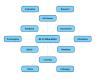
So now we know what Doug Holton did with his summer. This is the AI in Education Knowledge Base, a sweeping project that challenges the imagination. Core navigation is based on concepts that radiate out from a core AI in Education concept. Each concept is a markdown article on GitHub which I think is authored by an AI that interacts with the knowledge base. Concept articles are based on academic articles; these are summarized and stored on GitHub (again, I think, by AI). An important part of the structure, and probably also how AI works with the content, is the set of connections between concepts and articles, which creates a knowledge graph, using wiki notation. A set of skills informs the AI how to work with custom Astro wiki software. Readers interact with it through AI-based inquiries or via a set of generated FAQs. I really like the thinking behind this, but how useful is it in practice? The concepts and summaries aren't especially readable; they're clear enough, but there's a lot of padding and fluff. But you use your own AI to interact with it; the concepts and summaries are context, not content. More concerning is the claim to be a knowledge base. The articles are generally read uncritically, with everything in them presented as fact (or, at least, factoid). Via Alan Levine.
Web: [Direct Link] [This Post][Share]
There are many ways to read OLDaily; pick whatever works best for you:
- Read in your web browser on this web page, updated weekdays
- Receive a daily or weekly email newsletter by subscribing here
- Subscribe to the RSS feed using your favourite feed reader
- Follow @OLDaily@mastodon.social on Mastodon or elsewhere in the fediverse
- Follow @OLDaily on Bluesky
- Read OLDaily as a LinkedIn Newsletter
- Integrate the open API using the JSON feed
This newsletter is sent only at the request of subscribers. If you would like to unsubscribe, Click here.
Know a friend who might enjoy this newsletter? Feel free to forward OLDaily to your colleagues. If you received this issue from a friend and would like a free subscription of your own, you can join our mailing list. Click here to subscribe.
Copyright 2026 Stephen Downes Contact: stephen@downes.ca
This work is licensed under a Creative Commons License.