
Digital Platform Charter of Rights
Daniel Supernault,
RespectfulPlatforms.org,
2026/05/25

It would be hard to disagree with anything in this Charter, released over the weekend by Daniel Supernault, the creator of Pixelfed, though I guess Meta has issues with it, as it has started blocking links to its decentralized competitor (as 404 reports, "Pixelfed is an open-source, community funded and decentralized image sharing platform that runs on Activity Pub, which is the same technology that supports Mastodon and other federated services"). Tyler's comment on 404 summarizes my view: "It's probably within their rights but it always feels so childish when companies throttle links to their competitors. Clearly they don't have enough faith in their product to compete in the 'free market' so they have to cheat." Meanwhile, organizations can commit to uphold the pledge (all pledges are reviewed before being publicly listed). As for me, I'll just indicate my general support here (and note that I am very much following these principles as I design CList, fwiw).
Web: [Direct Link] [This Post][Share]
I’m not sorry: Should we punish?
Thomas Nagel,
London Review of Books,
2026/05/25

Discussions of ethics of technology in learning often focus on the three schools of ethics - virtual theory, consequentialism, and deontology. They rarely mention contractualism, which tells me simply that their foundations in actual ethical theory are slight. This essay, a well-written and accessible review of T.M. Scanlon's collection of essays, Morality and Responsibility (itself behind a paywall, sadly), helps address that deficiency. Scanlon's work reshapes some core assumptions about ethics: the idea that what counts as 'ethical' is contextual and based in relationships, and the idea that attributions of responsibility and consequences do not require a foundational theory of free will. "An action or policy is wrong," says Scanlon, "if any principle that permitted it could be reasonably rejected by someone affected adversely by that principle."
Web: [Direct Link] [This Post][Share]
Kitchen Table Stoic: Chapter One
Miguel Guhlin,
Another Think Coming,
2026/05/25

I like the way Miguel Guhlin is recasting Epictetus's Enchiridion, a core work in Stoic philosophy. He sets up the series with this podcast episode and then settles in with the actual chapters (three of six so far: one, two, three). "It opens with the Stoic premise stated plainly: 'some things are up to us, and some things aren't. What's up to us is our own perspective, our goals, and our choices. What's out of our hands is our health, our wealth, and our reputation.'" Or, put another way: "Look, the person who can give you what you want, or take away what you're afraid of losing - that person is your master. If you want to be completely free, stop wanting things from other people and stop fearing what they can do. Otherwise, you're just a slave in a nice suit." Now, of course, there are things we can do that influence our health, reputation and wealth - we don't live in the year 135 any more. But the advice - that we should focus on what is within our control - is still good.
Web: [Direct Link] [This Post][Share]
How to make a mint off the coming higher ed contraction
Hollis Robbins,
Anecdotal Value,
2026/05/25

I love how this article presumes it will be a company that creates an alternative to university credentials, and not (say) a government, a cooperative or a community. Presumably that's because the idea here is centered around a product: "This new product would be a registry, a kind of credit bureau, land registry, and LinkedIn all at once. The registry confirms you learned something and registers it. The world can check the registry when it needs to know what the student can do. An examination will surely be involved but the registry, not the examination, is the asset." But why would it be a (centralized) registry? One of the strengths of the university system is that it is decentralized - you can't simply replace it in one go, and it doesn't fail with the collapse of a single institution.
Web: [Direct Link] [This Post][Share]
The Time My Students Used AI in Their Final Reflections – and I Liked It!
Maha Bali,
Reflecting Allowed,
2026/05/25
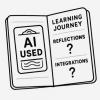
Though sceptical of AI, Maha Bali describes in this post her efforts to "encourage them (students) to use their own judgment to see where AI can support them in doing the work, without replacing them or limiting their creativity, their voice, their identity." And if they do use AI, she says, "I just ask for transparency." I think this is a good approach, and as this article documents, she was rewarded in turn. "Students are getting better at using AI, not in the sense of getting better at prompting it to do more work, but in the sense that they are becoming better judges of what appropriate use looks like and what inappropriate use looks like. And able to self-control and take agency over their use of AI when I gave them freedom beside critical AI literacy."
Web: [Direct Link] [This Post][Share]
Separate AI Literacy and Assessment Integrity
Mike Kentz,
How We Frame Machines,
2026/05/25
"Teaching AI Literacy and Preserving Assessment Integrity are not the same problem," writes Mike Kentz. This should be obvious but apparently the issues are being conflated in meetings convened to address 'the AI problem'. "The key insight: assessment integrity can be preserved or rebuilt without involving AI literacy at all. AI literacy can be built without navigating around AI cheating. These are separate tracks aiming at separate outcomes." For those who are wondering: breaking complex problems down into simpler parts is known as the Cartesian method, and was introduced in his Discourse on Method (1637).
Web: [Direct Link] [This Post][Share]
This is not Utopia: Surviving an Outage
Elisa Baniassad,
LTIC, UBC,
2026/05/25

I lot of people pointed to the response to the Instructure outage by the Learning Technology Innovation Centre (LTIC) at UBC as an example of best practice, so it's good to get this quick post mortem from its director post crisis. "We made, from scratch, findmycourse.ubc.ca to help students find their way to their courses. We published an alternative course hosting page, redirected the forbidden URL to a student facing website... We started a discussion forum... we spun up two options for hosting course materials, and many options for the satellite functions such as media and discussions." Preparation (even if not for this specific event) was key. "We were very lucky to have in our back pocket a very mature Blogs site ready and waiting for automated integrations like enrollments and media. We had an open source Moodle install that we rapidly expanded." Via D'Arcy Norman.
Web: [Direct Link] [This Post][Share]
In his first encyclical, Pope Leo XIV says AI must serve humanity, not the powerful few
Claire Giangravè,
RNS,
2026/05/25

The Pope's first encyclical, 'Magnifica Humanitas', tackles the social, economic and political challenges associated with artificial intelligence, according to this article. It covers a lot of ground and obviously I will disagree with some of it, but I agree with this: "When such power is concentrated in the hands of a few, it tends to become opaque and evade public oversight, increasing the risk of distorted forms of development that give rise to new dependencies, exclusions, manipulations and inequalities." Also, as many have pointed out, "There are clearly harmful uses, such as the manipulation of information or violations of privacy. Yet there is also a subtler danger, for when AI systems present themselves as neutral and objective, they end up reflecting and reinforcing the stereotypes or ideological bias of their designers and developers."
Web: [Direct Link] [This Post][Share]
ACL Statement on Desk Rejecting Papers with Hallucinated References
ACL 2026,
2026/05/25

The Association for Computational Linguistics, on removing around 100 papers for containing fake references, makes a statement that really should be unnecessary: "Scientific integrity requires that every claim and reference be grounded in verifiable reality... An author who fabricates a citation commits a serious breach of ethics." Via Dawn Ahuhanna, who comments, "You had 1 job-do research(FA) & share written findings(FO)." Also via Tito.
Web: [Direct Link] [This Post][Share]
There are many ways to read OLDaily; pick whatever works best for you:
- Read in your web browser on this web page, updated weekdays
- Receive a daily or weekly email newsletter by subscribing here
- Subscribe to the RSS feed using your favourite feed reader
- Follow @OLDaily@mastodon.social on Mastodon or elsewhere in the fediverse
- Follow @OLDaily on Bluesky
- Read OLDaily as a LinkedIn Newsletter
- Integrate the open API using the JSON feed
This newsletter is sent only at the request of subscribers. If you would like to unsubscribe, Click here.
Know a friend who might enjoy this newsletter? Feel free to forward OLDaily to your colleagues. If you received this issue from a friend and would like a free subscription of your own, you can join our mailing list. Click here to subscribe.
Copyright 2026 Stephen Downes Contact: stephen@downes.ca
This work is licensed under a Creative Commons License.