The Conditions of Understanding
Jonathan Boymal,
The Last Analogue,
2026/05/13

This is what I would call a 'folk theory of understanding': "To understand something well enough to act on it requires three things to converge: reliable observations about what is happening, theory that can organise those observations into coherent patterns, and mechanisms that explain how and why." In other words: observations, ontologies, and causal principles. We spend a lot of time on this, and Jonathan Boymal takes time to describe "sense-making as a system of (six) interlocking components": "the information ecosystem, our natural and built surroundings, the institutions that produce and distribute knowledge, the cultures we grow up inside, the sensing and feeling bodies through which all experience is filtered, and the mental models we carry as frameworks." But (in my view) all of this is an artifice, constructed rather than discovered, and in a complex world no longer sufficient.
Web: [Direct Link] [This Post][Share]
How to make Semantic Layer work for Analytics Agents
Claire Gouze,
New AI Order,
2026/05/13
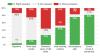
As Claire Grouze wrotes, "The semantic layer is presented as the holy grail to make your analytics agent reliable." This is the 'knowledge base' we suppose that intelligence and reasoning works from, filled with ontologies, causal principles, and the like. The stuff we think it takes to 'understand' a domain. But the semantic layer is brittle and context-dependent. When used on its own in this test, it refused to respond to most questions. Even optimized - at the cost of much more work and slower processing speed - it still answered few queries. And, as Grouze writes, it doesn't eliminate hallucinations - it just moves them. This sort of finding is why I think teaching recognition skills is more important that teaching facts and principles. Via Isin Pesch.
Web: [Direct Link] [This Post][Share]
Infrastructure as Curriculum: What Students Learn When AI Works Offline
Sai Gattupalli,
Society and AI,
2026/05/13
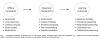
This short paper makes the point (and creates a framework of sorts) that offline AI can serve pedagogical purposes. "Offline systems make tradeoffs legible - coverage may be narrower and responses slower, but the system's boundedness encourages learners to treat AI output as a proposal to be tested rather than a conclusion to be accepted."
Web: [Direct Link] [This Post][Share]
AI may be the new gatekeepers, but human connection is more needed than ever
Ben Werdmuller,
2026/05/13

"I'm biased towards New_ Public's point of view: pro-social spaces, pro-democracy technology, and community as an ingredient for trust are all my jam," writes Ben Werdmuller, "But everything laid out in this presentation is already happening." Even more, a new pro-social technology that doesn't even have RSS is something I'm already questioning. If your collaboration is limited to email, LinkedIn and Bluesky, you haven't thought the subject through.
Web: [Direct Link] [This Post][Share]
We May Be Entering A Second Axial Age
Otto Scharmer,
NOEMA,
2026/05/13
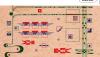
Writers are always hopeful that their age represents fundamental change that that their work has identified the nexus of that change. I am not immune to it, I confess. Neither is this paper, which argues that just as "the transition from small hunter-gatherer societies into complex civilizations gave rise to the first Axial Age," which "opened the depths of individual interiority," today's "planetary polycrisis of climate chaos, mass migration, increasing warfare and transformative AI represents a rupture of comparable magnitude," through "the systematic cultivation of ordinary people's inner development, moral imagination and civic agency." Again, though, this is an argument that sees the future as a return to the past, a subsumption of the individual to the collective. "We now must reimagine our existing institutions and create new collaborative structures that our sectorized setup mostly lacks."
Web: [Direct Link] [This Post][Share]
Brain Rot, AI Slop and the Work of Thinking
David Webster,
2026/05/13
This is a transcript where David Webster talks about "how to make our bit of the world (be that classroom, VLE site, or tutorial meeting) one that promotes and rewards actual thinking and nurtures concentration and an actual appetite for disciplinary engagement." It's a good article and worth reading in full, but I want to focus on one bit near the end. Webster says, "If we want students to care about understanding or thinking, they need to encounter people who visibly care about understanding - who are rapaciously curious. If we want them to tolerate uncertainty, they need to see uncertainty handled without panic. If we want them to revise their thinking, they need to see revision as a sign of seriousness rather than weakness." I've long talked about the role of the educator being 'to model and demonstrate'. That's what this is. That's where our focus should be. That (I hope) is what I've always tried to do in this newsletter.
Web: [Direct Link] [This Post][Share]
"My theory of change is to be"
Tim Hollo,
In Between Days,
2026/05/13

I want to leave a promissory note here to finish some thoughts, knowing I might not ever get to fulfill it, but at least to flag the intention as something important. Let's start here (and yes, we've visited this place a lot): "When we peel back the modernism, let go of the separation, the interdependence is everywhere, and the pathways to rediscovering it are many and varied - and surely that's the point." That should sound so familiar. A lot of people today see the path forward as a path backward - letting go of modernism, as though it has all been a big mistake. I too, think abstraction as an ideal was a mistake, but I see the path forward as reaching into a future, one where we don't lose who we are even while understanding our interconnection with everything else. Indeed, the whole concept of interconnection makes no sense if it is not connection between individuals - distinct, autonomous, and indispensable. And the promissory note is that I want to say this without appeal to mythology, whether to the idea of the will or to mysterium, tremendum et fascinans. Via Kate Bowles.
Web: [Direct Link] [This Post][Share]
There are many ways to read OLDaily; pick whatever works best for you:
- Read in your web browser on this web page, updated weekdays
- Receive a daily or weekly email newsletter by subscribing here
- Subscribe to the RSS feed using your favourite feed reader
- Follow @OLDaily@mastodon.social on Mastodon or elsewhere in the fediverse
- Follow @OLDaily on Bluesky
- Read OLDaily as a LinkedIn Newsletter
- Integrate the open API using the JSON feed
This newsletter is sent only at the request of subscribers. If you would like to unsubscribe, Click here.
Know a friend who might enjoy this newsletter? Feel free to forward OLDaily to your colleagues. If you received this issue from a friend and would like a free subscription of your own, you can join our mailing list. Click here to subscribe.
Copyright 2026 Stephen Downes Contact: stephen@downes.ca
This work is licensed under a Creative Commons License.