
No Need Rushing for AI in Education
Thomas Ultican,
tultican,
2026/05/05

Readers might find this surprising to hear, but I agree with the core sentiment of this article (though not with many of the details). In broad strikes, the argument is the same as has been made elsewhere: there's a concerted industry campaign to get schools to spend on AI technology, but it's not at all clear that it will be a good investment. "The AI pitch looks suspiciously like the same education technology song and dance bombarding schools for more than a century," writes Thomas Ultican. Quite right. But let's analyze this. From a business standpoint, schools (and education generally) represents a huge pool of money, especially when the market is approached at the district or the state/province level. Fortunes can be made. Companies will promise anything. We never see results because none of these products changes anything about that model of education - that's the last thing the companies want to change, because then the huge pools of money become harder to access. So most product results in money being spent on technology to do the same thing as before. I would advise: let's not do that this time. But it's not a popular message - the companies don't like it, obviously, and neither do the schools, because what they want is to keep doing the same thing they've always done.
Web: [Direct Link] [This Post][Share]
Hawkeye
Marshall Kirkpatrick,
What's Up With That,
2026/05/05
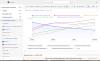
According to the website, "Turn market intelligence into communications that lead your field. Hawkeye monitors your ecosystem and helps you organize intelligence into newsletters, commentary, and outreach that strengthen your field-level radar and get people excited about the future." I don't use anything like this (I use my brain instead) but I do wonder how many influencers - especially those on Substack and LinkedIn with hundreds of thousands of followers - are doing exactly this. A partner app called 'What's Up With That' (previously covered here) which looks at a web page and analyzes the content behind it. "Hawkeye monitors your ecosystem at the macro level. What's Up With That? operates at the point of reading - showing you what's new and important in anything you read, with 40+ AI power tools to go deeper. Together they close the loop between ecosystem awareness and individual sensemaking."
Web: [Direct Link] [This Post][Share]
Pedagogical partnerships with generative AI in higher education: how dual cognitive pathways paradoxically enable transformative learning
Shaofeng Wang, Hao Zhang,
International Journal of Educational Technology in Higher Education,
2026/05/05
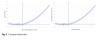
The gist of this research paper is that cognitive offloading to AI "liberates mental resources for higher-order reflection, thereby enhancing transformative learning experiences." An analysis of the types of AI use reveals what the authors describe as a U-shaped pattern, where casual cognitive offloading diminishes critical evaluation, but more deliberate and strategic offloading actually enhances that function. The more people use AI in a structured, studious way, the more likely they are to be sceptical of what it produces and to assess output in terms of what they are trying to achieve. Via Tawnya Means, who summarizes the main points (don't bother, though, the article is mostly AI filler - I don't know why people who write using AI have not learned that more is not better).
Web: [Direct Link] [This Post][Share]
What Works for the Most Vibrant Experiences in a Hybrid Conference Format?
Alan Levine,
Google Groups,
2026/05/05

Over a two-week period in 2002 I wrote a daily commentary for Australia's online Net*Working conference. It was a deep and engaging experience for me, and a success as a conference newsletter. They asked me to do it again the following year, but this time the conference was hybrid, and I felt cut off from what was happening, and it was a failure. This has been my experience with hybrid events ever since. I don't think there's any way to make the online participants feel equal to the people who paid their way through flights and fees to that exclusive in-person experience. It's not a technology divide, to my mind, it's a class divide. The only way to make it work is what we did when the government foolishly foisted hybrid 'back to office' mandates on us: we kept doing it all online. See also this second conversation thread.
Web: [Direct Link] [This Post][Share]
Intelligence?
Nik Bear Brown,
GitHub,
2026/05/05
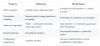
This is a pre-release version of Nik Bear Brown's Intelligence?, an engaging and fascinating exploration of the concept behind not only AI but life in general. It rewards a good reading. "It is the book's thesis: that intelligence is not a single thing being accumulated across the tree of life, but a family of distinct capacities, each with its own evolutionary history, each extendable by different tools, and none of them well described by any definition we currently have." Or put another way, "Every cognitive tool humans have built - from the first written word to the GPS to the bomb-sniffing dog - extended a specific capacity while requiring human judgment to direct it. The microscope extended pattern recognition. Writing extended memory. GPS extended spatial navigation. AI extends pattern recognition, prediction, and associative memory to superhuman scale." Definitely take the time to have a look, and even better, interact with the author on the concepts and themes. It came up in the course of a conversation on Google Groups.
Web: [Direct Link] [This Post][Share]
Educational AI Insights | MagicSchool Blog
MagicSchool,
2026/05/05

I know a lot of education technology specialists don't want to see this, but here it is anyway. According to its chatbot (I asked, "What does MagicSchool provide for teachers?"), "The platform uses AI to generate customized, standards-aligned resources tailored to your specific grade level, subject, and classroom needs. You can access tools through the search bar in the app to find exactly what you need." Also, "Just let me know what you're working on, and I can help you create or develop the resource directly! Whether it's a lesson plan, worksheet, rubric, or anything else - I'm here to support your work." I wouldn't expect learning outcomes to magically improve, though teachers might find their work gets a little easier. No RSS though.
Web: [Direct Link] [This Post][Share]
Open Source Wishlist
Open Source Wishlist,
2026/05/05

This is a nascent project that has potential if it gains traction. The idea of Open Source Wishlist is that it "connects open source maintainers with expert practitioners for sustainability: governance, funding strategy, security audits, succession planning, and more." I think that while there is potential it will require tending and moderation. Problems like scam developers and fly-by-night projects are real. Via Scott Leslie.
Web: [Direct Link] [This Post][Share]
DeepMind Vision Banana: A Unified Vision Architecture
Roboflow Blog,
2026/05/05
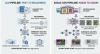
Vision Banana is "a unified model introduced by Google DeepMind that both generates RGB images and performs visual understanding tasks within a single architecture, controlled entirely through text prompts." Or in short: "image generators are generalist vision learners." It's interesting because it blends visual tasks and semantic tasks (eg., find all the cats' ears in the photo) in a single architecture. Just your regular reminder that AI is far more than large language models. (p.s. my take on the 'banana' name: it originates from the meme in image sites (like Imgur) of using a 'banana for scale').
Web: [Direct Link] [This Post][Share]
There are many ways to read OLDaily; pick whatever works best for you:
- Read in your web browser on this web page, updated weekdays
- Receive a daily or weekly email newsletter by subscribing here
- Subscribe to the RSS feed using your favourite feed reader
- Follow @OLDaily@mastodon.social on Mastodon or elsewhere in the fediverse
- Follow @OLDaily on Bluesky
- Read OLDaily as a LinkedIn Newsletter
- Integrate the open API using the JSON feed
This newsletter is sent only at the request of subscribers. If you would like to unsubscribe, Click here.
Know a friend who might enjoy this newsletter? Feel free to forward OLDaily to your colleagues. If you received this issue from a friend and would like a free subscription of your own, you can join our mailing list. Click here to subscribe.
Copyright 2026 Stephen Downes Contact: stephen@downes.ca
This work is licensed under a Creative Commons License.