How to Keep the Internet Human
Sarah Hinchliff Pearson,
Creative Commons,
2026/02/12
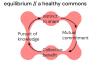
Creative Commons continues its campaign to redefine 'open' as 'closed'. It's getting to the point where I'm feeling like I should remove my Creative Commons licenses from my material - not because I want to stop people from using my stuff, but because I want to ensure that they can. In this post the argument is that the "instinct to share" is being eroded by a 'free-for-all' in which people use our content however they want. This 'instinct', though, is a complete fabrication that doesn't have any actual properties, just ones that have been made up. Anyhow, in this retelling everything is subject to new boundaries. "The ethics of sharing - which is what open is about - needs to be broader than what we can own." No. There never was an 'ethics of sharing'. This is also something being invented from nothingness. There is no transaction here - when I share my stuff, you can do whatever you want with it, except (obviously) own it. And I am not interested in some redefinition of the 'social contract' coming from south of the border.
Web: [Direct Link] [This Post][Share]
Revisiting 'the' Public Sphere, Again
Axel Bruns,
Snurblog,
2026/02/12
This of course seems right to me: "to still speak of 'the public sphere' may be a misnomer: our communicative environment has been reconfigured by contemporary digital and social media technologies to a point where it is no longer unitary, entirely public, or concentrically arranged around a set of agenda-setting mass media." So what may be said instead? In his slide presentation he talks about groups, communities, crowds and audience, though the best description is in the title, "From 'the' Public Sphere to a Network of Publics." (I'm surprised I can read the presentation on Slideshare without being slammed, so enjoy it while you can). See also.
Web: [Direct Link] [This Post][Share]
Democracy and the Swarm
Geoffrey Rockwell,
Theoreti.ca,
2026/02/12
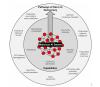
Gary Marcus likes to tell us that (neural network based) generative AI won't succeed, so it's a bit ironic to see him cited here (preprint here) as warning that the technology will destroy democracy. Still, the concern he raises is a valid one. "The "wisdom of crowds" works only if the crowd is made of distinct individuals. When one operator can speak through thousands of masks, that independence collapses. We face the rise of synthetic consensus." Quite so. This is a concern that was identified by the creators of blockchain, who faced the same issue when building consensus algorithms. Their solution was to make it too hard to be worthwhile to create fake voices, by adding an expensive 'proof of work'. That obviously won't work in a democracy (especially one inhabited by trillionaires). What we need instead is (what I'll call) "proof of life".
Web: [Direct Link] [This Post][Share]
Digital unravelling - losing Facebook and the transience of social media
Alastair Creelman,
The corridor of uncertainty,
2026/02/12

Once again a warning not to put all your faith in a platform owned by someone else. Alastair Creelman reports that "Last week I was suddenly and without explanation thrown out of Facebook and Messenger. I was scrolling through posts, as we all do, when a message appeared telling me that my account was suspended because activity on it didn't follow their Community standards on account integrity." He continues, "I have been a user for almost 20 years and have always been a responsible user, never making offensive comments or promoting disinformation or hatred." If you have some digital content that isn't backed up, stop what you're doing and back it up now. If it can't be backed up, get off that platform now.
Web: [Direct Link] [This Post][Share]
UK Higher Education VLE Market: 2025 Review
Neil Mosley,
Neil Mosley Consulting,
2026/02/12

There's a fair bit of in-the-weeds discussion, though "the story presented by this year's analysis almost perfectly reinforces overarching market trends seen in recent years. These include Instructure's Canvas being selected by a growing number of UK HE providers and increasingly becoming the choice for Russell Group universities looking to switch, as evidenced by Imperial College's decision this past year. Similarly, D2L's Brightspace continues to be frequently selected, with the company growing its number of UK HE customers again this year."
Web: [Direct Link] [This Post][Share]
The 2025 Emerging Technology Survey findings are available!
Nicole Johnson,
Canadian Digital Learning Research Association,
2026/02/12
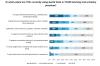
This is a relatively short document (9 page PDF) outlining a survey of post secondary institutions on potential AI use in education (see the methods here). "Survey respondents continue to foresee GenAI becoming a normal part of education, and an increasing proportion recognize its potential as a study tool. At the same time, concerns that GenAI will make teaching more challenging are also rising."
Web: [Direct Link] [This Post][Share]
Higher Education Beyond the Public Good
Alex Usher,
HESA,
2026/02/12
This is quite a good interview with Simon Marginson, author of Global Higher Education in Times of Upheaval, available as open access (337 page PDF) and itself recommended. The premises is that in the anglophone world, the public role of the university, as defined by governments, has been reduced to a purely economic role. "The state framework of regulation had decisively shifted into pure economism, if you like - the idea that the higher education system has to deliver for capital, and that is its sole rationale." So instead we turn to the 'common good': "the idea of a community committing to higher education as something that benefits it, and as an instrument for its own betterment and development."
Web: [Direct Link] [This Post][Share]
Slow learning
Alexandra Mihai,
The Educationalist,
2026/02/11

I am not nearly as enthused by 'slow learning' as are many of the educators writing in this space. Slow learning is an approach that does away with technology and emphasizes focus. The idea is to provide students "with an opportunity to slow down, enjoy silence, put away their digital devices for a bit, be in tune with their thoughts and with each other and practice patience." I like that sometimes - it's why I sometimes turn off the music when I'm riding my bike - but not when I'm learning. For some people silence is nice, but for me it's when my tinnitus ramps up and my internal voice starts cycling. The digital devices give me a focus that inert objects like pencils and papers can't. When I'm learning, I want to be engaged, not bored to tears. Maybe this is just me - maybe silence suits everyone else but me. But somehow I doubt it.
Web: [Direct Link] [This Post][Share]
Why I'll never let AI write for me...
Stephen Lahanas,
Digital Perspectives Digital Perspectives,
2026/02/11

Stephen Lanahas offers five reasons why he won't let AI write for him: because AI is a lousy writer, because AI's need real writing to be trained on, because of potential cognitive decline, because old writers will be needed to teach the next generation, and because he has a personal goal not to help anyone become a trillionaire. For those who wonder, I also do not use AI to write (I use it for other tasks, like coding software and adaptive cruise control) but mostly not for these reasons (except maybe a bit of the second: I want AI to learn as much from me as I learn from it). No, it's mostly because I have what AI will never have: my own opinions and experiences (sure, the AI may eventually have it's own opinions and experiences, but it can never duplicate mine). Now it is a bit of presumption on my part to suppose my opinions and experiences are worth sharing, but that's a different issue.
Web: [Direct Link] [This Post][Share]
AI and the future of work: Measuring AI-driven productivity gains for workplace tasks
AI Security Institute,
2026/02/11
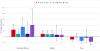
"To what extent does AI deliver productivity gains for individuals performing work-related tasks?" This is a bit of a moving target, obviously. And there are "the jagged capabilities of AI systems." But the results are still relevant. In two of the four task types, (Monitoring Processes, Materials, or Surroundings; and Drafting, Laying Out, and Specifying Technical Devices, Parts, and Equipment) AI resulted in an 'uplift' in quality. In another task type (Interpreting the Meaning of Information for Others) AI produced faster results. And in a final task type (Organising, Planning, and Prioritising Work) there was no observable improvement. Of course, "these results should be treated as preliminary indicators."
Web: [Direct Link] [This Post][Share]
Professor Says Her Garbled AI Textbook Was a Huge Success
Frank Landymore,
Futurism,
2026/02/11

There's some unsurprisingly negative reaction to this story where students were provided with an AI-authored textbook for $25 instead of the usual $250 worth of textbooks. "the digital textbook was immediately met with widespread mockery and derision from educators." In an interview with Inside Higher Ed (may be behind a spamwall) course instructor Zrinka Stahuljak said, "Compared to teaching the class without the AI-assisted textbook], engagement went up." This article rolls out the usual criticisms, such as concerns about hallucinations, reduced critical thinking skills, and tech company business practices. In this case, though, the criticisms are speculative - they might have happened, maybe, but we have no evidence that they did happen (except for the obviously garbled illustrations, which the instructor says was a design choice).
Web: [Direct Link] [This Post][Share]
There are many ways to read OLDaily; pick whatever works best for you:
- Read in your web browser on this web page, updated weekdays
- Receive a daily or weekly email newsletter by subscribing here
- Subscribe to the RSS feed using your favourite feed reader
- Follow @OLDaily@mastodon.social on Mastodon or elsewhere in the fediverse
- Follow @OLDaily on Bluesky
- Read OLDaily as a LinkedIn Newsletter
- Integrate the open API using the JSON feed
This newsletter is sent only at the request of subscribers. If you would like to unsubscribe, Click here.
Know a friend who might enjoy this newsletter? Feel free to forward OLDaily to your colleagues. If you received this issue from a friend and would like a free subscription of your own, you can join our mailing list. Click here to subscribe.
Copyright 2026 Stephen Downes Contact: stephen@downes.ca
This work is licensed under a Creative Commons License.