
Beyond the Human: Democratic Education Through the Ethics of Care and Carriance
Michalinos Zembylas,
Democracy & Education,
2025/10/17

This article is a response to a paper from Koponen and Kasa in which "the authors propose a framework for care-full democratic education (DE), which integrates the moral and political dimensions of democracy with an appreciation of relationality and caring" as a response to what they perceive to be a lack of feminist theorizing and care ethics in current DE. As Michalinos Zembylas summarizes, "A key aim of care-full DE, then, is to counter tokenism, ensuring that children's voices are genuinely heard and acted upon, rather than superficially acknowledged." Which sounds reasonable to me. However, says Zembylas, "their account of DE arguably remains anthropocentric. This raises an important question: Is democracy - and, by extension, DE - exclusively for humans?" Along these lines, "DE must consider not only how humans engage with technology but also how technology, as an active force, participates in shaping ethical and political possibilities. Expanding care ethics to include technology requires an attentiveness to these entanglements." This is the role played by Ettinger's (2015) notion of 'care-carrying,' or 'carriance', depicting care as "an ongoing, embodied process of holding and sustaining relationality" which "challenges educators to rethink their roles - not as sole providers of care but as co-participants in a shared process" and " underscores the interdependence of human and more-than- human actors in the educational process."
Web: [Direct Link] [This Post][Share]
What's Lost When NY Times Guest Essays Are Uninformed
On EdTech by PH&A,
On EdTech Newsletter,
2025/10/17
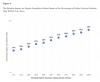
I didn't read the NY Times article because, of course, it's behind a paywall, but I do appreciate this response from Phil Hill, and especially the bit quoting Russ Poulin, former executive director at WCET, and especially this point: "the author ignores that many community college students either would not attend at all or would have their road to degree completion stretched out enormously....this risking their ability to persist." Hill adduces additional data and points out "Analyses indicate that students who attempt a greater proportion of online credit courses tend to earn more credits overall and are more likely to graduate from the community college within four years."
Web: [Direct Link] [This Post][Share]
Diamond Dreams, Unequal Realities: The Promise and Pitfalls of No-APC Open Access
Maryam Sayab,
The Scholarly Kitchen,
2025/10/17

Diamond Open Access is a model of open access publication that "removes financial barriers on both sides: readers pay nothing to access content, and authors pay nothing to publish it." Instead of relying commercial publishers, "ownership often rests with universities, scholarly societies, or library consortia... and journals are frequently community-driven and mission-focused." That said, I think nobody would question the assertion that "if diamond OA is to fulfil its equity promise, it cannot rely solely on idealism." Costs and issues remain, such as editorial overhead, discoverability and indexing, and compliance with regulation and policy frameworks. This article recommends the use of shared infrastructure, core institutional funding, inclusive indexing, and capacity-building work. All of these make sense, and point the way for ways communities (including government and industry) can support open access. What we need to be clear about is that a return to subscription or publication fees is a step backward, not a solution to remaining problems.
Web: [Direct Link] [This Post][Share]
Investigating Teachers’ Changing Perceptions Towards MOOCs Through the Technology Acceptance Model
Patrick Camilleri, Abeer Watted, Michelle Attard Tonna,
Education Sciences,
2025/10/17
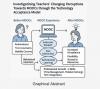
While this could be more clearly written, this paper argues that "MOOCs foster critical skills such as time management, problem-solving, and professional engagement while contributing to participants' self-efficacy and readiness to integrate technology into teaching practices." They arrive at this after considering the impact of MOOC use on participant's technology readiness (see part A of this paper by me for more) and in particular their perceived ease of use and their perceived usefulness. P.S. love the 'graphical abstract'.
Web: [Direct Link] [This Post][Share]
The Paradox of Analytic Philosophy’s Success
Justin Weinberg,
Daily Nous,
2025/10/17

I've never disguised the fact that my own education in philosophy was in large part based in the analytical tradition, and far from turning my back on it I view the questions and methods almost as a 'secret weapon' allowing me to address questions in learning and technology that go unremarked by others. That's not to say that I am an analytic philosopher - as some of the commenters remark, the identification really doesn't make sense any more. But it gives me a detached space from which to consider words, meanings, values, intents and semantics, which I think is essential in any discipline intending to teach these.
Web: [Direct Link] [This Post][Share]
Building Ethical, User-Aligned AI: What Nous Research Is Doing Differently
Leo Laporte, et al.,
TWiT.tv, Intelligent Machines,
2025/10/17

I listened to this interview with Nous Research CEO Jeffrey Quesnelle on my commute this morning (that's the one good thing about working from the office in the city). He describes the company's approach developing fully open AI models - not just open weights, but open everything from the training data on up. One part of this (necessarily) is that "users, not corporations, control alignment through... system prompts and post-training tools." According to the summary, "Nous Research aims to democratize not just AI usage, but its creation and alignment. The biggest threat isn't rogue superintelligence, Quesnelle suggests, but the risk that a tiny elite controls what billions see and hear." There's a bunch of stuff in the interview, including description of the distributed web of GPUs managed by blockchain used to train the model. Definitely worth a watch - it's the first 40 minutes of this longer video, or you can just read the summary on the web page. See also: Hermes4, Hermes4 Technical Report, The Psyche Network Architecture, VentureBeat, thehomebase.ai.
Web: [Direct Link] [This Post][Share]
There are many ways to read OLDaily; pick whatever works best for you:
- Read in your web browser on this web page, updated weekdays
- Receive a daily or weekly email newsletter by subscribing here
- Subscribe to the RSS feed using your favourite feed reader
- Follow @OLDaily@mastodon.social on Mastodon or elsewhere in the fediverse
- Follow @OLDaily on Bluesky
- Read OLDaily as a LinkedIn Newsletter
- Integrate the open API using the JSON feed
This newsletter is sent only at the request of subscribers. If you would like to unsubscribe, Click here.
Know a friend who might enjoy this newsletter? Feel free to forward OLDaily to your colleagues. If you received this issue from a friend and would like a free subscription of your own, you can join our mailing list. Click here to subscribe.
Copyright 2025 Stephen Downes Contact: stephen@downes.ca
This work is licensed under a Creative Commons License.