
Asking a More Productive Question about AI and Assessment
David Wiley,
Tech Trends,
2025/07/17
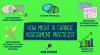
As Philipp Schmidt comments, "The article poses the right question 'Given that AI exists in the world, and that students are likely to use it (whether accidentally or on purpose), what evidence of learning would I now find persuasive?'" (This article might be behind a paywall though it seems to be open and a 'sharing token' was included in the link - try it here.) Image: John Spencer
Web: [Direct Link] [This Post][Share]
Links, Resources, and Humans of Note
Alex Russell,
Infrequently Noted,
2025/07/17

This resource page from Alex Russell on browsers, standards, and the process of progress is a bit peripheral to my own interests, so I won't follow everything in here, but there's enough overlap to at include at least this post here. "This page collects links to folks and firms sharing outstanding work on the web. If you're already caught up and just want to follow their ongoing adventures, import this OPML file via your feed reader." I mean, if I had another eight hours a day, I would follow all these authors. I just can't. Image: Rick Viscomi (I mean, I did browse through the links).
Web: [Direct Link] [This Post][Share]
Divergences in Cultural Approaches to Morality | Snurblog — Axel Bruns
Axel Bruns,
Snurblog,
2025/07/17

We get only the most tantilizing glipse of this research from Liming Liu; I couldn't find a more detailed presentation of these ideas anywhere online. Essentially, the argument, based on a study of 500 billion words from 5.2 million books since 1500, while the five basic moral foundations are "care, fairness, liberty, purity, and authority," a deeper analysis shows "different patterns emerged from this, and varied strongly across four target languages." As Axel Bruns comments, "existing research on this is overreliant on observations from English-language studies, which may not translate well to other languages and cultures with their own cultural norms." No kidding. I find it ironic how writers who complain of bias in AI fail to examine the cultural bias in their own understanding of ethics.
Web: [Direct Link] [This Post][Share]
Learning brains
Ben Williamson,
Code Acts in Education,
2025/07/17

Ben Williamson interprets the recent article titled Your brain on ChatGPT (covered here) from the perspective of a recent work of his own, Learning brains: educational neuroscience, neurotechnology and neuropedagogy. Both are worthy of a read (maybe start with this blog post then read the more formal article). The Learning Brain "is being conceived in terms of 'brain facts' that are assembled out of neural information through highly-data-intensive and computational methods... the scientific setup of investigation - the instruments used, the institutional priorities underpinning the study, the types of information collected - all play a part in constituting the findings, and in how the learning brain is rendered as authoritative scientific knowledge in published results, findings and presentations." Williamson and colleagues Jessica Pykett and Dimitra Kotouza identify four types of Learning Brains - a plastic learning brain, a synchronized learning brain, an attentive learning brain, and a computational learning brain, with the suggestion that there may be other characterizations.
Web: [Direct Link] [This Post][Share]
A University Providing Software as a Service: Noteable - Pooling Resources, Building Value
James Stix,
BCcampus,
2025/07/17

Noteable is "a platform that promotes interactive learning by enabling the use of computational notebooks across various disciplines." These, such as Jupyter Notebook, enable users to view, edit and run code in the context of a text document. Notable is enabled as a Software-as-a-Service (SaaS) by the University of Edinburgh in collaboration with Jisc, and is available as an integration with virtual learning environments like Canvas, Moodle, Blackboard, and Brightspace. This article describes the provision of Notable from a business and support perspective. See more case studies in Pooling Resources, Building Value.
Web: [Direct Link] [This Post][Share]
Generative AI's Three Body Problem
Steve Hargadon,
2025/07/17
I like the overall framing of this discussion of AI ethics as a 'three body problem' involving the training data, the outputs, and the users (it could well have involved a fouth body, the algorithm, and maybe more). I would have preferred that the ethical analysis moved beyond a risk analysis, however. Ethics is about more than just risk avoidance (especially when one person's risk is another person's opportunity). Best line of the piece: "I personally don't think we evolved for truth but for survival, meaning that shared stories and beliefs, rather than rational thinking, were critical to human survival." Via Miguel Guhlin.
Web: [Direct Link] [This Post][Share]
There are many ways to read OLDaily; pick whatever works best for you:
- Read in your web browser on this web page, updated weekdays
- Receive a daily or weekly email newsletter by subscribing here
- Subscribe to the RSS feed using your favourite feed reader
- Follow @OLDaily@mastodon.social on Mastodon or elsewhere in the fediverse
- Follow @OLDaily on Twitter
- Integrate the open API using the JSON feed
This newsletter is sent only at the request of subscribers. If you would like to unsubscribe, Click here.
Know a friend who might enjoy this newsletter? Feel free to forward OLDaily to your colleagues. If you received this issue from a friend and would like a free subscription of your own, you can join our mailing list. Click here to subscribe.
Copyright 2025 Stephen Downes Contact: stephen@downes.ca
This work is licensed under a Creative Commons License.