Core Values for AI Literacy
Doug Belshaw,
We Are Open Co-op,
2025/05/27
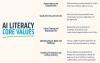
Two of the criticisms I have of the 'AI ethics' statements we've seen so much of recently are that (a) the statements address a much wider set of issues than those raised specifically by AI, and (b) the statements assume that a specific set of values constitutes 'ethics' when in fact there are many issues that remain unresolved in society. The recent rejection of diversity, equity and inclusion by a certain government underlines my point. My criticisms are made all the harder to make because I am largely in agreement with the ethical stance being proposed. But it needs to be clear that these 'AI ethics' statements are political statements, and even more importantly, that for many of them there is no political party or organization that explicitly stands for these statements.
Web: [Direct Link] [This Post][Share]
Beyond Augmentation: Toward a Posthumanist Epistemology for AI and Education
J. Owen Matson,
Intralation: Culture, Theory, Pedagogy,
2025/05/27
I am sympathetic with the main thrust of this argument. "The dominant discourse around AI in education - even when well-meaning - remains trapped within a humanist epistemology that misrepresents how cognition unfolds in AI-human systems," writes J. Owen Matson. "What is needed is not a defense of human uniqueness, but a reconfiguration of our epistemological assumptions—one that embraces a posthumanist understanding of learning as dialogic, unpredictable, and co-constructed across systems of human and machinic interaction." With Matson, "I resist the underlying premise of augmentation when it assumes a stable subject whose agency is simply extended or 'boosted' by AI - rather than fundamentally transformed through its entanglement with machinic systems."
Web: [Direct Link] [This Post][Share]
Identifying Reasons That Contribute to Dropout Rates in Open and Distance Learning
Kokila Ranasinghe, T. Lakshini D. Fernando, Nimali Vineeshiya, Aras Bozkurt,
The International Review of Research in Open and Distributed Learning,
2025/05/27
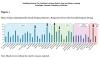
The conclusions outline here (22 page PDF) accord with my own experience in online learning. "The most influential reasons were job and family commitment, workload, time management, and flexibility, indicating that employed students were the more severely affected fraction of the dropout population." The prevalence of these factors is what has led me in the past to encourage the development of local support centres - part of the Triad model - to help learners manage their way through these factors.
Web: [Direct Link] [This Post][Share]
Higher Education Needs to Get On the AI Train - And Fast!
Ruth Slotnick,
I ❤️ AI Community,
2025/05/27
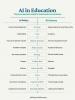
Ruth Slotnick shares an image posted on LinkedIn by Patrick Dempsey (I checked and he only posted on LinkedIn so I'm linking to this post so readers don't have to log in to LinkedIn to view it - I have no idea why Dempsey wouldn't share the image on an open platform). It's a good image, drawing the distinction between what I have in the past called 'free learning' versus 'control learning'. It obviously applies not only to AI policy and AI literacy, but to learning in general. Maybe there's a version out there on the web somewhere that expresses the same idea more generally. (Milestone of note: first feed name listed in OLDaily to contain an emoji).
Web: [Direct Link] [This Post][Share]
Executive Cognition, a New Learning Outcome We Cannot Ignore
Alexander "Sasha" Sidorkin,
AI in Society,
2025/05/27

I'm not completely sold on the idea but it's worth consideration. Sasha Sidorkin defines 'executive cognition' as "the ability to strategically allocate attention, manage cognitive resources, and construct workflows that integrate AI systems without surrendering human judgment. It is what separates those who can simply operate tools from those who can govern systems of intelligence."
Web: [Direct Link] [This Post][Share]
There are many ways to read OLDaily; pick whatever works best for you:
- Read in your web browser on this web page, updated weekdays
- Receive a daily or weekly email newsletter by subscribing here
- Subscribe to the RSS feed using your favourite feed reader
- Follow @OLDaily@mastodon.social on Mastodon or elsewhere in the fediverse
- Follow @OLDaily on Twitter
- Integrate the open API using the JSON feed
This newsletter is sent only at the request of subscribers. If you would like to unsubscribe, Click here.
Know a friend who might enjoy this newsletter? Feel free to forward OLDaily to your colleagues. If you received this issue from a friend and would like a free subscription of your own, you can join our mailing list. Click here to subscribe.
Copyright 2025 Stephen Downes Contact: stephen@downes.ca
This work is licensed under a Creative Commons License.