
What High School Debaters Have Really Been Learning About AI: You Won’t Even Believe it
Stefan Bauschard,
Education Disrupted: Teaching and Learning in An AI World Education Disrupted: Teaching and Learning in An AI World,
2026/10/28
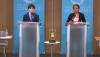
I participated in high school debates and learned a lot from it (not the least of which was that I was pretty good at argumentation). Here's an example of a high school debate from the City Club in Cleveland. It's pretty entertaining, though I still think the debaters focus too much on pumping out points of argument rather than crafting the whole for rhetorical force. But I quibble. This article is a fascinating look into that world. Stefan Bauschard offers a summary of this year's debate topic (hyperscale data center construction) and some general observations about the debate format, then gets into a deep dive into the topics and arguments raised across some 10,000 debates on the topic, resulting in a 2,100+ page scouting document. The article (happily) summarizes that. What can we learn from all this? A lot about the topic, obviously, including the sorts of considerations people bring to the fore around the issue. But also, we get a sense of the thinking around the issue, and especially the core points of contention.
Web: [Direct Link] [This Post][Share]
Manifesto for Co-Creation in Learning and Teaching – Teaching Matters
Catherine Bovill, Céline Caquineau, Heather McQueen, Rea Michalopoulou, Callum Paterson, Neneh Rowa-Dewar, Haolan Tu,
Teaching Matters,
2026/10/28
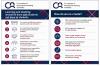
I think we'll be seeing a lot more of this in the next year or two, though not always in manifesto form. This manifesto states, "The days of didactic instruction, where students are positioned as passive recipients of knowledge, should be long gone. We need to disrupt these approaches and reposition staff and students as active collaborators." Instead, students and educators should be thought of as co-creators of the learning experience. What does that mean? "Students and staff work together to decide on course content, such as course topics, learning activities, and assessment formats... Students via group work and peer learning activities bring their expertise and perspectives to the learning process... etc." There are more examples here.
Web: [Direct Link] [This Post][Share]
Untangling the messy middle
Wendy Palmer,
Lifelong Learning Edge,
2026/10/28
Wendy Palmer teases out the tangled threads of a discussion about microcredentials. "If the problem is that someone needs to learn something quickly, then a short learning experience might be the answer. If the problem is that they already know it but can't demonstrate it, perhaps they need assessment or recognition of prior learning. If an employer doesn't understand what someone can do, perhaps we need better evidence and ways of communicating it. And if someone wants to build towards a larger qualification, we need pathways that allow smaller pieces of learning to connect and count. All of these might involve micro-credentials, but they don't necessarily require the same approach." This might all be too much to plan for in advance, especially if improvements to the education system are more incremental.
Web: [Direct Link] [This Post][Share]
The Movement to Privatize Public Schools
Thomas Ultican,
tultican,
2026/10/28
I keep an eye on all this, even if I don't report on it a lot (my focus is on learning technology, though personally I am very much in support of government-funded public education). Thomas Ultican writes and then documents, "In order to monetize education, deceptive slander of public schools became common place. People subjected to this slander still really liked their local schools but have become convinced schools in other areas are a disaster." Ultican suggests that "curriculum control was the goal" though of course the creation of a whole new private market was part of the motivation as well. Anyhow, the publications listed are mostly in my RSS reader (some are behind paywalls so I don't see them) and when I read or link to them I always keep this context in mind.
Web: [Direct Link] [This Post][Share]
The ethical application of AI in learning analytics
JISC,
2026/10/28

This document follows Jisc's updated learning analytics code of practice to add more on "the responsible use of artificial intelligence (AI) to enhance student engagement monitoring and support organisations to identify learners who may benefit from additional support." I think we should understand that the document refers to 'ethical' in the legal sense rather than the moral sense. That said, it contains a number of common-sense statements about AI in learning analytics, for example, "Where AI tools are provided by third parties, organisations remain responsible for how student data is used" and "'Understanding' a model means being confident in its behaviour through validation and monitoring, not necessarily being able to read its internal workings."
Web: [Direct Link] [This Post][Share]
Why AI in Education Is Four Things, Not One
Szymon Machajewski,
EDUCAUSE Review,
2026/10/28

The author makes the very good point that AI isn't just one thing in education. AI in medicine, for example, is very different from AI for medicine. So Szymon Machajewski proposes a four-type model: AI for education, AI in education, AI of the profession, and AI literacy. Of these I think the third is a bit garbled, and the fourth seems superfluous. It seems weird to say "AI literacy is the only layer that can be taught without AI." But as a first take I think the model is useful - it separates two very distinct domains of AI: "Tasks that are formatting, layouts, under-the-hood, filing, and filtering (FLUFF) can be handed to AI because the work is not the learning. Work that is specific, persuasive, authentic, rigorous, and keen-insight (SPARK) is the learning, so AI should make the student think rather than think for the student."
Web: [Direct Link] [This Post][Share]
The CC Zine is Out: Zines Are Cool
Alan Levine,
OEGlobal Connect,
2026/10/28
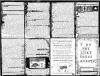
I was never part of Zine culture, though if I had ever been exposed to them I would no doubt have picked up the trend - after all, in grade school, I did write and print my own local newspaper, 'The Eagle Report', which I tried to sell in local stores (I loved eagles and birds generally; still do). Anyhow, Zines are having a moment - Doug Belshaw sold out his first limited print run, and Creative Commons celebrated its 25th anniversary with a 28 pager. In this post Alan Levine also links to one in the classic style from Becky Chambers along with her 8-page single sheet Zine template (I have no idea where I'd find a printer for paper that size).
Web: [Direct Link] [This Post][Share]
There are many ways to read OLDaily; pick whatever works best for you:
- Read in your web browser on this web page, updated weekdays
- Receive a daily or weekly email newsletter by subscribing here
- Subscribe to the RSS feed using your favourite feed reader
- Follow @OLDaily@mastodon.social on Mastodon or elsewhere in the fediverse
- Follow @OLDaily on Bluesky
- Read OLDaily as a LinkedIn Newsletter
- Integrate the open API using the JSON feed
This newsletter is sent only at the request of subscribers. If you would like to unsubscribe, Click here.
Know a friend who might enjoy this newsletter? Feel free to forward OLDaily to your colleagues. If you received this issue from a friend and would like a free subscription of your own, you can join our mailing list. Click here to subscribe.
Copyright 2026 Stephen Downes Contact: stephen@downes.ca
This work is licensed under a Creative Commons License.