Distributing knowledge for equity — An evolving concept and a call for action
Open Book Publishers Blog,
2026/10/26
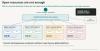
This post summarizes a webinar organized in response to two open books, one on distributing (and distributed) knowledge (212 page PDF), and the other on the politics of open infrastructures (388 page PDF) (which include the challenging argument that the internet infrastructure has never been open). Both take an explicitly international perspective, and the webinar reflects this, looking at conditions of access in war-torn regions like Ukraine and systematically underserved regions in Africa. The different cases return to a common theme: "openness is not enough" (which is fair enough, but I hearken to my own principle that nothing is ever 'enough'). That said, as noted here, "the Distributed University invites us to see higher education not as a collection of autonomous campuses, but as a network of interconnected educational, research, and infrastructural capacities in which equity and openness become foundational principles." The recording is available to view online, and the slides are available to download.
Web: [Direct Link] [This Post][Share]
What kind of research for what kind of education? Lessons for the OECD and others
Asia-Pacific Journal of Teacher Education,
2026/10/26
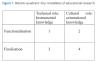
This article (16 page PDF) is a response to a 2025 OECD report (26 page PDF) on "how to strengthen the role of research and initial teacher education institutions in knowledge mobilisation." Gert Biesta argues "the report assumes that the research is available but that for some reasons it doesn't reach policy and practice." There's an assumption that there is a sort of 'knowledge' - singular - around which there is evidence and consensus, and which practitioners should simply "make use of". But this represents a misunderstanding of 'practrice'. "A practice rather is collective activity held together, so we might say, by its purpose. And this purpose is not external to the practice." Different cultures, regions and industries have difference conceptions of this purpose, and you can't simply 'apply research' to them. Biesta describes this as "education's double history," corresponding to poiesis and praxis, but if we look at it, there are multitudes of histories. All in all, "what teachers do is never 'just' an instrument for bringing about certain 'effects.'"
Web: [Direct Link] [This Post][Share]
Building sustainable futures: Responsible development of AI-enabled open educational resources as digital public goods
Javiera Atenas, Robert Farrow, Nicholas Caldwell, Éamonn Costello, Leo Havemann,
International Review of Education,
2026/10/26
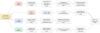
In this article, "the authors propose the creation of integrated and open platforms that position OER as global public goods, grounded in open principles and standards." The argument is that developing these platforms could foster "inclusive, transparent and collaborative development, particularly in AI, on a global scale." Specifically, there is "an urgent need for open, transparent and publicly governed alternatives to commercial AI platforms" that would conform with UNESCO's ROAM universality indicators of "Rights, Openness, Accessibility, [and] Multi-stakeholder participation." I think there's a good argument for this, though I begin to resist when the authors go further, suggesting "the ethical deployment of AI requires adherence to ethical design principles, ensuring fairness, equity, transparency and protection of learners' privacy." I think they mean this as a premise, but in my view it's weaker than the argument it's intended to support. There is, as a matter of empirical fact, no consensus on ethical codes, and great ethical diversity globally. But there is also independently a need for social and political institutions that govern wide-reaching and consequential technologies like AI.
Web: [Direct Link] [This Post][Share]
AI-Generated Work Is Breaking the Links Between Degrees and Real Skills,
Courtney Benton,
Science,
2026/10/26

I can't tell whether this summary of Yuke Meng, Xufeng Zhang & Han Li's paper on 'Synthetic Credentialism' is AI-generated, but it doesn't matter, since the original article is paywalled (boo! hiss!) so this is the best we've got. Synthetic Credentialism is " the systemic condition in which AI-generated or AI-assisted academic outputs enable the acquisition of credentials that no longer reliably signal the competences they are meant to certify." The paper itself is built on signaling theory, where "economists have understood education as a mechanism through which individuals communicate otherwise unobservable qualities to employers." This paper documents the breakdown in three dimensions: 'signal decoupling', or "the growing gap between the output a student submits and the underlying competence that output is supposed to represent"; 'verification collapse', where "institutions can no longer credibly distinguish human-produced from machine-produced work"; and 'normative ambiguity', where "the norms themselves are unsettled, responsibility becomes diffuse, and the traditional misconduct-based response, investigation and punishment of individual offenders, loses analytical traction."
Web: [Direct Link] [This Post][Share]
Making Haiku[photo]comic Daily Create #tdc5397
Alan Levine,
CogDogBlog,
2026/10/26
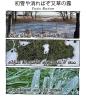
The DS 106 Daily Create has been running non-stop since 2012. The idea is simple: post a creativity prompt once a day and a hashtag people can use to identify their contributions, aggregate them, and enjoy. It started as a Twitter thing but migrated some time ago to the Fediverse. You can follow it here. In this post Alan Levine reintroduces the Daily Create and talks about how he spent 25 minutes over breakfast making Friday's. What I like is that I can picture it as though it were myself - though I don't contribute at all regularly to the Daily Create (it's more like once in a blue moon) I nonetheless identify with the idea of waking up in the morning and spending the day creating. That is what I do, and it is to me a good way to live my life.
Web: [Direct Link] [This Post][Share]
There are many ways to read OLDaily; pick whatever works best for you:
- Read in your web browser on this web page, updated weekdays
- Receive a daily or weekly email newsletter by subscribing here
- Subscribe to the RSS feed using your favourite feed reader
- Follow @OLDaily@mastodon.social on Mastodon or elsewhere in the fediverse
- Follow @OLDaily on Bluesky
- Read OLDaily as a LinkedIn Newsletter
- Integrate the open API using the JSON feed
This newsletter is sent only at the request of subscribers. If you would like to unsubscribe, Click here.
Know a friend who might enjoy this newsletter? Feel free to forward OLDaily to your colleagues. If you received this issue from a friend and would like a free subscription of your own, you can join our mailing list. Click here to subscribe.
Copyright 2026 Stephen Downes Contact: stephen@downes.ca
This work is licensed under a Creative Commons License.