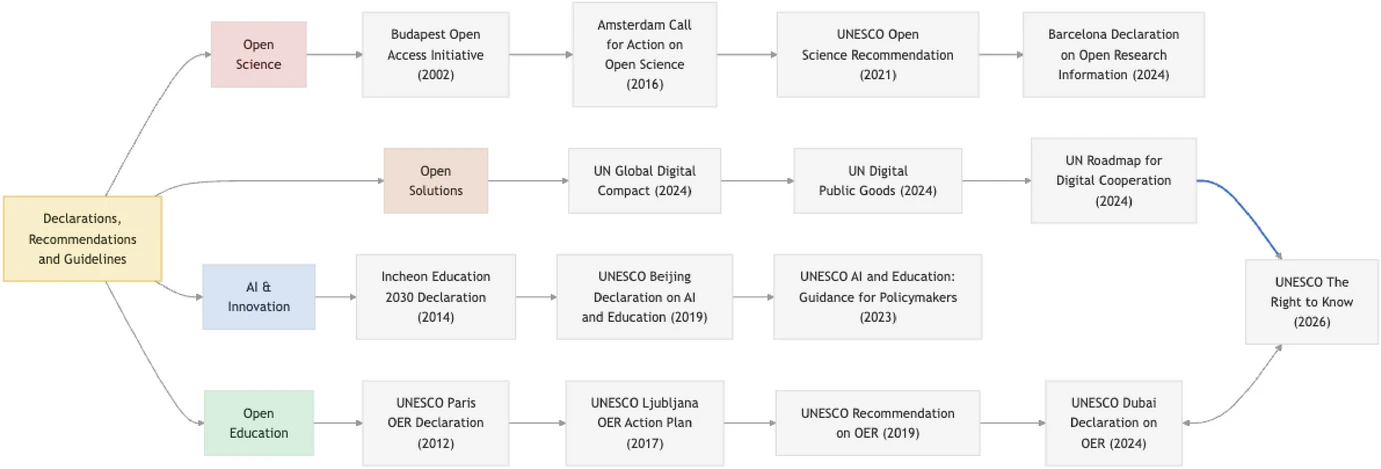
In this article, "the authors propose the creation of integrated and open platforms that position OER as global public goods, grounded in open principles and standards." The argument is that developing these platforms could foster "inclusive, transparent and collaborative development, particularly in AI, on a global scale." Specifically, there is "an urgent need for open, transparent and publicly governed alternatives to commercial AI platforms" that would conform with UNESCO's ROAM universality indicators of "Rights, Openness, Accessibility, [and] Multi-stakeholder participation." I think there's a good argument for this, though I begin to resist when the authors go further, suggesting "the ethical deployment of AI requires adherence to ethical design principles, ensuring fairness, equity, transparency and protection of learners' privacy." I think they mean this as a premise, but in my view it's weaker than the argument it's intended to support. There is, as a matter of empirical fact, no consensus on ethical codes, and great ethical diversity globally. But there is also independently a need for social and political institutions that govern wide-reaching and consequential technologies like AI.
Today: Total: [] [Share]