
bitchat
permissionlesstech,
2026/10/05

This link is to bitchat, "a decentralized peer-to-peer messaging application that operates over bluetooth mesh networks. No internet required, no servers, no phone numbers." It's relevant because in July the Indian government issued an order banning it, leading to people commenting that "decentralised open-source apps and their repositories do not have a single owner; GitHub repositories are still live as traditional takedown powers get a taste of decentralised, open‑source software." In fact, GitHub comploed with the government order. But "the practical impact on Bitchat itself is limited. The code is forked. Mirrors exist. The protocol is documented." This may be, but the more recent news is that bitchat "has disappeared from Apple and Google's app stores in India." App stores are not only centralized; the phone itself is a controlled platform (that's probably the major difference between phones and computers).
Web: [Direct Link] [This Post][Share]
Three Logics of Adaptation for the Human and AI Future
Julian Stodd,
Julian Stodd's Learning Blog,
2026/10/05
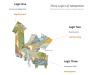
Julian Stodd describes three fundamental 'Logics' of adaptation to AI. They are (quoted): 'Structural Adaptation', and it includes Agentic deployment; 'Relational AI', which is AI held within human social structures as dialogic partner; and 'Contextual Shift', and it describes an emergent condition where social context itself has moved. What's important to understand, writes Stodd, is that these do not occur sequentially. They're all happening at the same time (that's why they're 'dimensions' and not 'stages'). "The Leadership question here is not kinetic: not the top down requirement to drive adoption of one or other Logic, but rather to consider how we lead when all three Logics are present and simultaneously true."
Web: [Direct Link] [This Post][Share]
Ask the Chefs: What Would You Have Done Differently About Open Access/Open Science if You Predicted the World as it Exists Today?
Roy Kaufman, et al.,
Scholarly Kitchen,
2026/10/05

This is a two part article (part one, part two) asking some of the contributors to the Scholarly Kitchen (a.k.a. 'the chefs') what they would have done differently about open access had they been able to see the world as it has become today. There are basically two trends in the seven responses: continue to oppose open access, or try for something better than article processing charges (APC) or transformative deals (mostly involving disaggregation and multiple pricing and funding models). There's no suggestion that commercial publishers should be excluded from the system outright, which would have been my stance.
Web: [Direct Link] [This Post][Share]
Learning isn’t the constraint—capacity is
Elizabeth Loutfi-Hipchen,
Chief Learning Officer,
2026/10/05
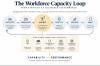
"As an industry, we have spent a great deal of time talking about whether organizations can provide learning fast enough.," writes Elizabeth Loutfi-Hipchen. "I think we may be asking the wrong question. The issue increasingly isn't access to learning. It is whether people and organizations have the capacity to absorb what we are asking them to learn and turn it into performance." I think this is a good point. It may force a shift in how we think about learning from 'just in case' to 'just in time' (I know, this has been said before, but few have taken it seriously). Loufti-Hipchen expresses it this way: "This changes the goal of personalization. We are no longer trying to create an elaborate individual curriculum for every employee. We are trying to find the shortest credible path between current capability and required performance." This is a good discussion of the need with steps toward a response.
Web: [Direct Link] [This Post][Share]
Schools Are Experimenting With AI With Little Evidence or Policy to Guide Them
Lee V. Gaines,
KQED, Mind/Shift,
2026/10/05
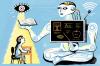
This article describes the way schools are experimenting with AI but expresses concern about the lack of policy, guidance or research. I want to complain that they are being overly fretful - after all, people experiment with every new technology; that's how we discover what the policy, guidance and research should be. But the article as a whole comes out in cautious favour of experimentation. "If we really close off AI experimentation, if we prevent kids from learning about AI, learning how to use it really well, thinking about how teaching could be transformed, we will set our kids back from being able to navigate a world that is changing outside of schools faster than we can possibly imagine." My thinking is: who better to learn first hand about the effects of AI on learning than teachers? That said, there is an argument for making sure organizations don't go overboard and do real harm.
Web: [Direct Link] [This Post][Share]
Comparisons | FlatWorld
FlatWorld,
2026/10/05

We haven't mentioned Flatworld for a while. They started as an open educational resources (OER) platform but then shifted to a commercial model, prompting co-founder David Wiley to leave and start an alternative, Lumen Learning. This page, published by Flatworld, compares its offering with commercial textbooks and with alternative OER platforms, including Lumen, OpenStax, LibreTexts, Top Hat, and vanilla OER resources (these would be found in places like OERCommons, OASIS, MERLOT, OEGlobal, OpenLearn, SkillsCommons and many more (none of these is mentioned by Flatworld)). The commercial textbooks are much more expensive and lock you into a platform. The OER platforms, writes Flatworld, offer content for free but usually sell access to a course or homework platform. It's still cheaper than Flatworld's bundled courses, but, they say, "OER best fits faculty with the time and institutional support to assemble and maintain a course." Via Delmar Larsen, who says "their numbers are screwy and incorrect." Obviously the presentation favours Flatworld, but as a while it offers a glimpse at a particular competitive landscape.
Web: [Direct Link] [This Post][Share]
On Salience
Maritina Dimopoulou,
The Cynefin Co,
2026/10/05

I first encountered the term 'salience' reading Robert Stalnaker's book Caounterfactuals. Something is 'salient' if it is 'more vivid, more relevant'. It stands out. To me, it marked the difference between just any similarity between things, and relevant similarities. Stalnaker, and also David K. Lewis, analyzed salience in terms of possible worlds. I analyzed it in terms of neural networks; something was 'salient' if it stimulated a neural network response. A pattern of perception. This article analyzes salience from a phenomenological, analytical and affective perspective. "Salience as an embodied familiarity," writes Maritina Dimopoulou, "what jumps to attention is an entanglement of the observer with their world." Salience comes with expertise. "Pruning irrelevant dimensions is one of the manifestations of expertise: the domain expert has internalised so many distinctions that deviations from the pattern are visible to them."
Web: [Direct Link] [This Post][Share]
There are many ways to read OLDaily; pick whatever works best for you:
- Read in your web browser on this web page, updated weekdays
- Receive a daily or weekly email newsletter by subscribing here
- Subscribe to the RSS feed using your favourite feed reader
- Follow @OLDaily@mastodon.social on Mastodon or elsewhere in the fediverse
- Follow @OLDaily on Bluesky
- Read OLDaily as a LinkedIn Newsletter
- Integrate the open API using the JSON feed
This newsletter is sent only at the request of subscribers. If you would like to unsubscribe, Click here.
Know a friend who might enjoy this newsletter? Feel free to forward OLDaily to your colleagues. If you received this issue from a friend and would like a free subscription of your own, you can join our mailing list. Click here to subscribe.
Copyright 2026 Stephen Downes Contact: stephen@downes.ca
This work is licensed under a Creative Commons License.