FediHome
Samuel Lison,
2026/09/28

I like the ambition of this project though I fear future maintenance because of its dependence on Node. Still, I like how a lot of attention has been paid to ease of installation and startup. "FediHome is a self-hosted, single-user Fediverse home — blog, photos, video, audio, and a live following feed, all on your own domain via ActivityPub. 1.0 marks the project production-ready: a test suite + CI gate every change, the security-audit findings are resolved, the dependency stack is current (Prisma 7, Next 16, Fedify 2), and a public demo runs the exact code at fedihome.social." Here's the source.
Web: [Direct Link] [This Post][Share]
Some things I have learned about generative AI
Jon Dron,
2026/09/28
This is a good overall summary of an informed perspective on AI in education that avoids the cliches and sees AI as something that is fundamentally new, and not defined by simple metaphors. I appreciate this perspective. Not that I agree with it all - my first reaction on reading the first part was to post this on Mastodon: "Some day in the future philosophers will agree that 'meaning' is a construct invented by logical positivists to play the same role previous (and no longer accepted) constructs like 'noumena' played in earlier metaphysics." Anyhow, Dron also says, "no more cognitive offloading: it's cognitive redistribution," whicch I agree with, and "the answer is not to keep humans in a loop (but) to think of genAIs as being part of the web of people, tools, processes, structures, theories, models, appliances, devices, and other artifacts that extends our cognition," which also makes sense to me.
Web: [Direct Link] [This Post][Share]
The Fediverse is social tech built by people
Hamish Campbell,
Open Media Network,
2026/09/28
"Let's stop pretending," writes Hamish Campbell, "we need to be honest, the community side of the Fediverse is a mess. The instance as a community, was a good idea, but just that an idea, it never worked, as the was no code that was needed to build the links that mattered, no mod tools, nothing." The existing fediverse, he says, is built on control, when it should be built on trust. "We need to balance collectivizing resilience. Just like with food, we need shared kitchens, food co-ops, and community gardens – not just individual allotments." I tend to favour a third option - not individualism, not collectivism, but cooperation, based on connections rather than commonality.
Web: [Direct Link] [This Post][Share]
rabbit r1 — a pocket AI device powered by rabbit OS3
Rabbit,
2026/09/28

OK, I don't really get it, but I can imagine playing with this device is a lot of fun, as Doug Belshaw has done here. From the web page: "rabbit r1 is a pocket AI device powered by rabbit OS3, and a native physical way into OS3. unlimited AI conversations, translation and voice recordings for $199." Rabbit OS3 is something like an AI-based operating system where you decide what you want and the OS assembles the resources needed to do that.
Web: [Direct Link] [This Post][Share]
Glossary of Digital Learning
Institute for Infrastructure and Interoperable Data in Learning,
2026/09/28

This is I2IDL's new glossary of digital learning terms, including learning engineering, xAPI, interoperability, learning analytics, learning science, and more. Sources: Learning Engineering Body of Knowledge (LEBOK), Modernizing Learning by J.J. Walcutt, J.J. & Sae Schatz with Advanced Distributed Learning (ADL), The Science of Remote Learning by Jim Goodall and Aaron Kessler, Exploring Learning Engineering Design Decision Tracking by Lauren Totino and Aaron Kessler, IEEE LTSC, IEEE xAPI, IEEE xAPI Profiles, IEEE ICICLE, and the UNESCO Thesarus.
Web: [Direct Link] [This Post][Share]
Compass for Governance of AI & Digital Transformation in Education
2026/09/28
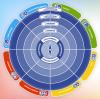
According to this article, "The Compass provides a method for thinking about governance and implementation of technologies holistically to help education systems navigate technological change while keeping human rights, democracy and the rule of law at the centre." The 'compass' has two major axes: "the governance of people and the governance of processes"; and "education with AI and education about AI." There are four layers: exploration, integration, implementation, and transformation. Around the outside are eight interconnected systems. The intent is fir the compass to be a guide, not a destination, and it's a nice metaphor, but I'm not sure it advances discourse in any particular way.
Web: [Direct Link] [This Post][Share]
What Happens When No One Owns Online Learning - Online Learning Consortium
Natalya Hierholzer,
Online Learning Consortium,
2026/09/28
This article takes a problem of coordination, translates it into a problem of ownership, and recommends a centralized solution in the form of a Chief Online Learning Officer (COLO). It sounds great, but it seems to me that it just pushes the problem deeper (and more intractably) into the different departments. Jeremiah Grabowski references decisions about online learning being made in academic affairs, instructional design, admissions, and marketing, among others. Is the COLO now going to tell marketing how to market? Admissions who to admit? This simply creates contradictions in each of those departments, where they no longer have the mandate to manage what they have the putative mandate to manage.
Web: [Direct Link] [This Post][Share]
There are many ways to read OLDaily; pick whatever works best for you:
- Read in your web browser on this web page, updated weekdays
- Receive a daily or weekly email newsletter by subscribing here
- Subscribe to the RSS feed using your favourite feed reader
- Follow @OLDaily@mastodon.social on Mastodon or elsewhere in the fediverse
- Follow @OLDaily on Bluesky
- Read OLDaily as a LinkedIn Newsletter
- Integrate the open API using the JSON feed
This newsletter is sent only at the request of subscribers. If you would like to unsubscribe, Click here.
Know a friend who might enjoy this newsletter? Feel free to forward OLDaily to your colleagues. If you received this issue from a friend and would like a free subscription of your own, you can join our mailing list. Click here to subscribe.
Copyright 2026 Stephen Downes Contact: stephen@downes.ca
This work is licensed under a Creative Commons License.