
Moral Learning
Stanford Encyclopedia of Philosophy,
2026/09/24

This article discusses how we learn morals (and not some type of learning that is ethically good, though that may be a subject for another day). It tries to approach the subject analytically, without actually taking sides in any of the cross-cultural disagreements on what morals there are, how they're arrived at, and who is subject to the morality in question (for example: " There is a difference between representing 'this is something people shouldn't do' and representing 'this is something I'm required to stop people from doing'."). It just touches the surface of interesting issues such as innateness, statistical descriptions of morality, emotional resonance, and universalizability.
Web: [Direct Link] [This Post][Share]
The Gap Between Me and the Machine
Nick Potkalitsky,
Educating AI,
2026/09/24

Nick Potkalitsky reports "beginning to feel a strange distance between me and the work. My critical theory professor Brian McHale describes parallel experiences in literature as an "ontological" flicker. We have known since the 1970s that we are living in a world of mirrors and simulacra that challenged our ability to determine what actually is. But my experiences with AI translated that analytical insight into an intimate and embodied truth in a way no other engagement with technology has had up to this point."
Web: [Direct Link] [This Post][Share]
Tiny-neural-network
con-dog,
GitHub,
2026/09/24
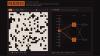
"Can a 14 Byte Neural Network Solve a Maze? Can it transfer across tasks?" This is a fun little demonstration of what even a simple neural network can do, with some interesting summary about the trial and error that led to its current configuration, including 'split weights' and a narrowing of what the input senses report.
Web: [Direct Link] [This Post][Share]
GPUs: Rent vs Buy
Cloud GPUs,
2026/09/24

Everything discussed in this post is way beyond my budget, though I suppose if I splurged I could rent a GPU for maybe an hour once in a while. Buying is out of the question with costs ranging from $3,000 to more than $10K. Institutions and departments with budgets, though, are looking at exactly this problem. Everyone knows the prince for GPUs is inflated right now. The question is, what will prices look like in the future. The best advice in the article is that, if you're considering buying, be sure to rent what you plan to buy to test how it actually performs under your planned load. The article also has numerous tables and examples of different loads, giving you a good guide on the subject.
Web: [Direct Link] [This Post][Share]
Red Blob Games: English: a vs an
Amit Patel,
Red Blob Games's Blog,
2026/09/24

This has long been a fascination of mind, ever since a colleague at the student newspaper titled a column 'An Historical Perspective'. Why would he use 'an' instead of 'a'. Well - it's a rule. But isn't the rule to use 'an' in front of a word beginning with a vowel? Not exactly - as this article notes, "The actual rule is not whether the written word starts with a vowel letter, but whether the spoken word starts with a vowel sound." Fair enough. That explains why we would say 'a unicorn' and not 'an unicorn'. But that doesn't solve the historical problem. We do pronounce the 'h' in 'historical'. Well - we do in Canada. In the UK and regions with similar accents, the 'h' sound is often dropped, learning an ungainly pronunciation, 'istorical'. And so you need the 'an'. But not in Canada. Next week: why Americans drop the 'h' on 'herb'.
Web: [Direct Link] [This Post][Share]
Meta says its Muse AI agent can do things for you. I put it to the test
Lisa Eadicicco,
CNN,
2026/09/24

Today's AI fad is Meta's Muse, which was the subject of a number of feature announcements (including a wrist bracelet) in Meta's Connect conference, which concludes today. Muse has built-in agents, which means, for example, that it can run applications on your computer and do things like shop online. Amazon has blocked Muse. People find it useful, but note that this comes at the price of giving it access to your personal information (Meta also owns Facebook, Instagram and WhatsApp). The focus on agents suggests a shift in educational applications, moving from prompts to loops.
Web: [Direct Link] [This Post][Share]
There are many ways to read OLDaily; pick whatever works best for you:
- Read in your web browser on this web page, updated weekdays
- Receive a daily or weekly email newsletter by subscribing here
- Subscribe to the RSS feed using your favourite feed reader
- Follow @OLDaily@mastodon.social on Mastodon or elsewhere in the fediverse
- Follow @OLDaily on Bluesky
- Read OLDaily as a LinkedIn Newsletter
- Integrate the open API using the JSON feed
This newsletter is sent only at the request of subscribers. If you would like to unsubscribe, Click here.
Know a friend who might enjoy this newsletter? Feel free to forward OLDaily to your colleagues. If you received this issue from a friend and would like a free subscription of your own, you can join our mailing list. Click here to subscribe.
Copyright 2026 Stephen Downes Contact: stephen@downes.ca
This work is licensed under a Creative Commons License.