
Writing with AI
O'Reilly,
O'Reilly,
2026/08/31

Tim O'Reilly argues that "AI is a medium, like painting, sculpture, photography, music, or language itself. If AI is a medium, it is a field of possibility from which humans can and will summon up and communicate insights, truth, beauty." This may be true, but we need to understand that what we create using AI is different from what it putatively replaces, just as what we create using photography is different from what we create using paint and brush. So (in my view) AI-based writing is producing something different from what is created when we write without using AI. How to express this difference? Well, here's a hint. O'Reilly describes how AI helped him write this post, saying "There are perhaps 40 or 50 words supplied by Claude, including the quotes from Delaroche and Baudelaire... I had read Baudelaire but I'd never heard of Delaroche." Now, when I reference someone, it's typically because I had previously read what I'm referencing, and I found the association myself. But here we have Delaroche being plucked out of the air by O'Reilly, not based on any previous experience, but because of Claude. Did O'Reilly go back and read and become familiar with Delaroche? No - he "verified both quotes by checking the original sources and reading a bit more about the ferment of the time". So what did O'Reilly mean when he inserted the quote? We don't know.
Web: [Direct Link] [This Post][Share]
Come Up to the Lab and See What's on the Slab
Audrey Watters,
Second Breakfast,
2026/08/31

Audrey Watters makes a point I think is correct: "I think that 'which technology' is the wrong question... because this focus on gadgets and apps and algorithms... always insures that the problems and solutions in education are framed almost exclusively in terms of the technology itself." So what should we focus on? "The goal, broadly speaking, is to learn how to be human, how to be part of humanity. The goal is to create the conditions -- in a lesson, in a classroom, in a school, in a system -- where students and teachers alike can practice what matters." I might quibble, but let's accept that. Can we say this, then? "What matters is not 'using technology'." But that takes us back to the 'wrong question'. We don't want to define 'what matters' in terms of whether or not we use technology - and indeed, 'what matters' is often going to involve technology. Not edtech, necessarily - but I needed a car to learn to drive, a camera to learn photography, a scanning electron microscope to learn biochemistry... and artificial intelligence to learn programming. These are all ways I am 'part of humanity'. Because humanity uses technology. Via Dagmar Monett.
Web: [Direct Link] [This Post][Share]
SwarmWorld: Stigmergic technological evolution in societies of language-model agents
Subhadeep Pal, Fiona Y. Wang, Markus J. Buehler,
arXiv,
2026/08/31
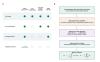
Really interesting paper (57 page PDF) that compares how well differently organized agents work together in a shared communication, culture, and world (which "acted as an external memory and transmission medium") or as unconnected individuals. "The experiments support a bounded form of swarm advantage: interaction is most valuable when performance depends on building and maintaining a technological ecology, not when the objective is only to find one record-setting object." Also, "Emergence appeared in organization as well as outcome. No agent was assigned to be an explorer, builder, maintainer, or cultural broker," yet these specializations nonetheless appeared. "The mature society was neither a globally synchronized collective nor a collection of independent agents. It formed persistent, modular technological neighborhoods with a limited set of local hubs and cross-community connectors." Via Ross Dawson.
Web: [Direct Link] [This Post][Share]
The Science of Selling
Nick Covington,
Mid-Conversation,
2026/08/31

This feels like an introduction to the blog as its first and only post. It states its position clearly in its coverage of the new researchED and AEI partnership. It reveals how they "see the American education system: as a growth market for technocratic solutions that seek to reduce the cost and complexity of teaching by removing human beings, a decades-long political aim of AEI, now given the imprimatur of science. While American schools face decades of compounding crises and inequities, 'The Practice Project' offers privatized solutions to systemic problems that any school leader can 'add to cart' and solve with a subscription." This approach favours direct instruction and opposes hallmarks of modern pedagogy such as inquiry-based learning and transferable skills (such as critical thinking). Via Alfie Kohn.
Web: [Direct Link] [This Post][Share]
Abstinence is not an AI strategy
Christyl Lucille Murray,
Chief Learning Officer,
2026/08/31

The intent of this article is to introduce a 'bot check' method as a means of using AI to develop agency in learners. It takes a bit of reading to get to this point, as Christyl Lucille Murray first offers arguments against both AI abstinence and whole-scale adoption as strategies, offering the 'bot check' approach as a middle ground. The idea is to begin with human reason and collaboration, then to use the AI to check the thinking, befor implementing the result. The method, once described, is then assessed against the SHINE framework.
Web: [Direct Link] [This Post][Share]
AI and Education
Mit,
2026/08/31

This is a report (40 page PDF) from an Ad Hoc Committee on AI use at MIT containing two major parts: a set of 'guiding principles' and a (much more comprehensive) set of recommendations. The recommendations have three sections: adapting education to an AI world, center the human community, and building review processes. These (in my cyclical view) address MIT's two major issues: how to make sure what it teaches remains relevant, and how to maintain MIT's exclusivity in a world where learning becomes that much more attainable. That's why (to my observation) the learning becomes more focused on personal experience (eg., out-of-class activities, more lab spaces) and the college community (value of residential education, strengthen social connections). These are the right recommendations, I think, but I don't think we need an MIT to do this. Via Fredrik Graver.
Web: [Direct Link] [This Post][Share]
Is The EdTech Love Affair Over?
Tim Stahmer,
Assorted Stuff,
2026/08/31

This article is one of a number (here's another one, from Doug Johnson) documenting the pushback to educational technology in schools, and especially measures limiting or blocking 'screen time' for younger children. "None of this comes as a surprise to me," writes Tim Stahmer. "Teachers and school administrators were starting to sour on edtech even before the pandemic. The panic-driven, poorly planned effort to take school online during that period, along with justifiable concerns over social media and AI, only accelerated the effort to remove technology from classrooms. Plus there's the glaring lack of evidence that the huge amounts of money spent on technology was actually improving student learning."
Web: [Direct Link] [This Post][Share]
There are many ways to read OLDaily; pick whatever works best for you:
- Read in your web browser on this web page, updated weekdays
- Receive a daily or weekly email newsletter by subscribing here
- Subscribe to the RSS feed using your favourite feed reader
- Follow @OLDaily@mastodon.social on Mastodon or elsewhere in the fediverse
- Follow @OLDaily on Bluesky
- Read OLDaily as a LinkedIn Newsletter
- Integrate the open API using the JSON feed
This newsletter is sent only at the request of subscribers. If you would like to unsubscribe, Click here.
Know a friend who might enjoy this newsletter? Feel free to forward OLDaily to your colleagues. If you received this issue from a friend and would like a free subscription of your own, you can join our mailing list. Click here to subscribe.
Copyright 2026 Stephen Downes Contact: stephen@downes.ca
This work is licensed under a Creative Commons License.