
Coursera investing $100 million in Andrew Ng's new startup
Ina Fried,
Axios,
2026/07/29

Here's the story: "Coursera is putting $100 million into LearnVector, a new AI education company founded by Andrew Ng, a pioneer in AI and Coursera's chairman and co-founder, the companies shared first with Axios." As The Next Web reports, "The target is white-collar workers and other adults, not schoolchildren or university students. Ng plans to sell to corporations, governments and higher education. The pitch is teaching people the skills that keep them useful as AI automates parts of their work." Or as Axios puts it, "LearnVector aims to build AI agents that function as personal tutors — adapting to each learner and practicing with them until they demonstrate they've mastered a concept." Same old same old. See also: Hacker News.
Web: [Direct Link] [This Post][Share]
Grav Helios Converters – Convert LMS and Pressbooks Content to Open Markdown
Paul Hibbitts,
2026/07/29
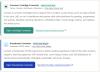
Lots of interesting stuff here. First, Grav is an "open source flat-file content management system (CMS). No database, no SQL, no installation wizard. You unzip it, drop Markdown into a folder, and you have a fast, secure, version-controllable website." So already we're talking m,y language. Helios, meanwhile, is a theme for Grav - you have to pay $50 for this; it's among Grav's premium offerings. Finally, Grav Helios Converters "convert Common Cartridge LMS exports (Canvas, Moodle, Brightspace, Blackboard) and Pressbooks books into portable Markdown files for Grav Helios Course Hub and Open Reader, built on the open-source Grav CMS." That's the part that interests me the most, because it (potentially) makes a lot of open content that much more portable.
Web: [Direct Link] [This Post][Share]
Announcing Bonfire for communities: groups and tools to organise together
Bonfire,
2026/07/29
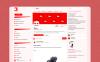
There's some buzz in the socials about the recent refocus at Bonfire, an online community platform. "Bonfire was never meant to be one more feed that grabs your attention. Today it takes the shape we've been building toward: Bonfire for communities. A tool for groups that need to organise together, not just post at each other. Shipping today: groups and topics, events, shared organisation profiles, embeddable federated comments, customisable themes, and a first set of governance tools." Suggested applications include publications, research groups, and communities. It's free and open source, and this in particular is a good strategy: "Bonfire combines the power of federation and open data formats to create interoperable toolkits that people can use to easily build their own apps to meet their specific needs."
Web: [Direct Link] [This Post][Share]
Decisions Have No Autopilot
Doug Belshaw, Tom Watson,
Field Station,
2026/07/29

If you want to learn about the causes and solutions to airplane crashes you'd be hard pressed to find a better source than Mayday, a video series comprising almost 500 episodes of dramatization, description and analysis. I've watched almost all of them. Here's the episode for Air France Flight 447, the airliner that disappeared over the Atlantic in 2009. What the series teaches you most of all is to eschew simplistic analyses like "the aircraft asked its pilots to do the one thing they had stopped practising: fly it themselves... the judgment underneath it had gone soft, and nobody noticed until it was needed." Yes, there was a training and ergonomic design issue that contributed to the crash. Training is often among the culprits. But what the series makes clear is that these are singular and generally unprecedented cases in a system of pilot craft, training and automation that works extremely well. Nobody is "abdicating judgment" on an airline crew. It's a severe case of misdiagnosis to suggest otherwise.
Web: [Direct Link] [This Post][Share]
The browser wars aren't about search anymore — here are the best alternatives to Chrome and Safari
Lauren Forristal,
TechCrunch,
2026/07/29

This is a good list of new and alternative browsers. "2026 has brought a wave of new entrants — from well-funded startups to Big Tech — all betting that the browser is about to become less like a window onto the web and more like an assistant that gets things done for you." OK, I can sort of see that. But what's really mysterious is the complete lack of any mention of Firefox - the brower I use on a daily basis. The other thing it doesn't address is whether any of these can perform the most basic function Firefox allows for me - block advertising. (Yes, that's right, I don't see advertising when I browse the web).
Web: [Direct Link] [This Post][Share]
What Latin America Has Taught Us About Building Scholarly Infrastructure
Alejandra Casas Niño de Rivera,
Public Knowledge Project,
2026/07/29

We don't read about it a lot in the English-language press, but as this article reports, "long before the term "Diamond Open Access" existed, or became a term international policy bodies reached for, it was simply how most of Latin America published research. Public universities ran their own journals and provided hosting either internally or by partnering with fellow institutions. Editors worked without author fees because the idea of charging researchers to publish, or readers to read, never took hold the way it did elsewhere." The article describes how the Public Knowledge Project (PKP) Open Journal Systems (OJS) played a role in this region, and how it learned from it in turn.
Web: [Direct Link] [This Post][Share]
D2L Fusion Conference Notes 2026
Phil Hill,
On EdTech Newsletter,
2026/07/29
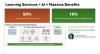
Fresh from the heat of D2L Fusion, Phil Hill takes a look at the company's product strategy. It's a good overview I'm sure will please company officials. "I saw much more coherence in strategy. Core Brightspace got unglamorous, daily-friction investment with dates attached. The announced Learner Mode is perhaps the most pedagogically explicit answer to the ChatGPT question (although still a bet). The content strategy is cleaner across native tools through Creator+ and H5P up to CreateSpace, with services added on top."
Web: [Direct Link] [This Post][Share]
There are many ways to read OLDaily; pick whatever works best for you:
- Read in your web browser on this web page, updated weekdays
- Receive a daily or weekly email newsletter by subscribing here
- Subscribe to the RSS feed using your favourite feed reader
- Follow @OLDaily@mastodon.social on Mastodon or elsewhere in the fediverse
- Follow @OLDaily on Bluesky
- Read OLDaily as a LinkedIn Newsletter
- Integrate the open API using the JSON feed
This newsletter is sent only at the request of subscribers. If you would like to unsubscribe, Click here.
Know a friend who might enjoy this newsletter? Feel free to forward OLDaily to your colleagues. If you received this issue from a friend and would like a free subscription of your own, you can join our mailing list. Click here to subscribe.
Copyright 2026 Stephen Downes Contact: stephen@downes.ca
This work is licensed under a Creative Commons License.