
AI labs begin to muscle in on $6tn education market
Jamie John,
Financial Times,
2026/07/28

This article is a combination of quotes from Simon Buckingham Shum and Michael Feldstein, economic data about the size of the education market ($6 trillion, if you're interested), and an overview of some recent advances into education by OpenAI and Anthropic. In this case, though, one plus one plus one does indeed make three. "Let's not be naive," says Simon Buckingham Shum, professor of learning informatics at University of Technology Sydney, adding that education is "absolutely a marketplace for these companies". Via Mark Oehlert, who calls the article a "signal".
Web: [Direct Link] [This Post][Share]
Walking away from education technology isn’t the answer to the latest backlash
Alexandra Walsh,
The Hechinger Report,
2026/07/28

Many of the criticisms of education technology (edtech) are justified, writes Alexandra Walsh, but the answer isn't to ban edtech, it's to do better. "High-quality student-facing technology should advance learning in ways that other formats cannot, strengthen rigorous classroom communities and give students authentic choices that build self-determination." I agree, of course, but the real issue is marketing and acquisition: how do we convince the people who pay for it to support technology that benefits learners not themselves?
Web: [Direct Link] [This Post][Share]
Caitlin Mace: Vehicle Indeterminacy in Memory Neuroscience — The Brains Blog
Caitlin Mace,
The Brains Blog,
2026/07/28
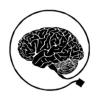
This is at once a summary and a snapshot of a wider discussion involving neural representations. These are "individuable structures or processes in the brain that have a representational role in cognition or behavior." That is, if you have a mental representation of a 'dog', then there is a physical structure (some set of neural states, for example) that serves as a 'vehicle' for that representation. Otherwise, how could the representation play any role in cognition? But what, exactly, is that vehicle? We don't really know; we can't pin it down; this is 'vehicle indeterminacy'. My own stance here is sceptical; I don't think we can talk meaningfully about mental representations as causal or effective agents of cognitive or physical behaviour. The other alternative is what might be called 'content pragmatism' - even if we can't pin it down, the concept of mental representations is useful enough to allow us to use it productively.
Web: [Direct Link] [This Post][Share]
Why School Is the Same Everywhere, and the Revolution Never Comes
Steve Hargadon,
2026/07/28

Good article that says a couple of important things. The first focuses on how deeply the idea of 'what school is' has been internalized across cultures. "Whatever else school teaches, the one lesson it delivers to every student without exception--more reliably than reading, more durably than mathematics--is what school is... You acquired the grammar of your native language in childhood without anyone teaching it to you explicitly. It runs below your awareness. You cannot state most of its rules, yet you follow them perfectly." The second addresses the function school serves - not simply as a mechanism for passing on knowledge (though it does that) but also as a place to keep children during the day. "The entire adult economy is built on that fact. Every workplace schedule silently assumes it. This is one of the quiet reasons the grammar cannot change: proposals that touch the school day or calendar collide not with pedagogy but with the labor force."
Web: [Direct Link] [This Post][Share]
Pedagogical Engagement Myths
Ann,
All Things Pedagogical,
2026/07/28

Good observations on what 'engagement' means and doesn't mean in a learning context. Simply being in the room and staring at the instructor does not equate to engagement; often, it's the opposite. By contrast, "When classes went back to on-campus after emergency remote teaching, the one thing that most learners expressed missing was the chat. They wanted a real time way to express and engage that didn't necessarily involve raising hand and speaking because that felt too high stakes." I have always preferred a backchannel, and tried to incorporate it in many of my talks. It's hard to do, often because the opportunity to participate this way is still novel to many audiences.
Web: [Direct Link] [This Post][Share]
There are many ways to read OLDaily; pick whatever works best for you:
- Read in your web browser on this web page, updated weekdays
- Receive a daily or weekly email newsletter by subscribing here
- Subscribe to the RSS feed using your favourite feed reader
- Follow @OLDaily@mastodon.social on Mastodon or elsewhere in the fediverse
- Follow @OLDaily on Bluesky
- Read OLDaily as a LinkedIn Newsletter
- Integrate the open API using the JSON feed
This newsletter is sent only at the request of subscribers. If you would like to unsubscribe, Click here.
Know a friend who might enjoy this newsletter? Feel free to forward OLDaily to your colleagues. If you received this issue from a friend and would like a free subscription of your own, you can join our mailing list. Click here to subscribe.
Copyright 2026 Stephen Downes Contact: stephen@downes.ca
This work is licensed under a Creative Commons License.