Preparing future math teachers to teach data science
Jonathan Kantrowitz,
Education Research Report,
2026/06/11
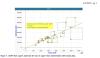
I think it's really important for people who lead with 'theory' and see it as a 'lens' to rethink their understanding of the scientific method in the era of data science. "In data science, you don't start with a hypothesis or prediction," Weber said. "You start with the data that already exists - maybe numbers someone collected years ago, or information gathered for a totally different purpose - and you work backward. You look for patterns, connections or surprises in the data, and those clues help you figure out what questions you should even be asking. So, instead of testing a hypothesis, you're discovering one." This article is based on a paywalled paper by Eric Weber, et al., though there's an archive version available (nor now) here.
Web: [Direct Link] [This Post][Share]
Nobody needs AI to search the Internet, court says in ruling against Google
Ashley Belanger,
Ars Technica,
2026/06/11
There's some nuance here that the headline doesn't really capture. Google was found liable by a judge because its AI-generated search output produced some false statements about the publishers it referenced. So the core argument here is that the person who publishes the statement is liable, even if it was an AI that generated it. As it should be. The nuance is found in the fact that the search engine would not be held liable for false statements produced by other sites that showed up in the search. So if the NY Post published a lie, and it showed it in a search result, Google wasn't liable. Again, as it should be. Google tried to use this as a defense, saying the AI output was produced in the context of producing search results. Which would be a defense if you needed AI-generated text to produce search results. But you don't. Hence, the headline.
Web: [Direct Link] [This Post][Share]
A PR Hoax Created the Year’s Hottest Rock Band. Imagine What It Can Do in Politics
Timothy Caulfield,
The Walrus,
2026/06/11
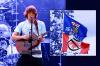
Grant Potter pulls out the relevant quote from this article (which should be read in its entirety): "Here's a good rule of thumb: if you go online - especially if a social media platform is involved - assume there is an attempt to exploit your fears, grievances, beliefs, personal identity, and sense of community. Whether you are an elitist music nerd or an aggrieved Alberta separatist, assume you are being manipulated." The 'hottest band of the year' was a band named Geese, but "their stratospheric hipness was all due to algorithmically manufactured buzz. Fake fans. Fake comments. Fake reviews. Bots pushing social media posts." That's what buys fame these days (in our field too). I'm proud to say I had never heard of them before I read this article.
Web: [Direct Link] [This Post][Share]
How Do Secondary Students Study, and Are Their Choices Related to Their Beliefs in Achievement?
Megan Sumeracki,
The Learning Scientists,
2026/06/11
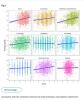
This article reports on a study examining "how secondary students report studying, and the associations these choices have with students' beliefs in their own abilities." The URL for the original study in the article is incorrect, but you can find it here (21 page PDF). I was originally going to complain about the authors inventing a new protocol, which they do, but there's much more to chew on. I was going to complain about "yet another study measuring X's perception of Y" but the study at least finds an association between perception and outcome, which is good, while also casting doubt on the whole 'mindset causes outcomes' argument, which is also good. That's the main focus of the article. But the original study contains an extra treat: the authors seek to find an association between "behaviors supported by cognitive science," such as explained by cognitive load theory and the like, and found it "could explain 9% of school achievement variance," a number that might be further reduced by some other correlations.
Web: [Direct Link] [This Post][Share]
On “Eight Predictions for the Future of Higher Education”
Bryan Alexander,
Bryan Alexander,
2026/06/11

As always with Bryan Alexander, this work is tightly focused on the U.S. context. And in the U.S., the eight predictions (from a paywalled source) boil down to three trends: "demographics, AI, K-12 learning loss." None of these was evenly distributed globally, not even after Covid (here's a full table of PISA results over the years) which to my mind says there are different drivers in different countries. Yes, the education system in the U.S. is under significant stress, but it's much more the result of domestic pressures, ranging from malice to disdirection to mismanagement, rather than a reflection of the global picture. Tuition at some institutions has topped $100K, while government funding for 'state' institutions has dropped to almost zero. That, more than anything, speaks volumes.
Web: [Direct Link] [This Post][Share]
My Selfie with Paulo Freire; or, Honest Work
Sean Michael Morris,
2026/06/11

I think there's a lot of insight in this post. "Education spins on the axis of reputation which spins on the axis of influence (within a field that fuels a dependency on the promise of both), so much so that the desire to simply help people learn, discover, or imagine can get very very lost in the mix." Most people in the field do the honest work of helping people on a day to day basis. Some people sometimes spin a 'hit single' that gets them noticed. But "then people would get tired of it. There would be other songs, other musicians, other hit tunes." The only way to survive, in my view, is to be focused on the honest work, not on being a celebrity. Do the work, help people learn, and maybe (in my case) rescue some kittens.
Web: [Direct Link] [This Post][Share]
There are many ways to read OLDaily; pick whatever works best for you:
- Read in your web browser on this web page, updated weekdays
- Receive a daily or weekly email newsletter by subscribing here
- Subscribe to the RSS feed using your favourite feed reader
- Follow @OLDaily@mastodon.social on Mastodon or elsewhere in the fediverse
- Follow @OLDaily on Bluesky
- Read OLDaily as a LinkedIn Newsletter
- Integrate the open API using the JSON feed
This newsletter is sent only at the request of subscribers. If you would like to unsubscribe, Click here.
Know a friend who might enjoy this newsletter? Feel free to forward OLDaily to your colleagues. If you received this issue from a friend and would like a free subscription of your own, you can join our mailing list. Click here to subscribe.
Copyright 2026 Stephen Downes Contact: stephen@downes.ca
This work is licensed under a Creative Commons License.