
Why Open Source Doesn't Embrace AI
Justin,
From The Architect,
2026/06/05

Open source software is different from open education, of course, but there is overlap in the two communities' rejection of AI. In this post Justin Fowler outlines the four major open source arguments against AI and shows that they don't have a basis in fact. The objective isn't to get everybody to support AI, but rather, to foster a more productive dialogue about it. Meanwhile, "there's a coherent version of the pro-AI argument that says: AI vendors are toolmakers, not platform owners. Judge them by what their users produce. And the produce here is overwhelmingly more open source, faster." If the same holds true of open education, then we too need to reframe our discussion. Via Liam Proven.
Web: [Direct Link] [This Post][Share]
They Built a System to See Everything. But It Can’t See You.
Abi Awomosu,
How Not to Use AI,
2026/06/05
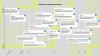
This is a long article, and ther title is a bit misleading, but it's entertaining, and contains elements of truth. I wouldn't exactly buy into the world view, but I know any number of people who would. It's based on comparing what AI does with what divination systems did through the ages - systems like the I Ching, the Oracle of Delphi, astrology. What they are all based on is not a big database of facts, but a method of seeing patterns and relationships in things. But there are two ways to look at this - as a type of calculation, a 'prediction', or as a type of interpretation, a 'divination'. "Empire does not divine. Empire predicts. And to make its predictions look like truth, it had to make divination look like superstition." And it becomes 'colonialism' when "it manufactures the predicted outcome rather than say: I don't know." That's what the surveillance systems in Tesco are being used for, and where the art of not being seen becomes a strategy. But "the system doesn't give you the answer. The system creates the conditions for the answer to arrive from the collision between the corpus and the question you brought. You are never optional."
Web: [Direct Link] [This Post][Share]
The European Social Stack - An open declaration
European.Social,
2026/06/05

What tells me I'm on the right track with CList? Initiatives like this. The proponents plan to build on federated social software and to include features such as bridging from service to service, distributed identity, and multiprotocol integration. I've already developed these in my proof of concept so I know it's possible. The real challenges are in things like content moderation and the full social ecosystem. How do you manage unwanted content in a network that supports genuine privacy and decentralized ownership? My own approach is to base interactions on 'pull' - that is, the only content you see is content you asked for. That makes it a poor platform for broadcasting, marketing and propaganda.
Web: [Direct Link] [This Post][Share]
ChipotlAI-Max
GitHub,
2026/06/05
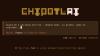
This is pretty funny. You may have heard the story about a restaurant AI customer support chatbot that people could use to write computer programs. This takes the idea a step futher. "Chipotle's customer support chatbot 'Pepper' went mega-viral after users discovered it could solve LeetCode problems, write Python, reverse linked lists - the works. It's powered by IPsoft Amelia (not Claude, not GPT), and it's still live.... We took OpenCode (MIT license, 120k+ stars), forked it, hardcoded Pepper as the default model, slapped on Chipotle's brand colors, and shipped it." It's now looking at Home Depot, Sephora, Nordstrom, IKEA, and more, using brand AIs to write computer code. "Not affiliated with Chipotle. They will probably sue us. Worth it."
Web: [Direct Link] [This Post][Share]
Cognition spaces: natural, artificial, and hybrid
Ricard Solé, et al.,
arXiv,
2026/06/05
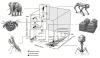
This is an interesting paper with an ambitious aim, as described in the abstract: "Within this framework, cognition is treated as a graded capacity to sense, process, and act upon information, allowing systems as diverse as cells, brains, artificial agents, and human–AI collectives to be analyzed within a common conceptual landscape." In addition to core requirements - sensation and memory - the framework describes cognitive capacity in terms of complexity, and also considers hybrid cognition as a consequence of agency and interaction. I think the approach is sound, but that it is incommensurable with terms like 'information' and 'processing', which reflect a computational, rather than network, basis for cognition.
Web: [Direct Link] [This Post][Share]
Canada’s National Artificial Intelligence Strategy: AI for All
2026/06/05
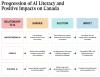
This document (50 page PDF) reads a lot like the European strategy just released, which isn't really surprising. The three major pillars are trust, opportunity, and sovereignty, and of those the elements that interest me the most are "shared prosperity" and "benefit from AI". It remains an open question how equitably distributed those will be. There's an emphasis on building out infrastructure to reduce dependence on key suppliers, just as in Europe. And there's a bluntly stated assessment of the state of innovation in Canada: "Canada helped invent modern AI, and that legacy is not just historical... Too much Canadian innovation is captured and scaled elsewhere." There's also an emphasis on AI literacy, "the understanding that lets Canadians recognize AI, judge its outputs, and decide for themselves where it belongs in their lives."
Web: [Direct Link] [This Post][Share]
There are many ways to read OLDaily; pick whatever works best for you:
- Read in your web browser on this web page, updated weekdays
- Receive a daily or weekly email newsletter by subscribing here
- Subscribe to the RSS feed using your favourite feed reader
- Follow @OLDaily@mastodon.social on Mastodon or elsewhere in the fediverse
- Follow @OLDaily on Bluesky
- Read OLDaily as a LinkedIn Newsletter
- Integrate the open API using the JSON feed
This newsletter is sent only at the request of subscribers. If you would like to unsubscribe, Click here.
Know a friend who might enjoy this newsletter? Feel free to forward OLDaily to your colleagues. If you received this issue from a friend and would like a free subscription of your own, you can join our mailing list. Click here to subscribe.
Copyright 2026 Stephen Downes Contact: stephen@downes.ca
This work is licensed under a Creative Commons License.