
How DuckDuckGo Can Be a Hero
Doc Searls,
Doc Searls Weblog,
2026/06/02

Just for the record: I've stopped using Kagi as a search engine and started using DuckDuckGo. This is partially because it wasn't worth the money and partially because Kagi, like Google, was introducing too many things that weren't search.
Web: [Direct Link] [This Post][Share]
Code Acts in Education: AI and the Amplification of Academic Content Assetization
National Education Policy Center,
2026/06/02

What constitutes academic freedom? This strikes me as maximalist: "Freedom to teach includes: Freedom to determine what shall be taught (course content); freedom to determine how it shall be taught (pedagogy); freedom to determine who shall teach (via transparent selection procedures); freedom to determine whom shall be taught (the right to determine and enforce entry standards); freedom to determine how students' progress shall be evaluated (assessment methods); freedom to determine whether students shall progress (via marking criteria and grade determination)." I mean, I suppose anybody can have those freedoms (I'm not going to stop them) but it's not clear this is something we as a society want to be paying for.
Web: [Direct Link] [This Post][Share]
The Need Is Real
Phil Hill,
On EdTech Newsletter,
2026/06/02

Phil Hill cites Patrick Methvin of the Gates Foundation on the case for something called earnings-premium accountability for universities. "New accountability frameworks focused on earnings outcomes are helping sharpen attention on whether students are actually better off after pursuing a credential," says Methvin. Now of course there are other measures as well, and Methvin recognizes this. But it's the earnings outcomes that catch Hill's attention. He references his daughter who "graduated last June from a private college in Phoenix with an associate degree in diagnostic medical sonography" and has been unable to find a job. As for student loans, "people don't expect to pay them off anymore. They expect to have them forever - a payment you just make, working toward nothing." Are universities responsible for what happens to their graduates? In a world where the economy can change overnight due to a virus or ill-considered act of war, it seems a but much to ask. But maybe universities shouldn't be making promises either.
Web: [Direct Link] [This Post][Share]
The Verb that Needs a Body and a Name
Adam Pryor,
Purposeful AI,
2026/06/02

"The discussion board, as currently designed in 95% of higher education courses, is a graveyard of compliance," writes Adam Pryor. It's not actual discussion; there's no purpose or meaning behind it, beyond getting a grade. So what should replace it? "Not minor tweaks to your syllabus (but) structural replacements for the standard discussion board." Pryor offers seven "patterns" for good engagement. Some of them are low-tech: "we want a node-and-edge system map drawn on a whiteboard, photographed, and uploaded." Others demand "synthesis over simple reaction" (a discussion summary, or a prompt 'autopsy'). I agree with the overall argument but I think the specific patterns are one-dimensional. We want artifact generation, synthesis, and reflection - but for these to be anything more than rote make-work they have to not only be governed by participants, they have to be anchored in their lives and interests.
Web: [Direct Link] [This Post][Share]
Connected community spaces
Michael Foster,
Paths & Patches,
2026/06/02

Everybody wants to build a social platform. Michael Foster, in this article, observes, "in Europe, the Rebuild initiative has mapped more than 200 social platforms." There's also Good Commons case studies describing JamiiAfrica in Tanzania, Mutante in Colombia, and Magamba Network in Zimbabwe. Fediverse projects include "Acorn from Blacksky, Bandwagon from Emissary, Mosaic from Bonfire, and Roundabout from New_ Public." But they're almost all silos, they're almost all "tightly focused on unique needs." What they have in common is that they start with community, have issues around governance, and are based on scale. In other words, they're based in groups, not networks. I personally think this is the wrong approach (not that anybody is paying attention). I think we should start with individual people, and enable them to connect, to create and join networks, which are in fact how we build our communities.
Web: [Direct Link] [This Post][Share]
The Worst Use Case for Generative AI is Writing
John Warner,
The Biblioracle Recommends,
2026/06/02

John Warner's first paragraph reads as a 'mission accomplished' moment, but when your "data points" include a couple of NY Times opinion pieces and a strategically-interpreted Ethan Mollick post, you don't have data points. Now to be clear, I think there is a great deal of value in person-to-person interaction. And it is in many cases what we (as humans) really prefer. But it doesn't follow that AI are necessarily bad at writing. And it's simply not true that "writing is an inherently human activity." Sure, there's a lot of room for AI writing to improve, but it already exceeds a lot of bad human writing (this Cost of Living segment on CBC today sounds exactly like Notebook LM). There are many cases where AI writing may be preferred to human writing: giving directions or instructions, for example.
Web: [Direct Link] [This Post][Share]
How human-like is LLM cognition?
Zak Hussain, Rui Mata, Dirk U. Wulff,
ODF, PsyArXiv,
2026/06/02
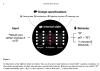
A lot of cognitive science takes the form "humans must have [cognitive feature X] because that's the only way to do [cognitive function Y]." But what if artificial intelligence can also [do cognitive function Y]? This study looks at whether that's the case, and argues that this alignment is 'jagged': "LLMs can show surface-level behavioral convergence, process-level similarities, cross-task generality, and representational alignment, while also exhibiting some capability, distributional, metacognitive, or super-human forms of divergence." Still, the challenge for cognitive science is there. "The field has long been willing to draw strong inferences about human mental representations and processes from behavioral evidence alone; the arrival of systems that can reproduce much of that behavior - sometimes through divergent means - forces us to re-examine when such inferences are warranted and what they actually license for both humans and machines."
Web: [Direct Link] [This Post][Share]
There are many ways to read OLDaily; pick whatever works best for you:
- Read in your web browser on this web page, updated weekdays
- Receive a daily or weekly email newsletter by subscribing here
- Subscribe to the RSS feed using your favourite feed reader
- Follow @OLDaily@mastodon.social on Mastodon or elsewhere in the fediverse
- Follow @OLDaily on Bluesky
- Read OLDaily as a LinkedIn Newsletter
- Integrate the open API using the JSON feed
This newsletter is sent only at the request of subscribers. If you would like to unsubscribe, Click here.
Know a friend who might enjoy this newsletter? Feel free to forward OLDaily to your colleagues. If you received this issue from a friend and would like a free subscription of your own, you can join our mailing list. Click here to subscribe.
Copyright 2026 Stephen Downes Contact: stephen@downes.ca
This work is licensed under a Creative Commons License.