
DrawSplat Feature: Mermaid Diagram Studio
Miguel Guhlin,
Another Think Coming,
2026/05/29
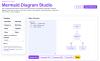
This is an item I'm posting for myself, so I don't forget. "Type or paste Mermaid syntax on the left, preview on the right. Use templates for flowcharts, sequence diagrams, mind maps, pie charts, Gantt charts, timelines, class diagrams, and state diagrams. Download as SVG or PNG, or copy to clipboard." Great stuff; already wondering how I can integrate it into my own projects. See also this item on Drawsplat.
Web: [Direct Link] [This Post][Share]
Redefining Publishing: Practical pathways to open science
Alison Mudditt,
PLOS,
2026/05/29

Interesting report (37 page PDF) from PLOS on the future of open academic publishing. There's a good summary on Scholarly Kitchen if you don't want to read the whole thing. The main finding is that "open science creates value when reuse is practical at scale," however, "these benefits depend on the infrastructure, standards, metadata, incentives, and coordination needed." Related is the idea that academic credit for participating in the various elements of the scientific research stack (and not just the publication, as is currently the case). The report defines this stack as "a publishing model that connects articles and preprints with associated research outputs - data, code, methods, and materials - into a structured, open, machine-readable record." The report also addresses the role of publishers, business model reform, and regional pathways.
Web: [Direct Link] [This Post][Share]
Must-Read: AI is Not a Tool, It’s a Medium-Institution (Discover Abi Awomosu)
Maha Bali,
Reflecting Allowed,
2026/05/29

Referencing an article by Abi Awomosu, Maha Bali argues that AI is not 'just a tool'. "At best, Generative AI is like a swiss knife, but you can't control which item within the swiss knife comes at you at any point in time, even with 'careful prompting'. It also has hidden elements you don't know, and you also can't control whether it gets used on you, even if you choose not to use it yourself." OK, fair enough. Not just a tool. But what, then? Maybe it's more like a 'medium-institution' where "it becomes the place where social, economic, and epistemic life happens. It sets norms. It creates gatekeeping. It arbitrates who gets to speak. It builds the archives that constitute collective memory." I think that's overstating it. Here is maybe a better analogy: working with AI is like working with an animal. It can greatly extend your capacities, but it can be capricious and act like it has a mind of its own.
Web: [Direct Link] [This Post][Share]
2028 Is When Traditional Publishing Plans to Quietly Kill Literary Fiction
Michael O. Church,
2026/05/29

This article makes the case for the prediction we read in the title, but it has more value as a takedown of the publishing industry in general. "The text, notably, is not all that relevant. Publishing is all about leverage and social status... As a leftist (i.e., someone who truly understands sociology and economics) you will be inadmissible into most institutions no matter how much you excel." There's a lot more (and I've cherrypicked the bits that apply to me) but the main message here is that "traditional publishing is not only aware of its impending cultural obsolescence, but actively planning it."
Web: [Direct Link] [This Post][Share]
Do AI Risks Require Extraordinary Government Intervention?
Sayash Kapoor,
AINT,
2026/05/29
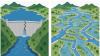
I don't really agree with the argument here but readers should have the opportunity to see it. Sayash Kapoor argues against what is called here "extraordinary government intervention in response to new technology," and specifically, AI. The contrast is with an approach called "resilience", and they are characterized here as one big intervention versus many little interventions. The argument: first, "extraordinary interventions tend to... restrict activity based on anticipated harms rather than realized or demonstrated ones"; second, "extraordinary interventions impose restrictions on the liberty of actors who are not directly responsible for the harm"; and third, "extraordinary interventions bypass normal processes of governance." Against this, posited as the major objection, "investing in resilience requires action and investment by a much wider set of actors than nonproliferation does." I think that's an issue but it's not the only issue.
Web: [Direct Link] [This Post][Share]
There are many ways to read OLDaily; pick whatever works best for you:
- Read in your web browser on this web page, updated weekdays
- Receive a daily or weekly email newsletter by subscribing here
- Subscribe to the RSS feed using your favourite feed reader
- Follow @OLDaily@mastodon.social on Mastodon or elsewhere in the fediverse
- Follow @OLDaily on Bluesky
- Read OLDaily as a LinkedIn Newsletter
- Integrate the open API using the JSON feed
This newsletter is sent only at the request of subscribers. If you would like to unsubscribe, Click here.
Know a friend who might enjoy this newsletter? Feel free to forward OLDaily to your colleagues. If you received this issue from a friend and would like a free subscription of your own, you can join our mailing list. Click here to subscribe.
Copyright 2026 Stephen Downes Contact: stephen@downes.ca
This work is licensed under a Creative Commons License.