
Advancing pluralism through education
GEM Report,
World Education Blog,
2026/05/27
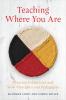
Readers understand, I think, that I endorse pluralism, and I think this is a good overview of what the concept means: "We understand pluralism as resting on two core pillars of reciprocal recognition and belonging: Reciprocal recognition means acknowledging the dignity, experiences and contributions of different groups in society. Belonging goes further than individual feelings of inclusion; it also means being meaningfully recognized within institutions and having real opportunities to shape collective life." I was thinking of that this week when reading In Education, for example, Jennifer MacDonald's review of Leddy and Miller's (2024) Teaching Where You Are: Weaving Indigenous and Slow Principles and Pedagogies (sadly behind a paywall). There's a skill - and it's hard, I think - to find that line between respecting values and feeling obligated to endorse those values as principles that guide one's own life.
Web: [Direct Link] [This Post][Share]
The Gap Between Knowing and Deciding
Colin Beer,
Col's Weblog,
2026/05/27

As is well known, writes Colin Beer, there are two typoes of authority: that derived from expertise, and that derived from authority. It is ironic, then, that universities, which produce the former, are governed so often by the latter. Consequently, Beer advocates in this post for what Gary L. Anderson calls democratic professionalism, "which is neither passive compliance nor open conflict, but a persistent insistence on the value of expertise through the quality and visibility of the work itself." He adds, "For me, the irony here is not that there is a tension between authority and expertise, but that institutions capable of producing entire fields of knowledge aren't terribly good at eating their own dog food.
Web: [Direct Link] [This Post][Share]
So, how’s retirement going?
Martin Weller,
The Ed Techie,
2026/05/27

Martin Weller reflects on how his retirement is going (well, from the sound of it) so I may as well reflect for a moment on mine. I've settled into a bit of a routine - wake up when I want (yay!), spend time reading and writing posts, work on my CList application, and get out for bike rides. I worry most about money (because I'm a pensioner now) and am paying more attention to my health (which typically took a back seat when I had a day job). I have a 'consultancy business' with no current clients, but I can't bring myself to do the LinkedIn song and dance it would take to make that work. But that's OK. I still feel deeply engaged in my work, which always was, for me, my hobby.
Web: [Direct Link] [This Post][Share]
Choosing to Stay Human
Ethan Mollick,
One Useful Thing,
2026/05/27

"I am cool with a lot of cognitive surrender," writes Ethan Mollick. "I don't remember phone numbers anymore because my phone does that for me. I am happy my kids didn't need to learn cursive. I am fine with calculators doing my daily math and my computer figuring out how to schedule my classes. These were once useful skills, but we were probably right to get rid of them." But we need to be intentional about this, and we need to continue the work that sharpens our ideas and defines our own unique style (which is why I write all these posts by hand, with no AI interaction). It's not that AI writing is bad, per se, but that when badly prompted, it's not sharp or clear or intentional. "Balancing using AI with our own mental abilities is going to be a defining challenge of the coming years," says Mollick. I agree.
Web: [Direct Link] [This Post][Share]
Attention Isn’t Given. It’s Spent.
Mike Taylor,
Mike Taylor,
2026/05/27

I think Mike Taylor is on the right track here as he reframes what we're talking aboiut when we talk about attention. The most important thing is that there isn't some predefined attention span (equal to that of a goldfish or whatever). A moment's reflection will prove this. When I race my bicycle down a hill, my attention doesn't waver or run out of 'span'. Attention is something that starts and stops as a result of a decision, and this decision can be prompted. Taylor credits John Keller's model - Attention, Relevance, Confidence, Satisfaction (ARCS) - but of course it's also the first item in Gagne's nine events. Where Taylor is wrong, I think, is in drawing an analogy between attention and money. Try, the language of capital infuses our vocabulary, so we 'pay money' and 'pay attention', but attention is not a type of "rational economics". It's messy and complex, emotion-driven and context-sensitive, just like everything else human (except a banker's heart).
Web: [Direct Link] [This Post][Share]
There are many ways to read OLDaily; pick whatever works best for you:
- Read in your web browser on this web page, updated weekdays
- Receive a daily or weekly email newsletter by subscribing here
- Subscribe to the RSS feed using your favourite feed reader
- Follow @OLDaily@mastodon.social on Mastodon or elsewhere in the fediverse
- Follow @OLDaily on Bluesky
- Read OLDaily as a LinkedIn Newsletter
- Integrate the open API using the JSON feed
This newsletter is sent only at the request of subscribers. If you would like to unsubscribe, Click here.
Know a friend who might enjoy this newsletter? Feel free to forward OLDaily to your colleagues. If you received this issue from a friend and would like a free subscription of your own, you can join our mailing list. Click here to subscribe.
Copyright 2026 Stephen Downes Contact: stephen@downes.ca
This work is licensed under a Creative Commons License.