
The Illusion of Protection: Why Canada’s Growing Push to Ban Social Media for Kids Won’t Work
Michael Geist,
2026/04/28

Michael Geist outlines the objections to proposed plans to restrict access to social media (and in some cases, AI chatbots) for kids. The ban, he says, lets social media off the hook. "Algorithmic manipulation, addictive engagement design, inadequate content moderation, inconsistent policy enforcement, insufficient transparency, and privacy risks affect users of every age." Also, evidence from Australia suggests the ban does not work. The ban creates its own hams, such as when "mandated, mandatory ID submission is required for all users." And ultimately, "kids have constitutional rights too." Image: my cat. Just because.
Web: [Direct Link] [This Post][Share]
The Reinvention of Workday: From System of Record to Platform of Agents
Josh Bersin,
2026/04/28
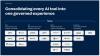
Workday, enterprise applications for finance and HR and known as the most hated software on earth, is (remarkably) "moving from a system of record to a system of agents." I have no doubt other enterprise software providers are watching closely. Josh Bersin explains it well. "Workday, as a trusted system of record, provides the company rules, policies, security model, and compliance that enables agents to run at scale. These 'rails' exist in Workday today and recreating them outside of Workday is expensive, slow, and risky." Agents, if you will, run on the rails, based on five operating principles (paraphrased): AI complements deterministic rules, approval chains, and data models; these rails are the core of enterprise AI; agent management tools are a core part of the infrastructure; Sana is the new default front door for Workday; and the model aligns to outcomes, not seats. Bersin also comments, "the Sana dynamic learning platform is far more profound than most companies realize. AI-native learning is not training alone: it's global employee enablement, powering enormous improvements in productivity and employee reskilling. I don't think Workday fully sees this opportunity yet, but Sana customers do." There's a lot to like about this new direction, just in terms of enterprise software design, though of course I am always wary of the enterprise overwhelming the individual. See also a16z on this story.
Web: [Direct Link] [This Post][Share]
MyTerms and SEDI's Duty of Loyalty
Phil Windley,
Phil Windley's Technometria,
2026/04/28

This is a short article that connects a number of important concepts: MyTerms, the new IEEE 7012 standard, that "gives individuals a protocol for proposing terms to websites as first parties"; and State-Endorsed Digital Identity (SEDI) provides that non-optional base layer, enabling portable proof, accountable delegation, and interoperable trust infrastructure to function at societal scale. "MyTerms," writes Phil Windley, "could become the concrete mechanism through which SEDI's duty of loyalty requirement, essentially fiduciary obligations to identity holders, are expressed and enforced."
Web: [Direct Link] [This Post][Share]
I Taught Philosophy for 20 Years. Here’s What I Learned.
David Website,
2026/04/28

The most important lesson in philosophy I ever taught was not taught in the classroom. I was driving toward the college in Grouard, Alberta, where I gave a mostly Indigenous student cohort a course in critical thinking. I was running late, but it was morning in northern Alberta, and the sun caught the mist over the river just right, and I stopped to take out my camera and enjoy the view. There I was, knee-deep in brush and weeds, as the school bus came. I arrived in class, late and dirty, and a voice came from the back: "gotta stop to smell the roses, right?" The whole class changed in that moment; they could see me in a new light. No, it was not the pedantic question of "whether students can ponder questions without rushing to resolve them. Whether they can tolerate not knowing, and still keep at it. Whether they notice how their own assumptions shape what they take to be obvious: and are up for that shifting." For me, it's whether people can live while living, whether they can experience what they are experiencing, whether the expectations of everyone else - including philosophy professors - can be set to the side for a time while you watch the ducks on a lonely northern river in the morning mist. Image: the photo I took that day.
Web: [Direct Link] [This Post][Share]
A systems Weltanschauung of open, distance, and digital education (ODDE)
Olaf Zawacki-Richter,
Journal of Open, Distance, and Digital Education,
2026/04/28

This paper (21 page PDF) attempts an analysis and new theoretical structure of open, distance, and digital education (ODDE) framed within a type of systems theory, drawing especially from sociologist Niklas Luhmann. "Communication, evolution, and differentiation - these components serve as the basis for introducing Luhmann's systems theory here, which will then be applied to ODDE." The paper follows in a grand tradition; "This interpretation complements earlier systems-oriented models in distance education (e.g., Rumble, 1979; Moore & Kearsley, 1996), which conceptualize ODDE as a set of interrelated functional components, by reinterpreting these components as communicatively constituted subsystems." If the problems of the world (and hence ODDE) are in the systems, then we need to get the systems analysis right.
Web: [Direct Link] [This Post][Share]
forrestchang/andrej-karpathy-skills
GitHub,
2026/04/28
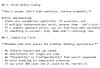
I don't use this exact CLAUDE.ms file telling the AI how I want it to approach programming tasks, but my own version is very similar. "A single CLAUDE.md file to improve Claude Code behavior, derived from Andrej Karpathy's observations on LLM coding pitfalls." The key instruction: "Don't assume. Don't hide confusion. Surface tradeoffs." Now that I think about it, it's probably pretty good advice for life in general. Here's a version you can paste into your project.
Web: [Direct Link] [This Post][Share]
The Long Push To Blame Systemic Problems On Individuals
Nick Chater, George Loewenstein,
Science Friday,
2026/04/28

The idea that "many of society's, and the world's, problems stem from individual failings" is called in this book excerpt "the i-frame (individual frame)." It is contrasted with the view that "the idea that social problems arise because there is something wrong with the system of complex and interlocking rules that govern our lives," known as "the s-frame (system frame)." The thesis, with which I am in general agreement, is that "a mountain of evidence shows that the impact of i-frame interventions - the nudges we have been told are so beneficial - has been disappointing, often showing small or even null results." We are being lulled - or even deliberately misled - into believing that we are the problem. But we're not. "Change the game, not the players." Via Alfie Kohn.
Web: [Direct Link] [This Post][Share]
There are many ways to read OLDaily; pick whatever works best for you:
- Read in your web browser on this web page, updated weekdays
- Receive a daily or weekly email newsletter by subscribing here
- Subscribe to the RSS feed using your favourite feed reader
- Follow @OLDaily@mastodon.social on Mastodon or elsewhere in the fediverse
- Follow @OLDaily on Bluesky
- Read OLDaily as a LinkedIn Newsletter
- Integrate the open API using the JSON feed
This newsletter is sent only at the request of subscribers. If you would like to unsubscribe, Click here.
Know a friend who might enjoy this newsletter? Feel free to forward OLDaily to your colleagues. If you received this issue from a friend and would like a free subscription of your own, you can join our mailing list. Click here to subscribe.
Copyright 2026 Stephen Downes Contact: stephen@downes.ca
This work is licensed under a Creative Commons License.