
The Pedagogical Promptbook
David Wiley, et al.,
EdTech Books,
2026/04/21
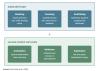
Not long after the initial popularity of ChatGPT David Wiley argued that the new form of open educational resources would be found in the form of 'open prompts'. This new open access book (391 page PDF) feels like the implementation of that idea. The fourteen chapters each take an 'evidence-based' learning theory or pedagogical strategy, ranging from 'think-pair-share' to Gagne's 'nine events' to 'science of learning'. They outline the strategy, develop a set of prompts that implement the strategy, test the prompts, and report the outcome. The papers are very lightly edited (if at all) and there's a lot of variability in length and quality, though I wouldn't describe any of them as bad. A little more care in presentation would have helped a lot (things like numbering the chapters, sizing the images properly, nicer heading font selection, etc (though these may be limitations of the PressBooks format). Also, there's no mention anywhere of newer developments in the field, like agents (except for a mention in the section on Bloom's Taxonomy), model context protocol (MCP) and the other tools AI models can access.
Web: [Direct Link] [This Post][Share]
Why OER: open educational resources
Tel Amiel,
UNESCO,
2026/04/21

UNESCO has released a short (9 page PDF) 'programme and meeting document' describing open educational resources and explaining why people might want to adopt them. The majority of the document focuses on questions people might have, for example, "I want to keep some control over my works" or "I do not want others to judge the quality of my educational resources."
Web: [Direct Link] [This Post][Share]
Why AI alone cannot fix social problems
Deepak Varuvel Dennison, Aditya Vashistha,
Rest of World,
2026/04/21

The headline really distracts from the core question and I wish people would stop presenting arguments of this form: "X alone won't fix Y". No kidding. We live in a complex interconnected world. Nothing 'alone' fixes anything. The real questions concern what things are necessary (if any) and what combination of things will be sufficient. We also need a good definition of what it is exactly that needs fixing. Now consider the summary of this article: "Even sophisticated AI systems need human support and institutional capacity to succeed in addressing social problems." What we need to learn, really, is what kind of institutional support and institutional capacity are required. At one point we read it's "adequate infrastructure, dedicated administrative support, and enabling leadership." So - the usual.
Web: [Direct Link] [This Post][Share]
Learnings from conducting ~1,000 interviews at Amazon
Gergely Orosz,
The Pragmatic Engineer,
2026/04/21

I confess that I'm suspicious of any article that uses the word "learnings" in the title, because it represents a certain perspective where the meanings of words have started to shift toward the vague and fuzzy. But this article is not that; it's full of concrete advice for technical people looking for a technical job with a strong focus on the non-technical aspects, because that's where the interview succeeds or fails. If I had to summarize in a nutshell: find out what the company or organization values, and then craft stories (that you can use as answers to questions like "describe a case where you had to manage through a conflict") that show how what you've done fits those values.
Web: [Direct Link] [This Post][Share]
The Edtech Insiders Rundown of ASU+GSV 2026
Sarah Morin,
Edtech Insiders,
2026/04/21

This is a report from the posh ASU+GSV conference that just concluded and is filled with predictable ragebait, for example, "The line between Big Tech and EdTech has basically dissolved." Or "The distinction between 'AI company with an education play' and 'edtech company using AI' gets thinner every year." And there are some old tropes, like "the skills revolution finally feels real." It does, though, introduce some new concepts being bounced around: 'jagged', which describes how an AI model can be very capable in one area and not at all capable in another; 'harness', and specifically, 'education harness', which is the set of functions around an AI model that integrate it into tools and systems; 'dislocation', which is a vague term describing fear of AI, which is in turn a concern about replacing human systems that work with AI systems that don't.
Web: [Direct Link] [This Post][Share]
There are many ways to read OLDaily; pick whatever works best for you:
- Read in your web browser on this web page, updated weekdays
- Receive a daily or weekly email newsletter by subscribing here
- Subscribe to the RSS feed using your favourite feed reader
- Follow @OLDaily@mastodon.social on Mastodon or elsewhere in the fediverse
- Follow @OLDaily on Bluesky
- Read OLDaily as a LinkedIn Newsletter
- Integrate the open API using the JSON feed
This newsletter is sent only at the request of subscribers. If you would like to unsubscribe, Click here.
Know a friend who might enjoy this newsletter? Feel free to forward OLDaily to your colleagues. If you received this issue from a friend and would like a free subscription of your own, you can join our mailing list. Click here to subscribe.
Copyright 2026 Stephen Downes Contact: stephen@downes.ca
This work is licensed under a Creative Commons License.