Password Manager Angst
ongoing by Tim Bray,
ongoing by Tim Bray,
2026/04/13

As Tim Bray says, if you're not using a password manager, you should probably start using one. I personally use 1Password, because it works quite well with my browser. But the whole business of managing credentials is about to get more complicated and more important as we begin to use services (and especially AI services) to access our various accounts. This post compares 1Password to BitWarden. My experience was similar.
Web: [Direct Link] [This Post][Share]
All in the Verbs
Heart Soul Machine,
Heart Soul Machine,
2026/04/13
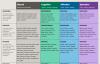
I like what Tim Klapdor is doing with Bloom's Taxonomy, both in the last post and in this post. "What I'm really trying to achieve is a more three-dimensional version of Bloom's. Learning has height, breadth, and width – but the affective and operative components have often been lost. These are often dismissed as 'soft skills' or treated as trade-specific concerns, but they matter deeply in higher education. Higher education that includes vocational training and degrees in which cognitive, affective, and operative development are genuinely intertwined." Quite so. There's a lot to be discovered analyzing these concepts in detail - though at any point it may be tempting to crystalize that emerged in a far too quick abstraction.
Web: [Direct Link] [This Post][Share]
An illustrated guide to resisting "AI is inevitable" in education
Benjamin Riley,
Cognitive Resonance,
2026/04/13
What I like about this article is that it takes the reader step by step through the argument against the use of AI in education, with clear examples and references to real work. It begins by pushing back against the inevitability of AI and by pointing to what has come to be called 'cognitive surrender'. Then a series of examples shows how it fails in education. Good stuff; I'm sure this will be popular. But let's reframe. What if we replaced 'cognitive surrender' with the word 'trust', and thought of using AI as no different than depending on a library of books or statements made by people who have written them? And what if, instead of thinking of AI as some sort of tutoring system, we thought of it as similar to writing, which exists everywhere in society, but which serves to guide though not replace human experience?
Web: [Direct Link] [This Post][Share]
Through the Prism: Illuminating Educational Impact with Brookfield’s Four Lenses
Danielle Hinton,
#LTHEchat,
2026/04/13

This is an outline of Stephen Brookfield's 'four lenses' theory of reflective practice. The four lenses, for the record, are: "student feedback, emotions, behaviour patterns, peer insights, theory." The idea is that learning from diverse forms of evidence creates "stronger, more credible reflections." The diversity part makes a lot of sense to me. Calling these forms of evidence 'lenses' does not. The use is at best metaphorical, though I fear people take it literally, like this: "Each lens refracts our teaching differently, offering a unique hue in the spectrum. Where these colours converge or contrast, we begin to see the fuller pattern of our work. Using diverse forms of evidence is like adjusting how the prism catches the light - subtle shifts that reveal deeper detail, sharpening our understanding of what our teaching truly looks like in practice."
Web: [Direct Link] [This Post][Share]
What Happens When Students Stop Believing Their Work Matters
Marc Watkins,
Rhetorica,
2026/04/13

I think we have to ask this not only of students but of people generally. The framing for education, though, is to pose this as opposed to more oft-cited concerns about cheating. "There's a much deeper wound here that we're only now beginning to see. When a machine can now mimic the work of a human being, many of us, especially students, must be asking what the point is anymore." Of course, this is being written from the perspective, I guess, of someone whose work has always mattered. But a lot of people look at the world of work generally, with or without AI support, and say "what's the point?" For a lot of people, if they didn't have to earn a paycheque, they wouldn't be doing this work at all.
Web: [Direct Link] [This Post][Share]
Supporting AI Literacies for Young Adults Aged 14-19
Rhianne Jones, Doug Belshaw, Laura Hilliger,
We Are Open Co-op,
2026/04/13
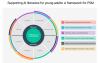
This report (39 page PDF) for the BBC's Responsible Innovation Centre benefits from Doug Belshaw's background in digital literacies as well as a survey of 40 definitions of AI literacy (another growth industry in our field). "The report outlines that public service media (PSM) have a key role to play in addressing a gap between technical and functional skills, and critical skills through creative learning interventions that blend these elements." I'm a bit sceptical that the literacies all line up neatly as words that begin with 'c' (aka Angela Gunder's "Dimensions of AI Literacies") but do agree that "the competencies involved in AI Literacies are not something that can be 'delivered' but only developed." I think we could talk about 'core values' and literacy; while I support EDI and human rights, I'm not sure they belong in a definition of 'AI literacies'.
Web: [Direct Link] [This Post][Share]
There are many ways to read OLDaily; pick whatever works best for you:
- Read in your web browser on this web page, updated weekdays
- Receive a daily or weekly email newsletter by subscribing here
- Subscribe to the RSS feed using your favourite feed reader
- Follow @OLDaily@mastodon.social on Mastodon or elsewhere in the fediverse
- Follow @OLDaily on Bluesky
- Read OLDaily as a LinkedIn Newsletter
- Integrate the open API using the JSON feed
This newsletter is sent only at the request of subscribers. If you would like to unsubscribe, Click here.
Know a friend who might enjoy this newsletter? Feel free to forward OLDaily to your colleagues. If you received this issue from a friend and would like a free subscription of your own, you can join our mailing list. Click here to subscribe.
Copyright 2026 Stephen Downes Contact: stephen@downes.ca
This work is licensed under a Creative Commons License.