The machines are fine. I'm worried about us.
Minas Karamanis,
Ergosphere,
2026/04/06

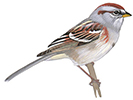
Minas Karamanis depicts a scenario where one PhD graduate does all her work by hand while the other uses AI. On paper, both had exactly the same outcome, thoiugh arguably, one understood where the other did not. "The real threat," writes Karamanis, "is a slow, comfortable drift toward not understanding what you're doing. Not a dramatic collapse. Not Skynet. Just a generation of researchers who can produce results but can't produce understanding. Who know what buttons to press but not why those buttons exist. Who can get a paper through peer review but can't sit in a room with a colleague and explain, from the ground up, why the third term in their expansion has the sign that it does." This is not a new problem. There are different levels of understanding. AI gives us access to tools without requiring the deepest level of understanding. That doesn't mean the understanding disappears. Via Tom Czarniecki.
Web: [Direct Link] [This Post][Share]
Emotion concepts and their function in a large language model
Anthropic,
2026/04/06
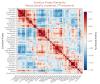
Emotion plays an important role in learning and cognition and so it's not surprising to see it play a similar role in AI. That, at least, is what researchers at Anthopic have found. Now, these are not the same as human emotions, but it takes a bit to explain why. AI systems act like a character that speak a language and develop rich internal representations of the abstract concepts underlying that language, including emotions. "These correspond to specific patterns of artificial 'neurons' which activate in situations - and promote behaviors - that the model has learned to associate with the concept of a particular emotion (e.g., 'happy' or 'afraid')". Nothing in this suggests that an AI feels things the way a human would, but AI's representation of an emotion plays the same functional role as its counterpart in humans. The full report considers three case studies: blackmail, reward hacking, and sycophancy and harshness.
Web: [Direct Link] [This Post][Share]
Australia's teen social media ban is a flop. But there's no joy in 'I told you so'
Samantha Floreani,
The Guardian,
2026/04/06

As readers probably know, the Australian government ban on social media for children took effect last December. It's probably much too early to draw conclusions, but this article reports that as of this week, "around seven in 10 children remain on major platforms." Writes Samantha Floreani, "If policymakers wish to genuinely reduce harm to young people online, they must take seriously the task of challenging models based on behavioural advertising, profiling and problematic algorithm-driven feeds." Image: Canberra Times.
Web: [Direct Link] [This Post][Share]
Smart Glasses for Exam Cheating: Best Models, Prices and Risks in 2026
S. Popovich,
abit.ee,
2026/04/06

I really don't want to toss this grist into the mill, but here it is anyway, because whether or not this is a real site with real content, the concept is out there, and that's all that matters: "Smart glasses are a real technology with genuine consumer use cases: translation, navigation, teleprompter, memory capture, hands-free communication. The fact that they can be used to cheat is a side effect the industry neither planned for nor celebrates. But the fact remains: the line between 'smart device' and 'cheating device' is today defined entirely by the user's intention." Via Subconscious Proxy.
Web: [Direct Link] [This Post][Share]
The Five Roles Framework
Nick Potkalitsky,
Educating AI,
2026/04/06
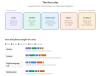
As I've often said, education researchers love a taxonomy, and this is another one, so I may as well pass it along. The five roles are: the critic, the verifier, the interlocutor, the editor, and the architect. "They are positions on a spectrum that runs from critical distance to collaborative integration, and the student's movement across them is shaped by context, by the demands of the task, and by the developing expertise the student brings to it."
Web: [Direct Link] [This Post][Share]
Components of A Coding Agent
Sebastian Raschka,
Ahead of AI,
2026/04/06
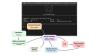
This is a pretty good look at the design of a coding agent; this is a mechanism that uses an AI model to create new software. It's clearly written and well illustrated. It's interesting because it essentially describes a coding task model - that is, what people are actually doing when they write software. I picked this up via Benjamin Riley, who writes a critical summary of the AI coding process outlined here, calling it an ouroboros, a snake that eats its own tail. "AI writes the code. AI reviews the code. AI checks the deployment. When it breaks, the answer is more AI. The loop has no exit condition...The company that sells AI coding tools cannot build a quality product with its own AI coding tools." With last week's release of Claude Code's harness there has been a wave of similar posts. It's clear that Claude Code, at least, does not use its own code as input; there's a specific constraint against it, and the ouroboros problem is well understood and accounted for.
Web: [Direct Link] [This Post][Share]
Ellis: Your On-Demand Classroom Companion
Jennifer Gonzalez,
Cult of Pedagogy,
2026/04/06

We're entering a phase where we'll see a wave of new AI-based Edtech. Almost all of them are designed to assist people to do what they're alreadying doing. Ellis is a case in point. It tries "to come as close as it can to being that trusted colleague who has deep knowledge about learning differences and student mental health and is ready at any time to help us figure out the best way to approach every individual situation." I can't imagine this being useful, because I can't it being more reliable in specific cases than the teacher in the classroom, but I could be very wrong about that.
Web: [Direct Link] [This Post][Share]
There are many ways to read OLDaily; pick whatever works best for you:
- Read in your web browser on this web page, updated weekdays
- Receive a daily or weekly email newsletter by subscribing here
- Subscribe to the RSS feed using your favourite feed reader
- Follow @OLDaily@mastodon.social on Mastodon or elsewhere in the fediverse
- Follow @OLDaily on Bluesky
- Read OLDaily as a LinkedIn Newsletter
- Integrate the open API using the JSON feed
This newsletter is sent only at the request of subscribers. If you would like to unsubscribe, Click here.
Know a friend who might enjoy this newsletter? Feel free to forward OLDaily to your colleagues. If you received this issue from a friend and would like a free subscription of your own, you can join our mailing list. Click here to subscribe.
Copyright 2026 Stephen Downes Contact: stephen@downes.ca
This work is licensed under a Creative Commons License.