Feature Article
Resilience in the Age of AI
Stephen Downes,
Half an Hour,
2026/04/02
Three classes of workers will emerge: Those who care, employed in high-touch professions delivering 'hand-holding' care. Those who service, doing the things that aren't yet automated. And those who experience: Today we call such people 'celebrities' and 'influencers,' but there will be an ever-greater need for people to have new experiences to produce new 'content' … to enable AIs to keep learning and for the rest of us to react to. In many ways, experiencers will be aspirational, much like professional athletes are today, but there will be far more opportunities to enjoy similar experiences first-hand. (This is the edited version of my contribution to Building a Human Resilience Infrastructure for the Age of AI: Experts Call for Radical Change Across Institutions, Social Structures - Imagining the Digital Future Center by Lee Rainie and Janna Anderson.)
[Share][Link] [Local copy]
Building a Human Resilience Infrastructure for the Age of AI: Experts Call for Radical Change Across Institutions, Social Structures - Imagining the Digital Future Center
Lee Rainie, Janna Anderson,
Imagining the Digital Future Center,
2026/04/02
Including more than 160 essays from experts in the field, this massive tome (300 page PDF) urges "urging an all-encompassing systems response by leaders to serve humanity's best interests in light of rapid technological change," according to its editors Lee Rainie and Janna Anderson, both from Elon University. Rainie and Anderson offer shorter versions of the overall analysis available in a four-page news release and a 15-page executive summary. In their executive summary, they describe "five layers needed for an institutions-first infrastructure" as described by the authors collectively: oversight and governance, a civic layer, an ethical layer, a cognitive layer, and a decision-making layer.
Web: [Direct Link] [This Post][Share]
The Course Is Dying as the Unit of Learning
Philippa Hardman,
Dr Phil's Newsletter,
2026/04/02
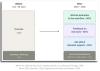
This is nothing readers here haven't heard before, but as Philippa Hardman says, AI is accelerating the trend and making the implications a lot more obvious. "Formal learning accounts for only 4-10% of how people actually learn at work," writes Hardman, and "only a fraction of what we 'learn' in courses transfers into changed behaviour. Put another way, we've built an entire industry and tech stack around the margins." So what will we get instead? I think we already know: "the learning moment is inseparable from the work... compliance courses for nudge learning and 3-10 minute mobile micro-modules embedded into normal workflows... (and) self-directed exploration and peer support." What does that technology look like?
Web: [Direct Link] [This Post][Share]
The Gravity We Didn't Vote For
Carlo Iacono,
Hybrid Horizons,
2026/04/02

This article is a bit disjointed but makes some important points. One is that everything that is not AI is losing investment. "The evidence of defunding is broad and consistent. Edtech investment fell to $2.4 billion globally in 2024, the lowest since 2014, an 89 per cent decline from its 2021 peak." Another is that the money flowing into AI "is not buying better chatbots. It is buying agent infrastructure: systems that can observe, decide, act and keep acting." Finally, and perhaps most importantly, "That gap, between what these systems actually are and what the public conversation assumes they are, may be the most dangerous thing about this moment. We are still arguing about whether AI can pass exams. Meanwhile, the companies absorbing 64 per cent of global venture capital are building agent platforms with scheduled tasks, remote triggers, delegated subagents, and layered permission systems."
Web: [Direct Link] [This Post][Share]
Tribune paywall removal: details, timeline and how it will work
The Salt Lake Tribune,
2026/04/02

Cheers to the Salt Lake Tribune, a local newspaper that is removing its paywall. Here's how they explain it: "We believe trusted, independent journalism is a right - not a luxury. And at a time when misinformation spreads faster than ever, expanding access isn't just important - it's necessary." They are asking for donations from their readers. It's a model that has worked elsewhere - The Guardian (which I send money to every month) has done it for years. And as readers here know, we're adopting the same approach here at OLDaily. Via Jay Rosen.
Web: [Direct Link] [This Post][Share]
Eurosky - Building a thriving open social web for Europe
Eurosky,
2026/04/02

Eurosky has launched. "Eurosky is an independent European initiative spearheaded by a coalition of entrepreneurs, technologists and civil society organizations working towards a future where Europe has a thriving open social web that's innovative, competitive and built on European values." It's built on the ATmosphere protocol, which means it shares the same space as Bluesky.
Web: [Direct Link] [This Post][Share]
The Revenge of the Data Scientist
Hamel Husain,
Hamel's Blog - Hamel Husain,
2026/04/02
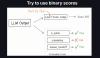
You should ignore the fact that this article is about data scientists and addressed to python developers (complete with the memes they'll resonate to). Read from the perspective of a learning professional, this article is full of insights as to the sorts of skills that will be valuable in the future, not just for data engineers, but for everyone. For example: is discusses how to develop an AI harness, and links to an OpenAI blog post on harness engineering. That's the sort of thing we saw in this week's Claude Code software. Knowing about the 'observability stack' - logs, metrics, and traces - is key. "Explore the data, explore the traces, ask 'what is actually breaking here?', and figure out the highest-value thing to start measuring. There are infinite things to measure. You have to form hypotheses and iterate." The article lists a series of 'pitfalls' but this is just the beginning of the list of things worth learning.
Web: [Direct Link] [This Post][Share]
There are many ways to read OLDaily; pick whatever works best for you:
- Read in your web browser on this web page, updated weekdays
- Receive a daily or weekly email newsletter by subscribing here
- Subscribe to the RSS feed using your favourite feed reader
- Follow @OLDaily@mastodon.social on Mastodon or elsewhere in the fediverse
- Follow @OLDaily on Bluesky
- Read OLDaily as a LinkedIn Newsletter
- Integrate the open API using the JSON feed
This newsletter is sent only at the request of subscribers. If you would like to unsubscribe, Click here.
Know a friend who might enjoy this newsletter? Feel free to forward OLDaily to your colleagues. If you received this issue from a friend and would like a free subscription of your own, you can join our mailing list. Click here to subscribe.
Copyright 2026 Stephen Downes Contact: stephen@downes.ca
This work is licensed under a Creative Commons License.