How to Build Practice-Based Learning Activities with AI
Philippa Hardman,
Dr Phil's Newsletter,
2026/03/19

I personally think this is only the tip of the iceberg. Philippa Hardman shows how to use AI to create four types of simulation (paraphrased): structured roleplay, to practise difficult conversations in real time; decision simulator, to navigate complex trade-offs with compounding consequences; feedback simulator, to get perspective-specific critique on work products; and adaptive case study, to interview a character to diagnose the real problem. These are the low-hanging fruit of Management 101. Much more complex and interesting possibilities suggest themselves: flight simulations, machine operations, chemical reactions, and more.
Web: [Direct Link] [This Post][Share]
Whole-Brain Connectomic Graph Model Enables Whole-Body Locomotion Control in Fruit Fly
Zehao Jin, Yaoye Zhu, Chen Zhang, Yanan Sui,
arXiv,
2026/03/19
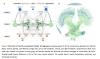
In 2024 the entire fruit fly connectome was mapped (a connectome is the full set of connections in a neural network). Last year, the researchers simulated the entire connectome on a computer and then ran some tests to see what would happen. The result: the fruit fly exhibited fruit fly behaviour (such as walking toward food and cleaning its antennae) without training. This illustrates that (simple) behaviour can be hard-coded into a neural network, in addition to being learned through a series of training events. I found this (13 page PDF) via Nir Diamant but he doesn't link to the original study anywhere in his article. For shame! See also: RoboHorizon, XROM, Eon (with TikTok video).
Web: [Direct Link] [This Post][Share]
Liberty and Zhi: Chinese and Anglo-American Ideas of the University
Alex Usher,
HESA,
2026/03/19

"When it comes to student development, it is not necessarily only about self-development. It is always part of a broader communal or collective development alongside the individual's own development." This is presented as the Chinese perspective in this interview with Lili Yang of the University of Hong Kong. "There has been a huge mistake in the policy pathways of recent decades in places like the UK when it comes to tuition fees. The mistake lies in overlooking - or deliberately ignoring - the fact that higher education and student development contribute not only to private returns for individuals." Back in my days as a student activist we used data showing students gain 23% of the benefit of a university education; society gained the rest. Despite this, students paid a much greater percentage of the cost - in effect, subsidizing the broader economy. I have no idea what the statistic would look like today, but I'm sure it exists, and is continuing to be ignored.
Web: [Direct Link] [This Post][Share]
Introducing Vistral: A Grammar of Graphics for Streaming Data
Leland Wilkinson,
Timeplus,
2026/03/19
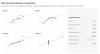
This is really interesting on a number of levels. The web page introduces an open source project called Vistral, which is a TypeScript library that brings what it calls the Grammar of Graphics to streaming data. "Here's the thing about real-time data: it never stops. A traditional chart takes a complete dataset, computes scales, renders pixels, and you're done. But streaming data keeps arriving. Your axes need to shift. Old points need to expire. Aggregations need to update incrementally." You can learn more about the grammar of graphics from this presentation (which I found today via Data Science Weekly Issue 643). "It's what we've been building internally at Timeplus to power our streaming dashboards, and now it's available for every developer under open source Apache 2.0 license." You could lose yourself in this; at the very least look at the presentation.
Web: [Direct Link] [This Post][Share]
The Best Tacit Knowledge Videos on Every Subject
Parker Conley,
LessWrong,
2026/03/19

Videos (like my own series) that seek to pass on the thinking process behind an activity are known as 'tacit knowledge videos'. This website serves as a Schelling point for some of the best examples. "Tacit knowledge is extremely valuable. Unfortunately, developing tacit knowledge is usually bottlenecked by apprentice-master relationships," writes Conley. I could think offhand of many more topics to add (bicycle maintenance is one) and I'm sure many of the best videos are left out of this list. Nonetheless, the site makes a compelling point (in my opinion) about the development and use of numerous and usually open learning resources online.
Web: [Direct Link] [This Post][Share]
There are many ways to read OLDaily; pick whatever works best for you:
- Read in your web browser on this web page, updated weekdays
- Receive a daily or weekly email newsletter by subscribing here
- Subscribe to the RSS feed using your favourite feed reader
- Follow @OLDaily@mastodon.social on Mastodon or elsewhere in the fediverse
- Follow @OLDaily on Bluesky
- Read OLDaily as a LinkedIn Newsletter
- Integrate the open API using the JSON feed
This newsletter is sent only at the request of subscribers. If you would like to unsubscribe, Click here.
Know a friend who might enjoy this newsletter? Feel free to forward OLDaily to your colleagues. If you received this issue from a friend and would like a free subscription of your own, you can join our mailing list. Click here to subscribe.
Copyright 2026 Stephen Downes Contact: stephen@downes.ca
This work is licensed under a Creative Commons License.