
The one science reform we can all agree on, but we're too cowardly to do
Adam Mastroianni,
Experimental History,
2026/03/09

This is a longish article revisiting an issue we've covered on numerous occasions here: the broken system of academic publishing. This is a great line: "These days, Springer Nature, Elsevier, Wiley, and the like are basically giant operations that proofread, format, and store PDFs. That's not nothing, but it's pretty close to nothing." One interesting note: the pattern of use of the (pirate site) SciHub matches the pattern of researchers with the best access to legitimate sources. "Why would researchers resort to piracy when they have legitimate access themselves? Maybe because journals' interfaces are so clunky and annoying that it's faster to go straight to SciHub... for-profit publishing only 'works' because people find ways to circumvent it."
Web: [Direct Link] [This Post][Share]
PEER: a technique for brainstorming interviewees and story sources
Paul Bradshaw,
Online Journalism Blog,
2026/03/09
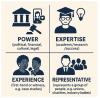
This is a useful article meant for journalists but worth reflecting on for all of us. It outlines the PEER mnemonic (based on a previous post) for remembering the following four types of source: Power, Expertise, Experience, and Representative. Part of the issue with journalism (in my own opinion) is that writers unimaginatively return to the same old sources in each of these groups. That's why I prefer the PEER'D alternative, where D stands for diversity. Good journalism tries to get sources from a spectrum of each type of source - not always the same authorities, not always the same expertise. I think especially they should avoid deferring to (what they believe) is the 'elite' level for each of these, because this usually reflects wealth, connections and influence more than it does actual power, expertise, experience or representation.
Web: [Direct Link] [This Post][Share]
Is higher education broken? Not exactly.
Jon Dron,
Jon Dron's home page,
2026/03/09

Jon Dron applies something like a systems analysis to the question in the title, asking essentially, "what does it mean for higher education to work?" In one role, teaching, it doesn't perform especially well, due to conflicts with its other roles. But in another role, 'surviving', it has done remarkably well, having persisted for centuries and having expanded around the globe. I do question, though, whether this is true: "The main technological features that universities acquired in the first century of their existence are still fully present, in virtually unaltered form. Courses, classes, terms/semesters, professors, credentials, methods of teaching, organizational structures, methods of assessment, and plenty more are visibly the same species as their mediaeval forebears, and remain the central motifs of virtually all formal higher education." Are they really? I wonder about that. (I suppose I could ask ChatGPT...)
Web: [Direct Link] [This Post][Share]
Explore AI Literacy - A Visual Navigator for AI Literacy Frameworks
Sean McMinn,
2026/03/09
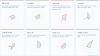
This tool, which the website source reveals was created by Perplexity computer, compares 20 AI literacy frameworks across 9 domains. The domains are: technical understanding, practical application, critical evaluation, ethical reasoning, societal and systemic awareness, human agency and identity, governance and participation, cognitive and metacognitive processes, and sociocultural and critical orientation. My question is: what makes these good dimensions of AI literacy, over and above the fact that they may be extracted from the 20 literacy frameworks viewed? Minimally, a typology should be comprehensive and non-overlapping. But more to the point, what exactly is a 'literacy'? My own view is that a 'literacy' is a type of pattern recognition. What alternative characterization would a presentation like this offer? It seems circular - a 'literacy' is what people say is a literacy.
Web: [Direct Link] [This Post][Share]
The Australian Workforce Crisis: Why skills aren’t enough
Colin Beer,
Col's Weblog,
2026/03/09

Colin Beer is usually sharper than this, so while I agree that knowledge and skills (as he defines them) are not enough, I think we need some clarity regarding what he calls 'dispositions' (it's not that he's wrong so much as he's fuzzy). He writes, "Dispositions represent the values, tendencies, and attitudes, such as motivation, mindset, professional identity and agency, that dictate how a professional actually navigates the "swampy lowlands" of practice. In simple terms, dispositions are the habits of mind and heart that shape how we show up when work gets hard." Dispositions are best described as tendencies, which may result from habits, or which may be subconscious tics. They should be contrasted with attitudes, which are states of mind regarding such things as values and truth. Expertise (in, say, the Dreyfus sense) is a matter of disposition, while professionalism is a matter of attitude. It's certainly arguable that an education should (help) shape both, but they are very distinct things, and are approached very differently.
Web: [Direct Link] [This Post][Share]
Context Hub
Andrew Ng,
The Batch,
2026/03/09

The current issue of The Batch introduces readers to Context Hub, Andrew Ng's new tool to provide API documentation to your coding tools. The purpose of this is to make the tool aware of new tools and updates to existing tools, so they're not depending on out-of-date models. "Chub is built to enable agents to improve over time. For example, if an agent finds that the documentation for a tool is incomplete but discovers a workaround, it can save a note so as not to have to rediscover it from scratch next time." It's available on GitHub and installed using the node package manager (npm). It's the lead article in this issue; you can also read other AI news from the week.
Web: [Direct Link] [This Post][Share]
What's an API?
Sung Won Chung,
Technically,
2026/03/09
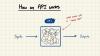
This is a clear and well-written account of what an application programming interface (API) is. We read about APIs all the time, from xAPI for learning records to MCP as an API for artificial intelligence. This article describes in an accessible way what we mean by API, exactly. "When engineers build modules of code to do specific things, they clearly define what inputs those modules take and what outputs they produce: that's all an API really is."
Web: [Direct Link] [This Post][Share]
There are many ways to read OLDaily; pick whatever works best for you:
- Read in your web browser on this web page, updated weekdays
- Receive a daily or weekly email newsletter by subscribing here
- Subscribe to the RSS feed using your favourite feed reader
- Follow @OLDaily@mastodon.social on Mastodon or elsewhere in the fediverse
- Follow @OLDaily on Bluesky
- Read OLDaily as a LinkedIn Newsletter
- Integrate the open API using the JSON feed
This newsletter is sent only at the request of subscribers. If you would like to unsubscribe, Click here.
Know a friend who might enjoy this newsletter? Feel free to forward OLDaily to your colleagues. If you received this issue from a friend and would like a free subscription of your own, you can join our mailing list. Click here to subscribe.
Copyright 2026 Stephen Downes Contact: stephen@downes.ca
This work is licensed under a Creative Commons License.